

Today, BAN Toxics joins the global movement in marking World Environment Day, the largest international platform for environmental awareness and action, led by the United Nations Environment Programme (UNEP) since 1973.
This year’s theme addresses one of the most urgent environmental challenges of our time: plastic pollution.
Plastic production has skyrocketed over the last 70 years, causing massive environmental damage and worsening the climate crisis. With 99% of plastics made from fossil fuels, the primary source of greenhouse gas emissions, the problem is only escalating.
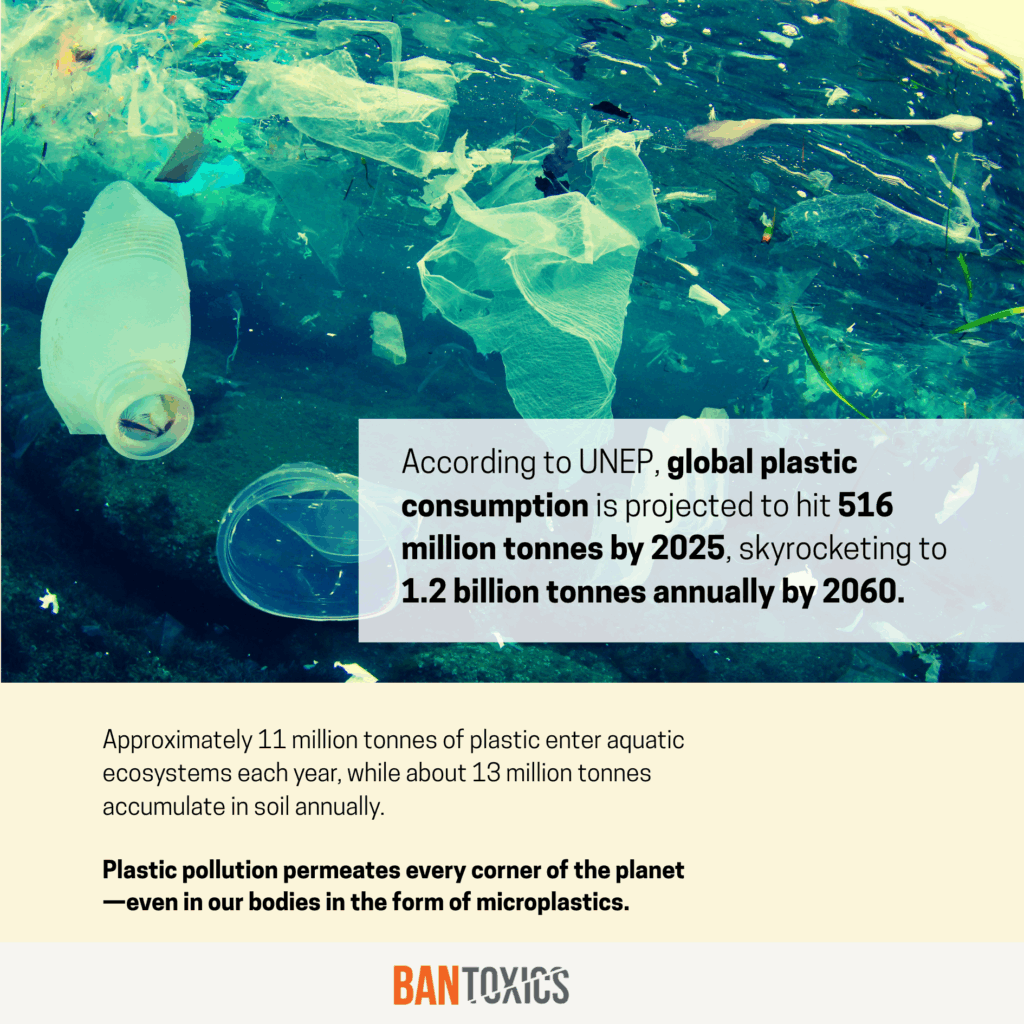
According to UNEP, global plastic consumption is expected to reach 516 million tonnes in 2025, with projections soaring to over 1.2 billion tonnes annually by 2060.
Plastic pollution now contaminates every corner of the planet, from the deepest point of the Mariana Trench to the summit of Mount Everest, and even in our bodies in the form of microplastics. Approximately 11 million tonnes of plastic enter aquatic ecosystems, while about 13 million tonnes accumulate in soil annually.
In the Philippines alone, the World Bank estimates that the country used an overwhelming 163 million pieces of sachets per day in 2022. A staggering 2.3 million tons of plastic waste are generated in the country annually.
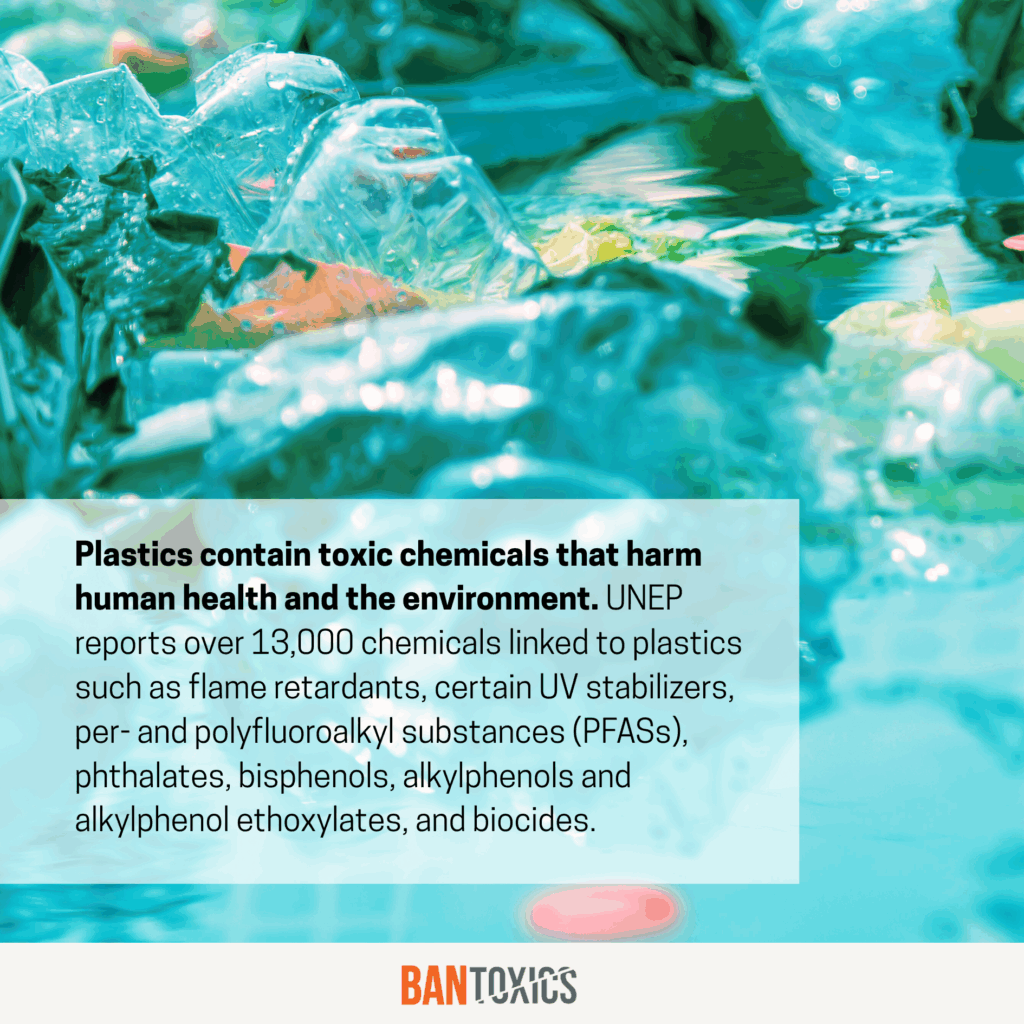
Plastics aren’t just a waste issue, they contain toxic chemicals that harm human health and the environment. UNEP reports over 13,000 chemicals linked to plastics, with 10 groups of chemicals (based on chemistry, uses, or sources) identified as being of major concern due to their high toxicity and potential to migrate or be released from plastics. These include specific flame retardants, certain UV stabilizers, per- and polyfluoroalkyl substances (PFASs), phthalates, bisphenols, alkylphenols and alkylphenol ethoxylates, biocides, certain metals and metalloids, polycyclic aromatic hydrocarbons, and many other non-intentionally added substances (NIAS). These are found in everyday items like toys and other children’s products, medical devices, food packaging, and personal care products.
A recent study by BAN Toxics and Bangladesh-based NGO Environment and Social Development Organization (ESDO) revealed that numerous plastic toys contain hazardous chemicals such as arsenic, lead, cadmium, and mercury, with traces of bromine and chlorine. Out of the 257 plastic toys tested, 62.64% exceeded safety limits, posing serious health risks to children and their families.
Throughout the entire life cycle of plastic, from raw material extraction and polymer production to product use and end-of-life disposal, hazardous chemicals may be released. Improper waste management further increases the risk of these substances leaching into the air, water, and soil.
Southeast Asian countries like Indonesia, Malaysia, and the Philippines ingest the most microplastics among 109 countries, based on the 2024 research study by Cornell University.
The health implications are equally alarming. Plastics break down into microplastics and nanoplastics, which can enter the food chain and have been detected in human arteries, lungs, brains, and even breast milk.
Despite these risks, recycling alone cannot solve the crisis. Only 9% of all plastics produced are actually recycled globally, and just 21% are economically viable to recycle, the rest are discarded.
Addressing the issue of chemicals in plastics must be a key part of the global effort to combat plastic pollution and protect human health and the environment.
To #BeatPlasticPollution, BAN Toxics calls on the government to implement stronger control measures on plastic production, manufacturing, and importation, especially for problematic and hazardous plastics, enforce a nationwide ban on single-use plastics, and urge corporations to phase out plastics immediately.
Reducing plastic usage is a great step toward protecting the environment! Here are the practical steps we can do:
Everyday Habits:
- Carry a reusable water bottle – Avoid buying bottled water
- Store food in glass or metal containers
- Switch to cloth instead of disposable ones
- Refuse plastic freebies
Shopping Smarter:
- Bring reusable shopping bags
- Choose products with no plastic packaging
- Buy in bulk to reduce packaging waste
- Avoid single-use plastics like straws, cutlery, and cups
- Buy secondhand
- Choose products made of natural materials like wood, bamboo or stainless steel
- Shop local as farmer’s markets often use less packaging
- Do not buy products with toxic chemicals
Community Actions:
- Organize or join clean-up events
- Advocate or petition for nationwide ban on single-use plastics
- Educate others – Share tips and raise awareness at school, work or online
Systemic and Long-term solutions
- Support legislation that reduces plastic production
- Invest in refill/reuse systems
- Reduce demand for plastic-heavy industries
On World Environment Day 2025, let’s reflect, commit, and act together for a cleaner, toxic-free, healthier future! Join BAN Toxics and the global movement to #BeatPlasticPollution today!
Let us stand together and be part of the solution.
#BeatPlasticPollution #WorldEnvironmentDay #BreakFreeFromPlastic #ZeroWaste #ToxicsFreeWasteFree