
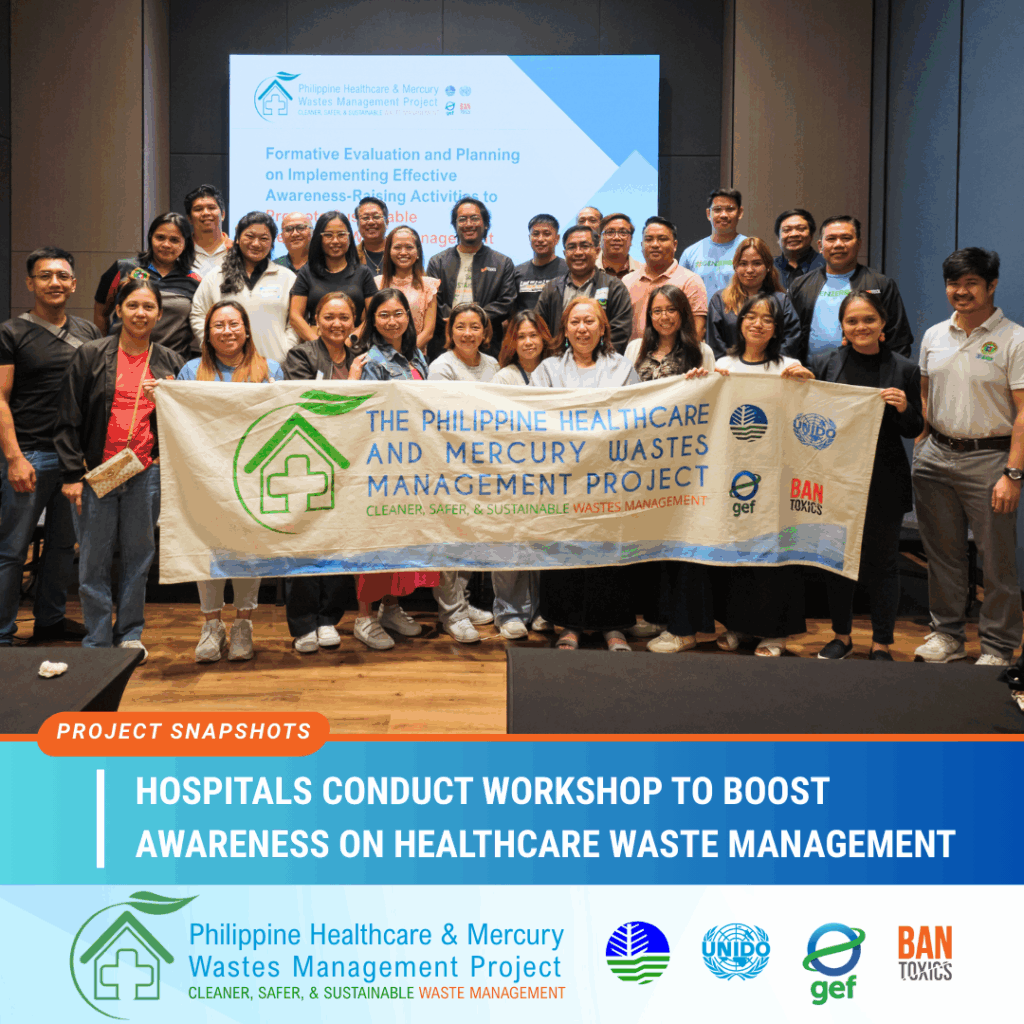
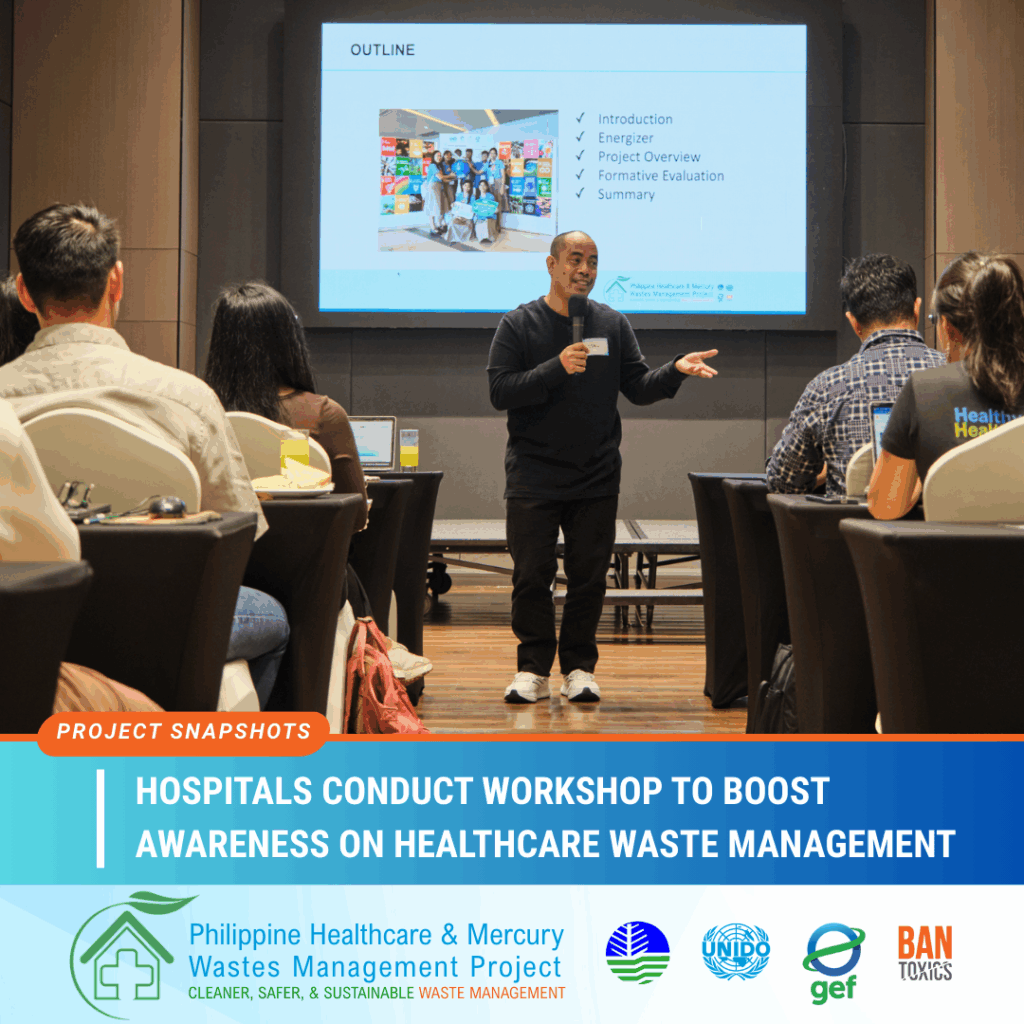
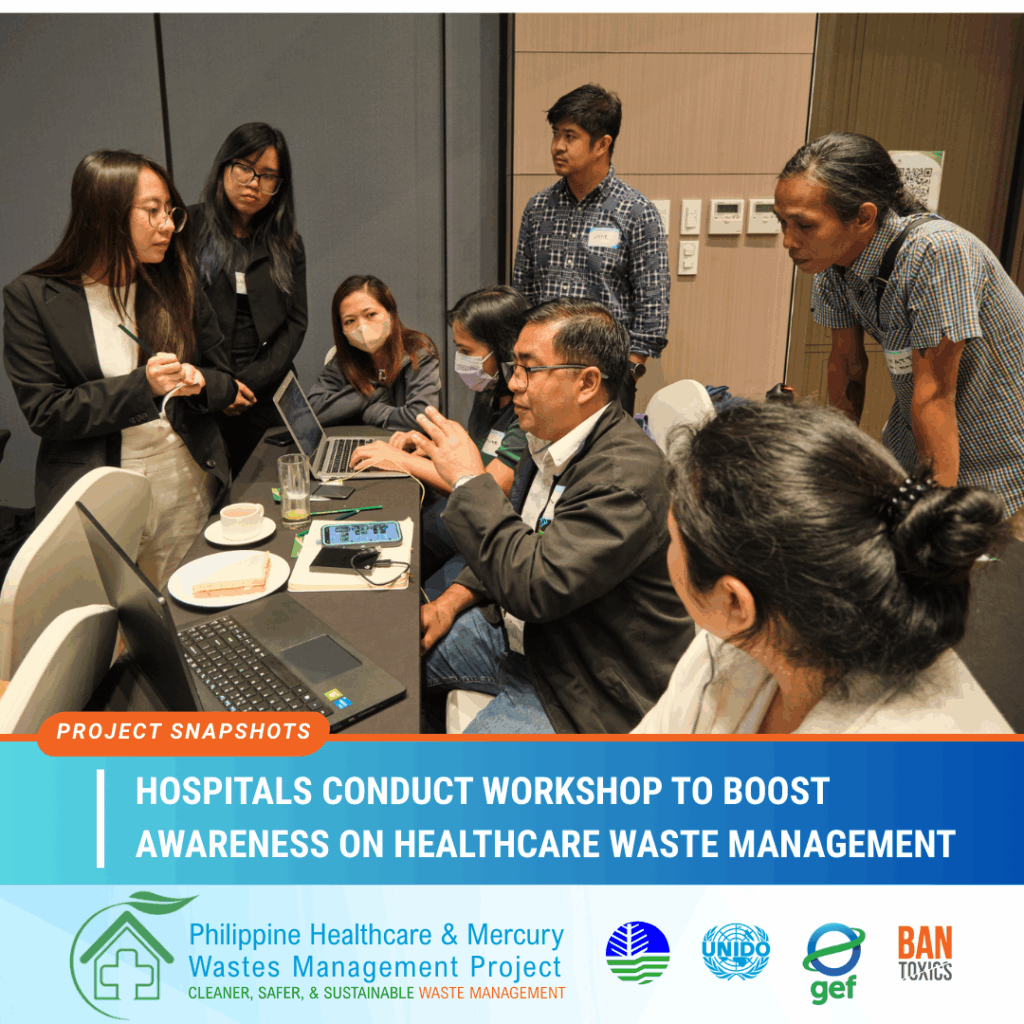
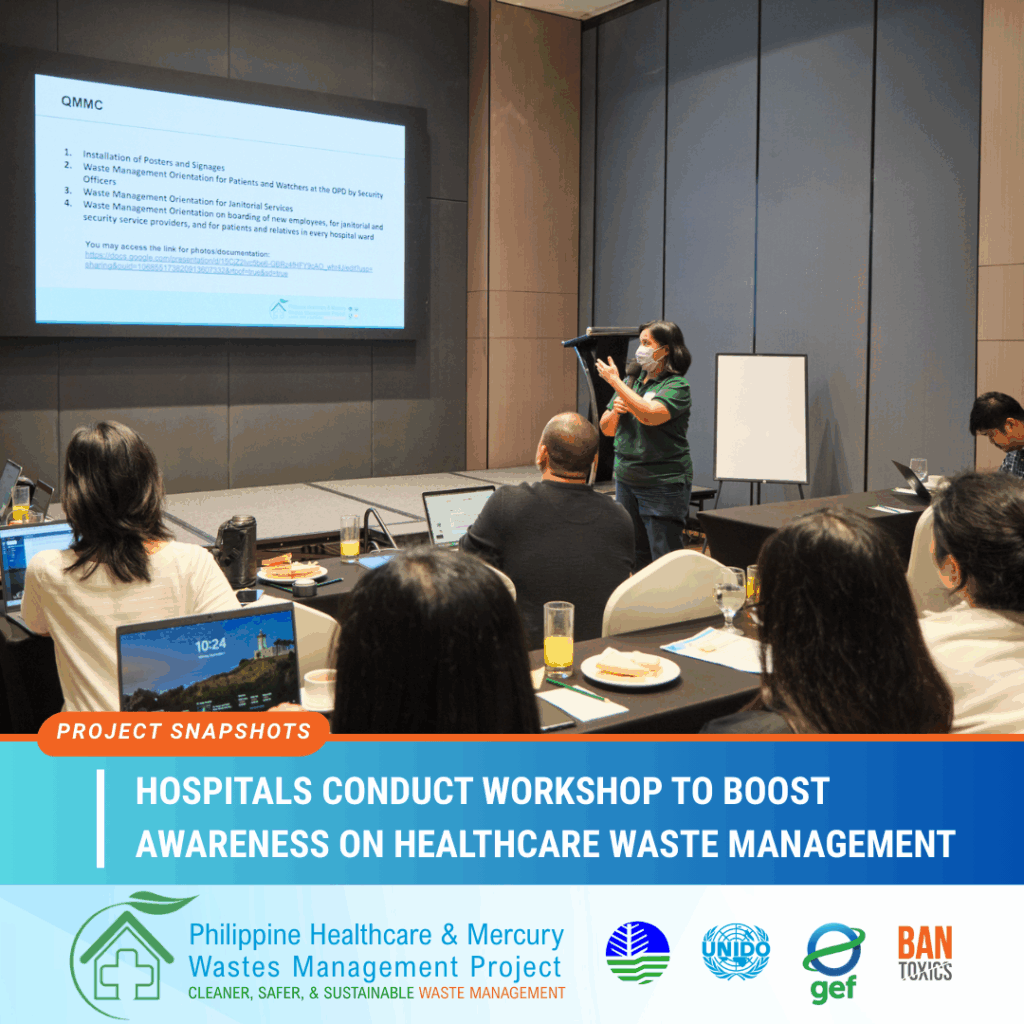
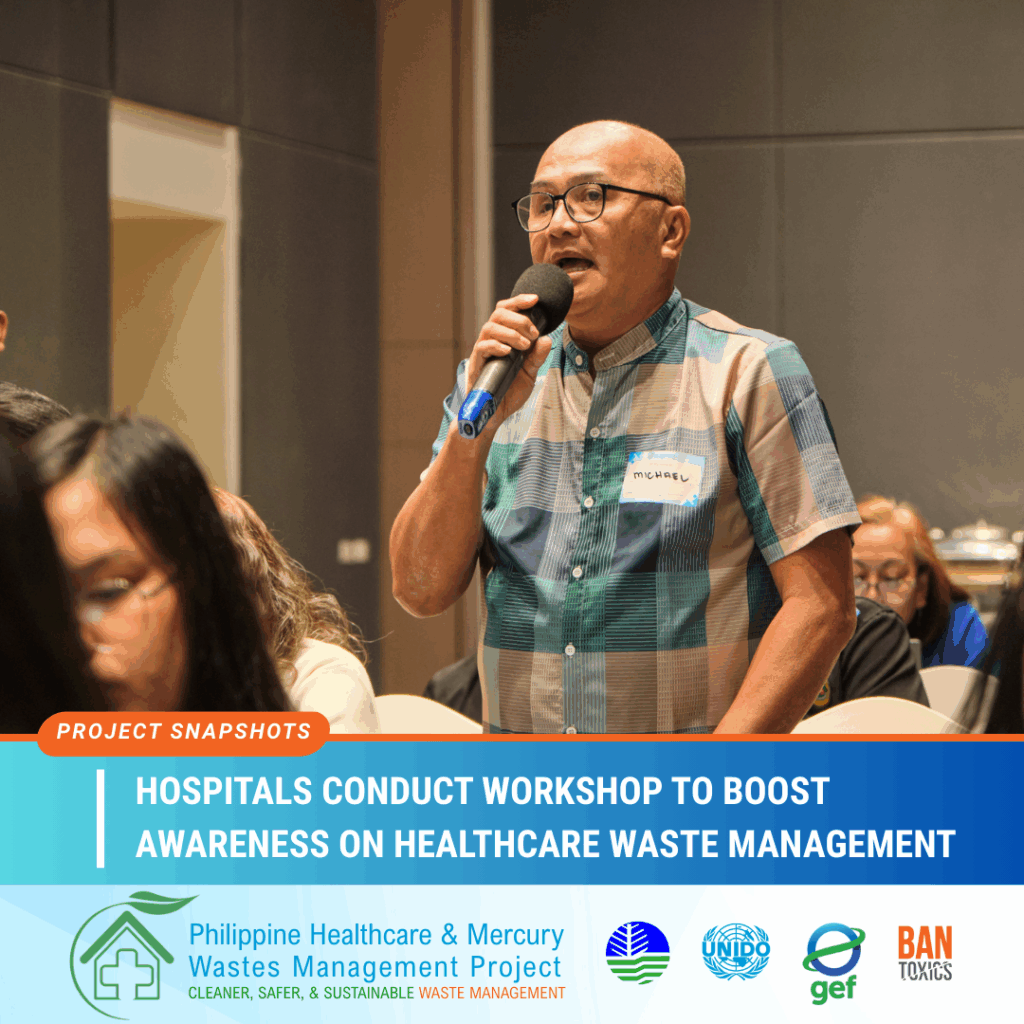
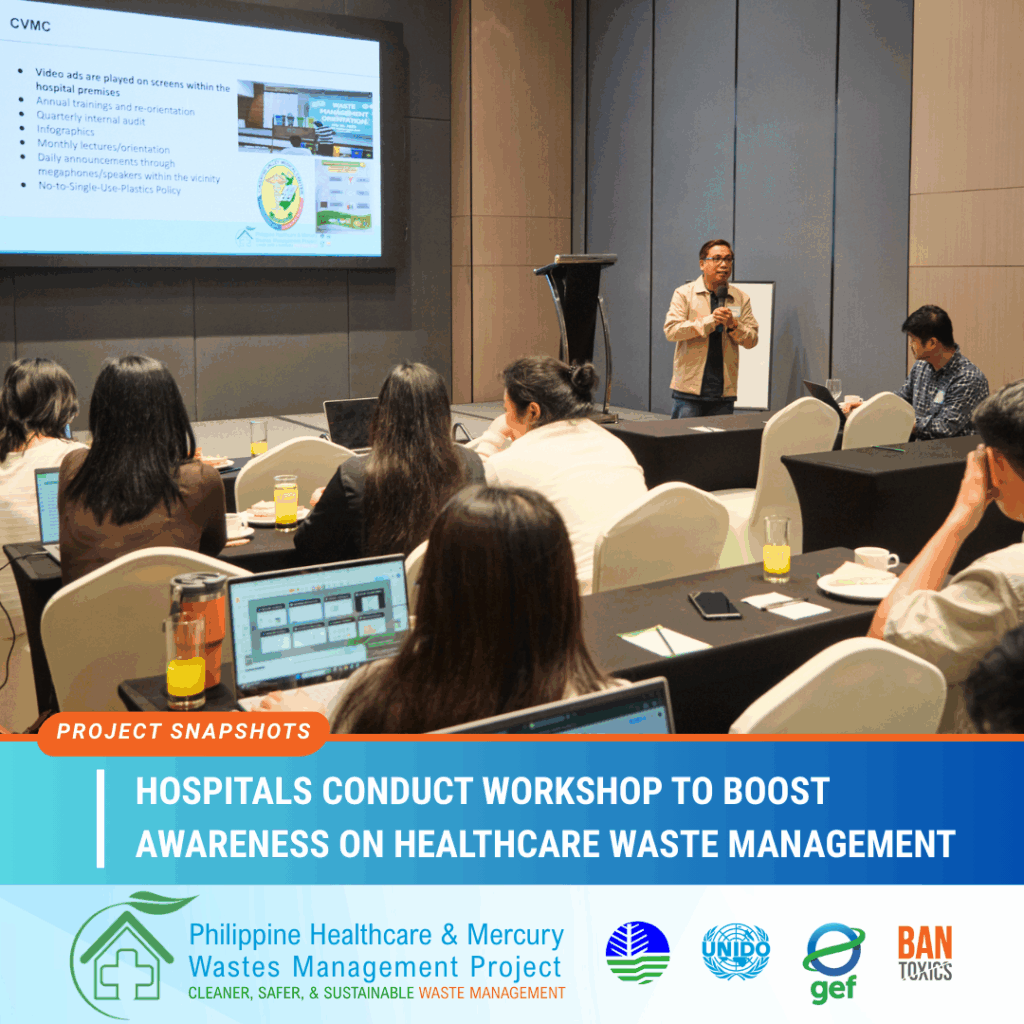
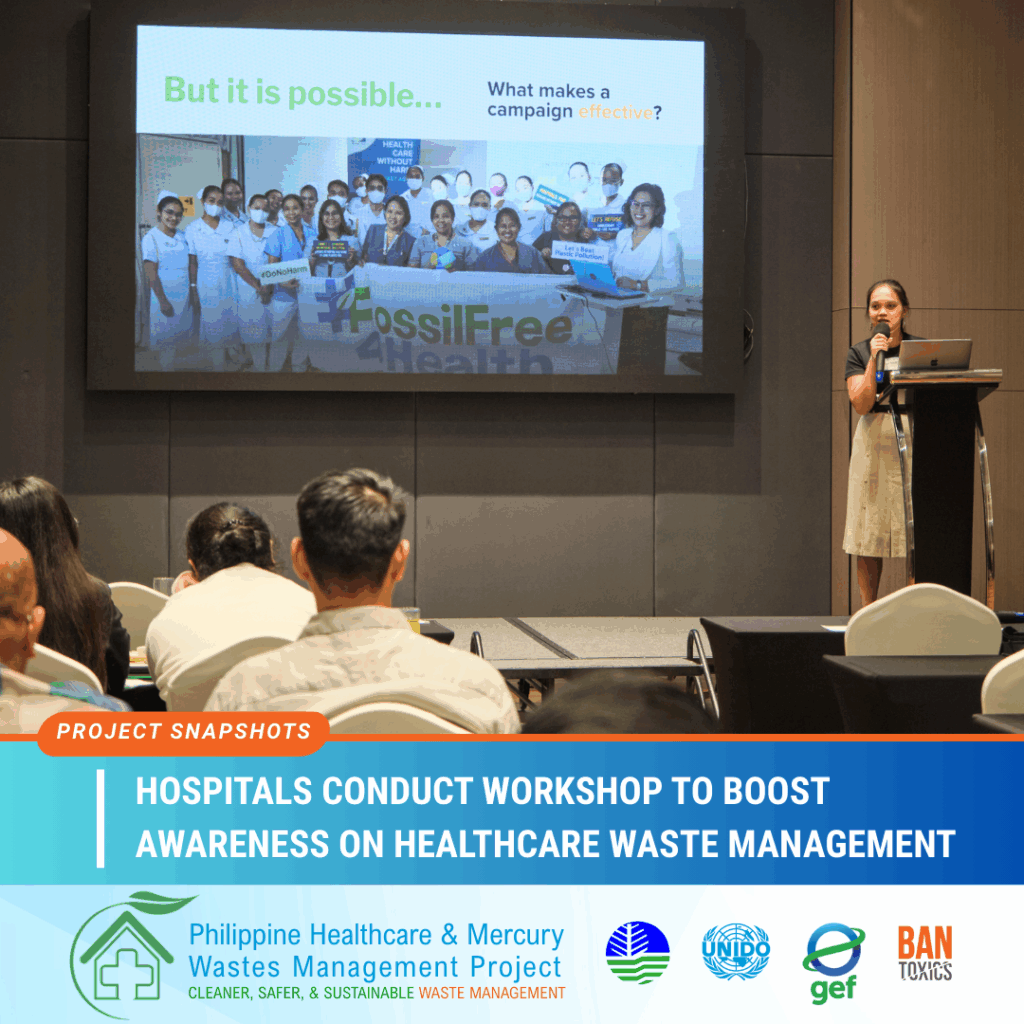
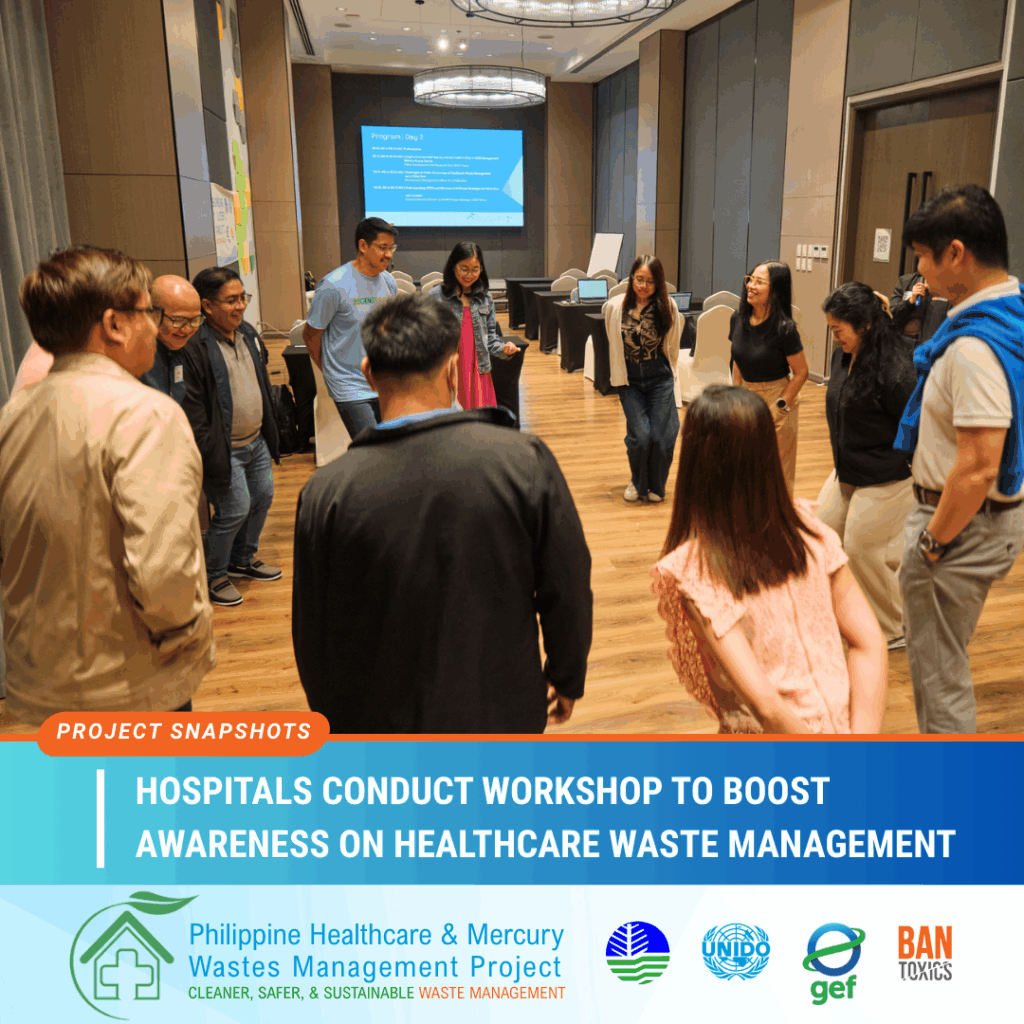
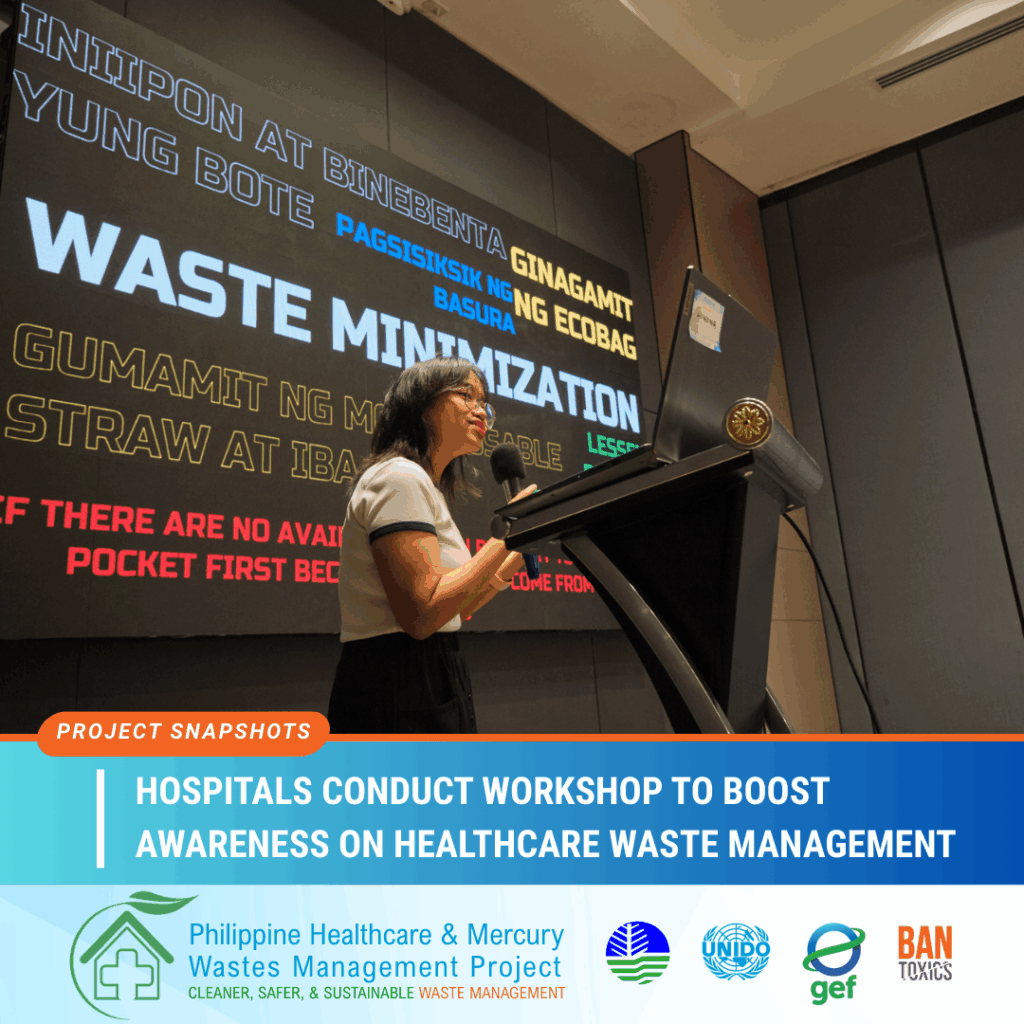


The Philippine Healthcare and Mercury Wastes Management Project (HCWM Project) successfully concluded a workshop aimed at evaluating and enhancing the capacities of its partner hospitals in raising awareness on the environmentally sound management of healthcare waste.
Held in Quezon City on September 1–2, 2025, the workshop was attended by personnel from Cagayan Valley Medical Center, Eastern Visayas Medical Center, and Quirino Memorial Medical Center, as well as representatives from the DENR-Environmental Management Bureau (EMB), DENR-Foreign Assisted and Special Projects Service (FASPS), DOH-Health Facility Development Bureau (HFDB), Healthcare Without Harm Southeast Asia (HCWH-SEA), and BAN Toxics.
Awareness-raising is one of the key areas of work of the HCWM Project, which underscores the importance of a multi-stakeholder approach to addressing the growing issue of healthcare waste management. Through awareness-raising, the project aims to drive long-term behavioral change among hospital clients, communities, hospital personnel, local and national government agencies, and the general public to promote zero-waste principles and sustainable management practices and technologies in healthcare waste management. This also includes highlighting the impact of healthcare waste on public health and the environment, positioning it as a shared public concern.
During the workshop, the partner hospitals shared their experiences and challenges in waste management, particularly the lack of or insufficient awareness of proper waste segregation and reducing plastic products, which, according to a waste audit conducted by HCWH, make up as much as 46% to 72% of wastes generated in healthcare facilities (HCFs).
The activity also provided inputs on reducing unintentionally produced persistent organic pollutants (uPOPs) and proper management and disposal of mercury wastes in HCFs, which are the main objectives of the HCWM Project. According to the World Health Organization (WHO), uncontrolled or incomplete burning of solid and hospital waste is often among the worst culprits for the environmental release of uPOPs, specifically dioxins and furans. WHO warns that short-term exposure to high levels of dioxins may result in skin lesions such as chloracne, darkened skin patches, and altered liver function, while long-term exposure is linked to impairment of the immune system, the nervous system, the endocrine system, and reproductive functions.
Meanwhile, mercury-containing products in HCFs—such as medical measuring devices, fluorescent lighting, batteries, and switches—although already generally phased out in hospitals, are still stockpiled and in need of proper temporary storage and disposal.
Other inputs included Effective Public Information Campaigns and Strategies by HCWH-SEA, Challenges in Raising Public Awareness on HCW Management by DOH-HFDB, and Policies and Regulations on HCW Management, Including Implementation Challenges and Gaps by DENR-EMB.
As the main output of the workshop, the partner hospitals crafted their own communications plans, reflecting their learning and appreciation of the importance of public awareness in healthcare waste management.
—
The Philippine Healthcare and Mercury Wastes Management Project aims to improve healthcare waste management in the country, with a special focus on reducing the release and emissions of hazardous substances from healthcare waste. Implemented by the United Nations Industrial Development Organization (UNIDO) and the DENR-EMB, the project receives funding support from the Global Environment Facility (GEF), with BAN Toxics serving as the executing partner.
#CleanerSaferSustainable #WasteFree #ToxicsFree #HealthcareWasteSolutions #HCWMProject