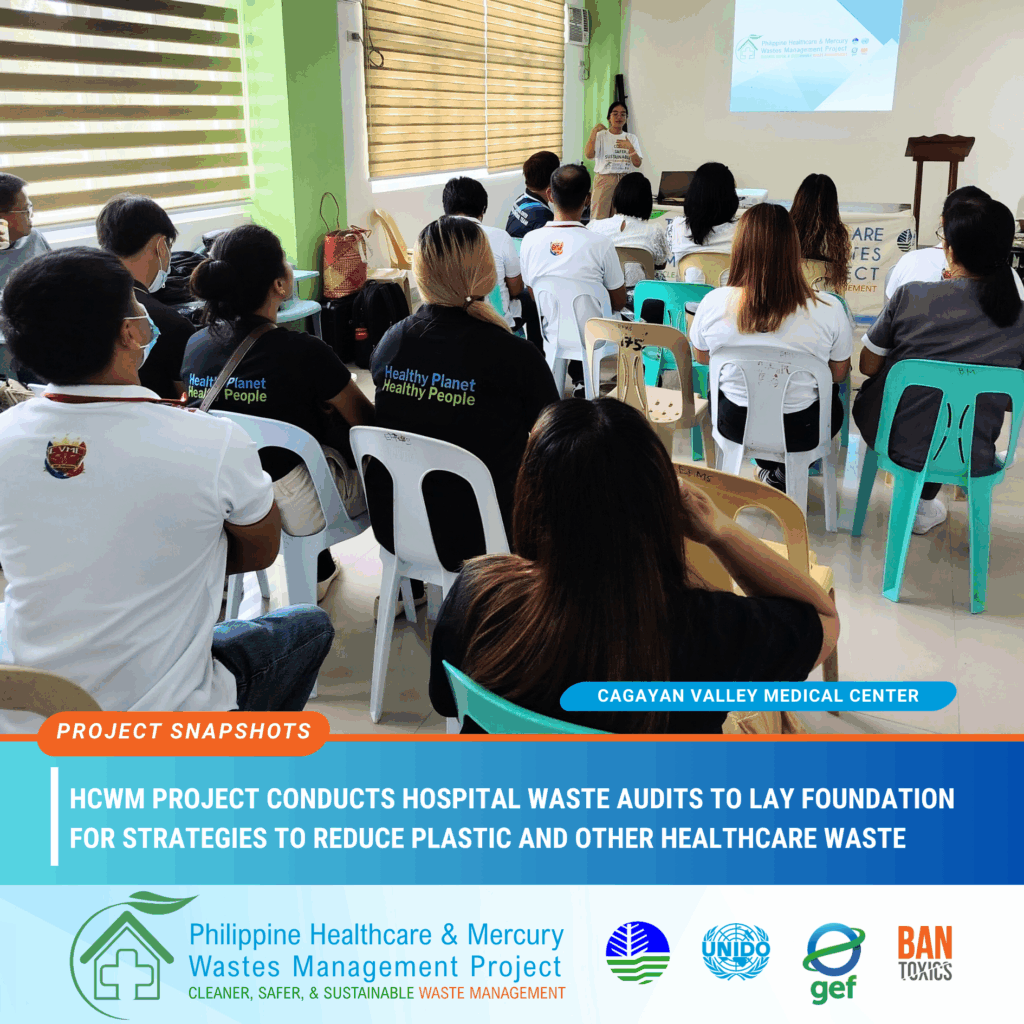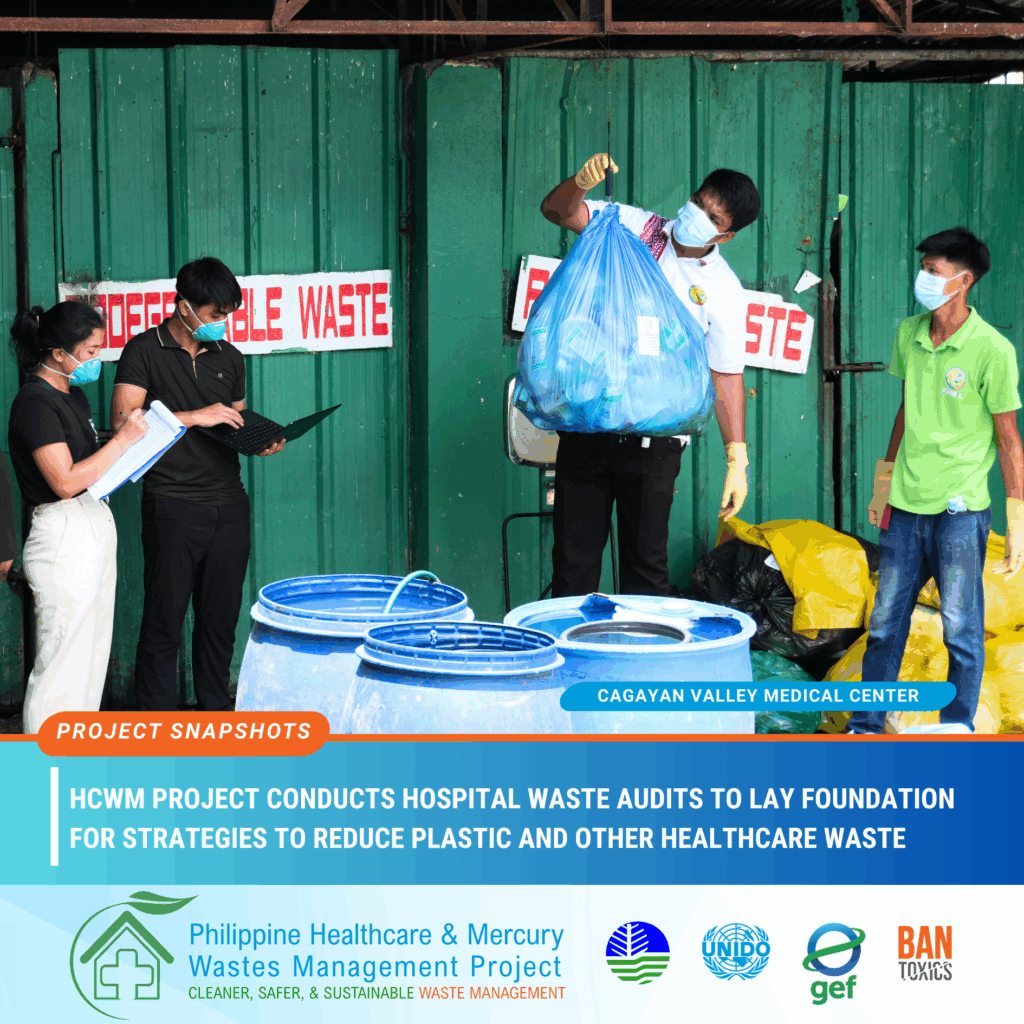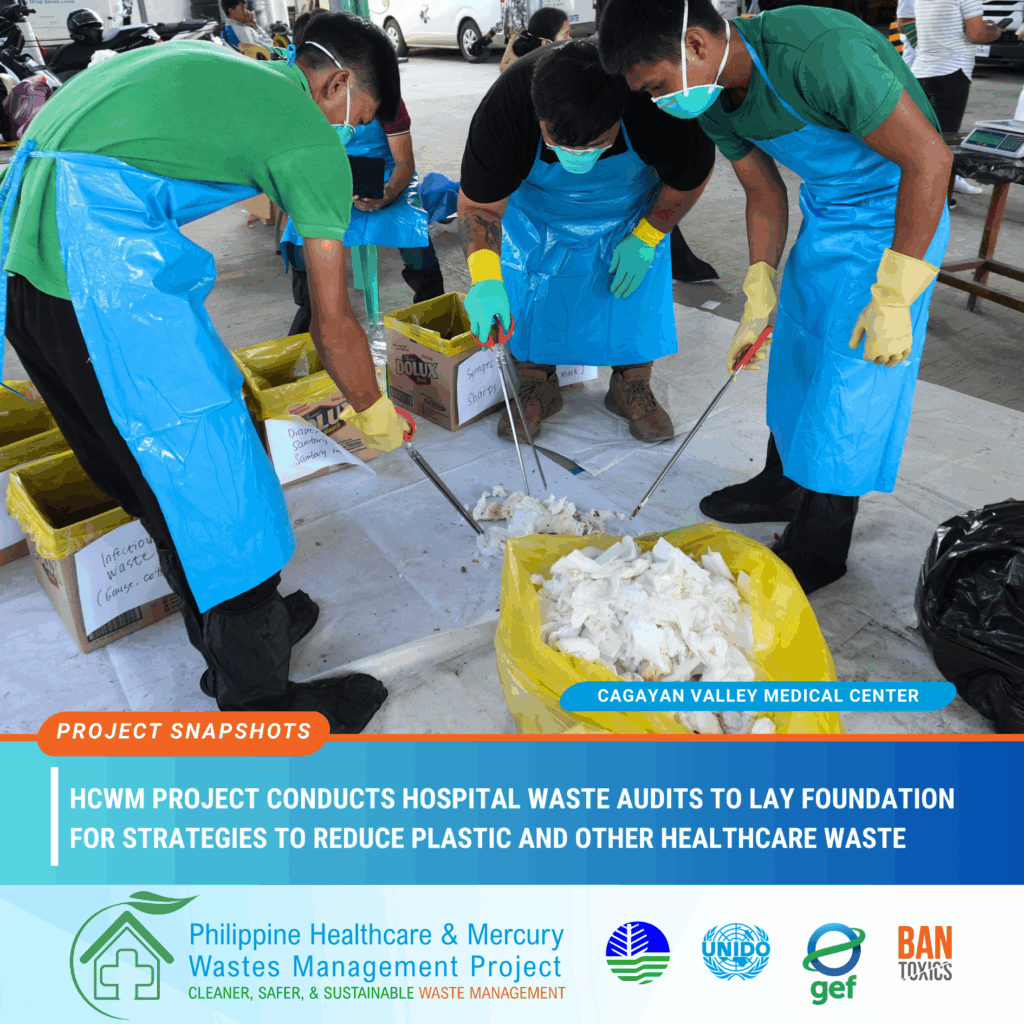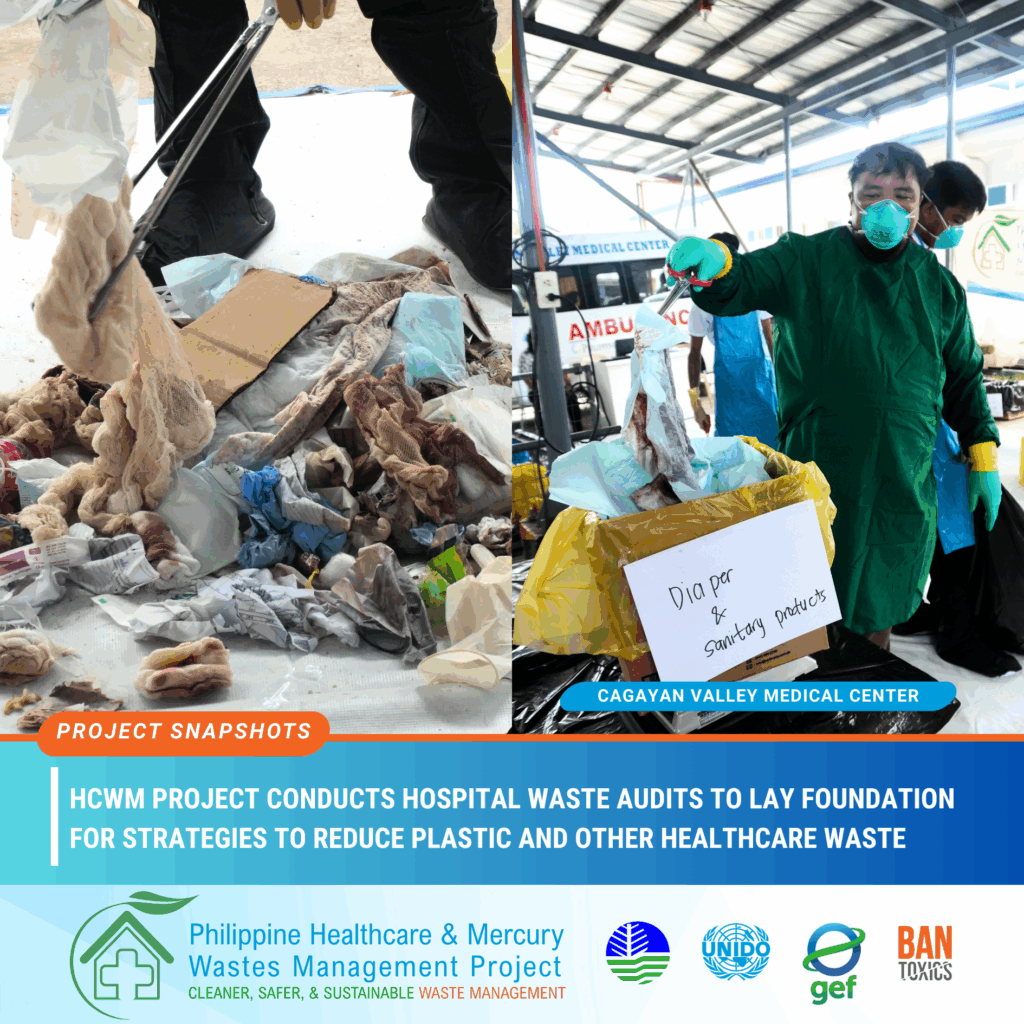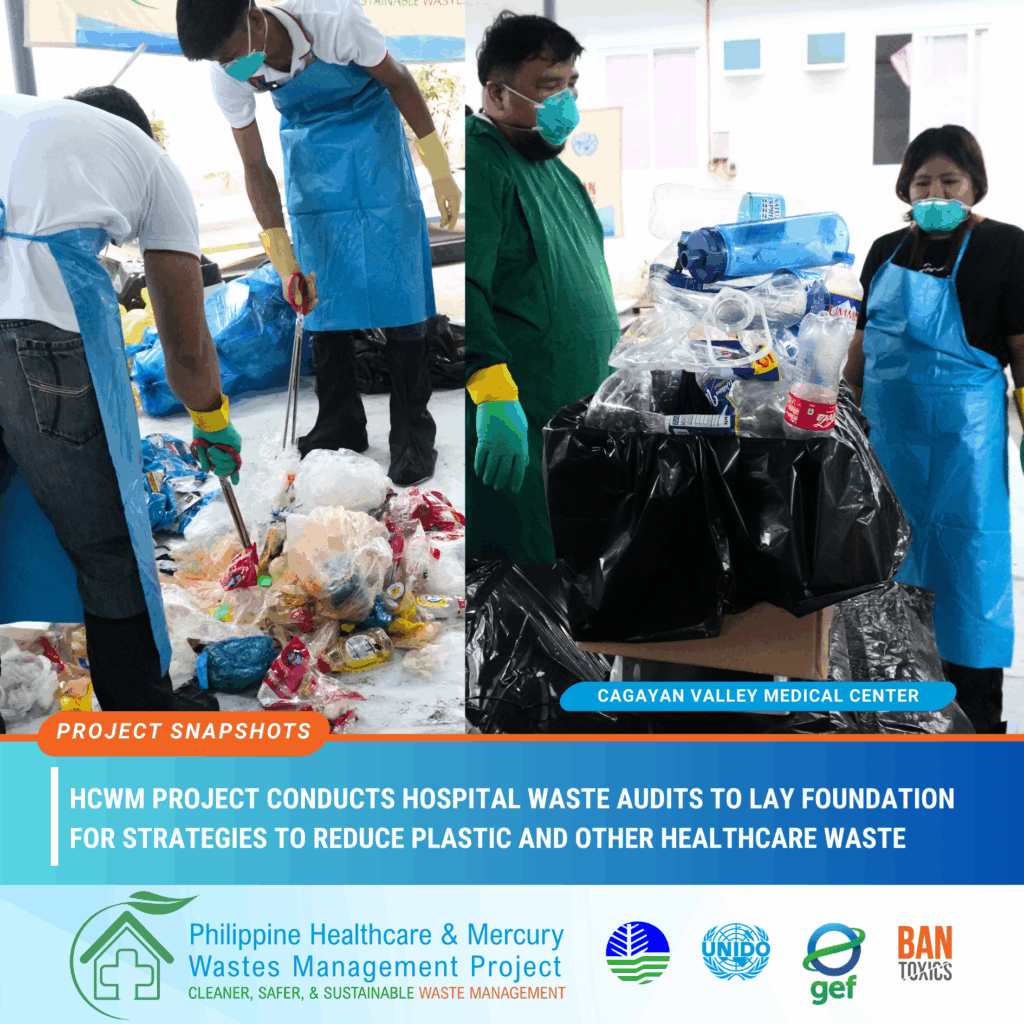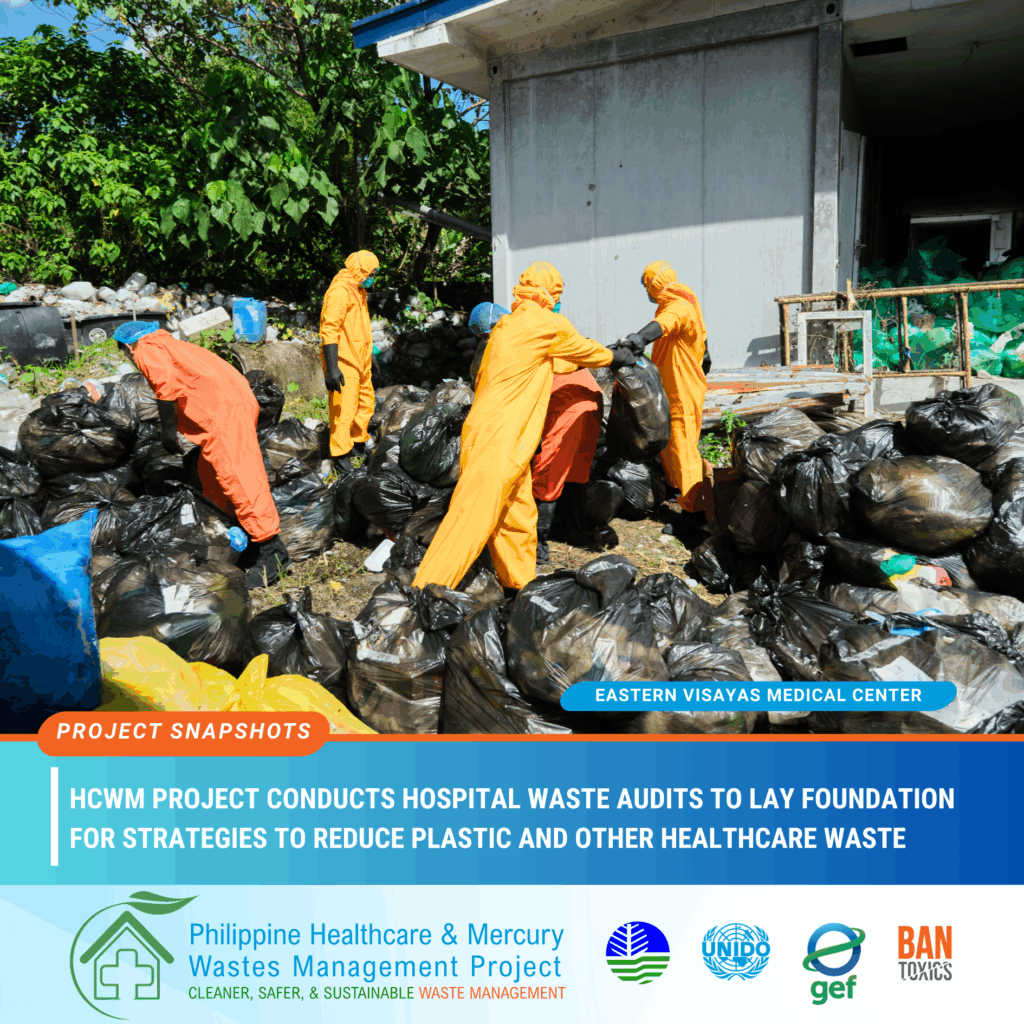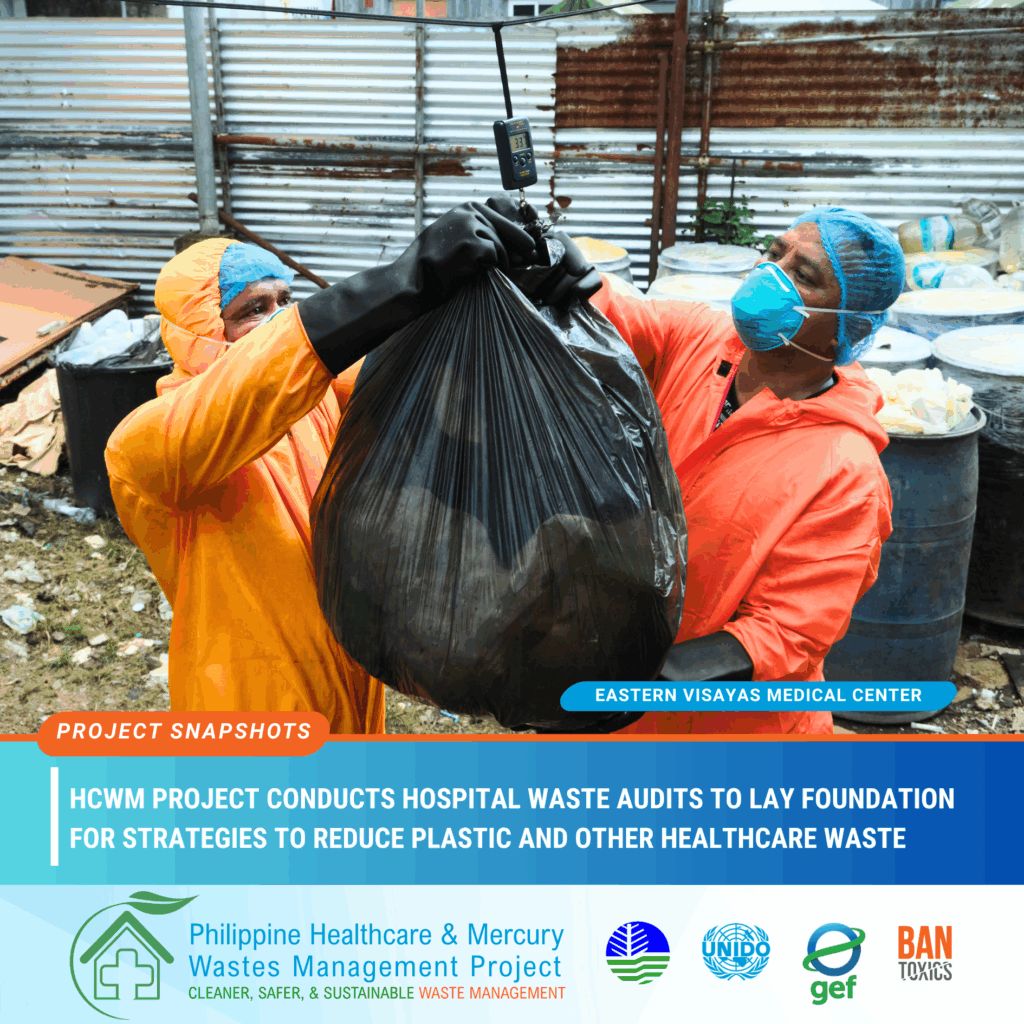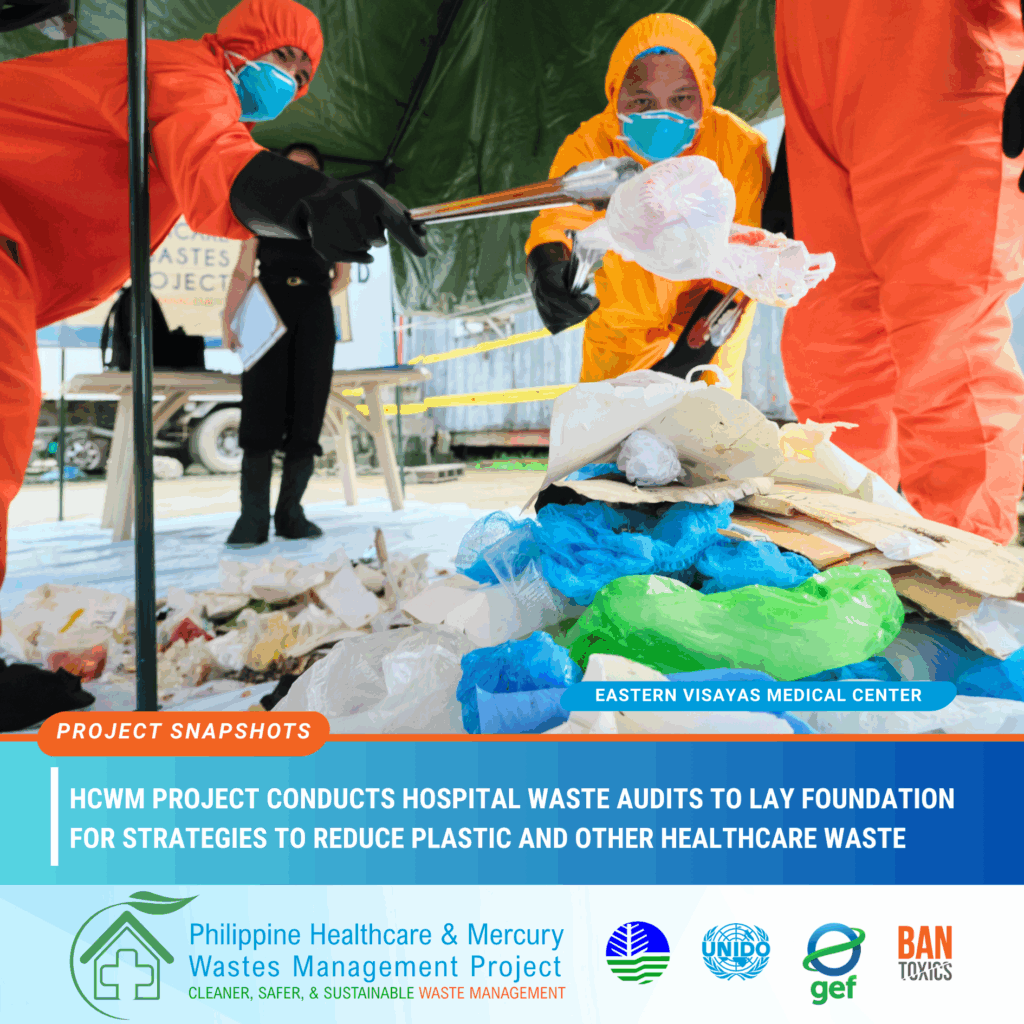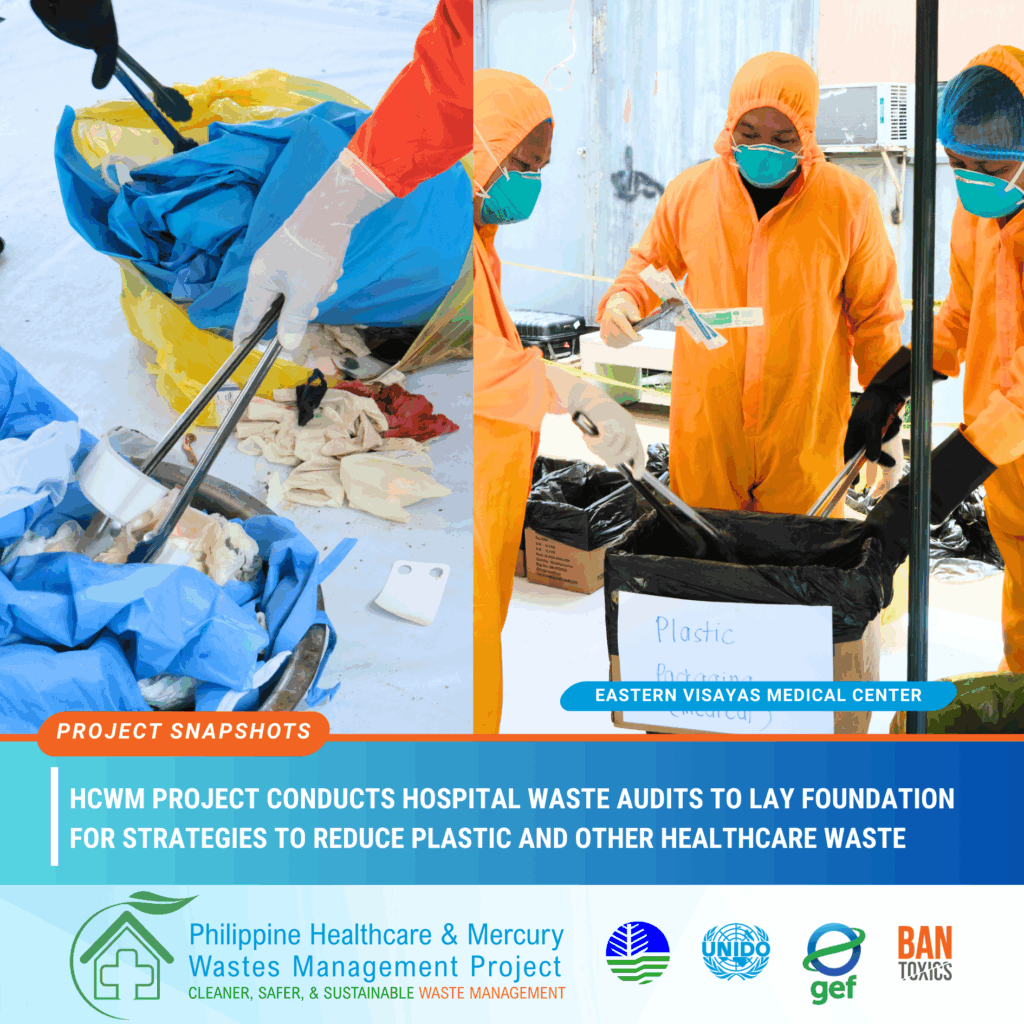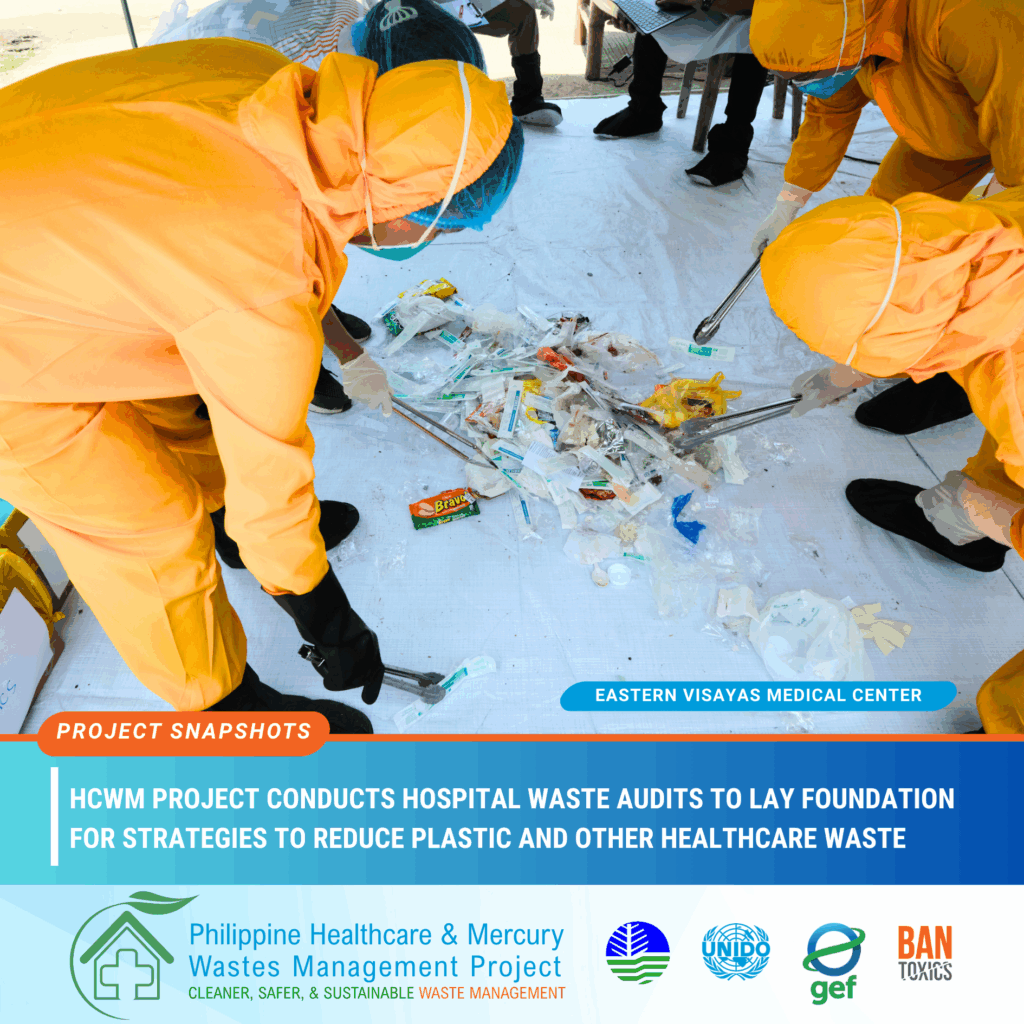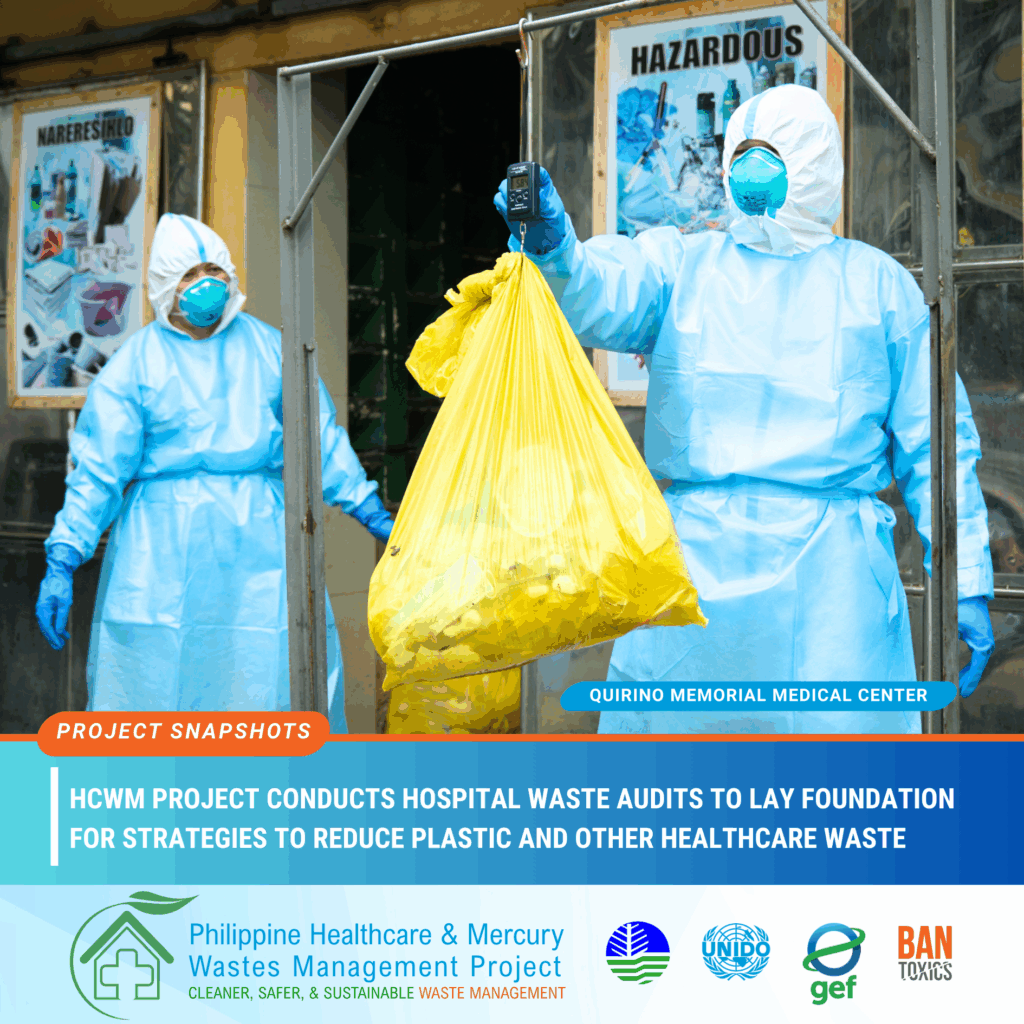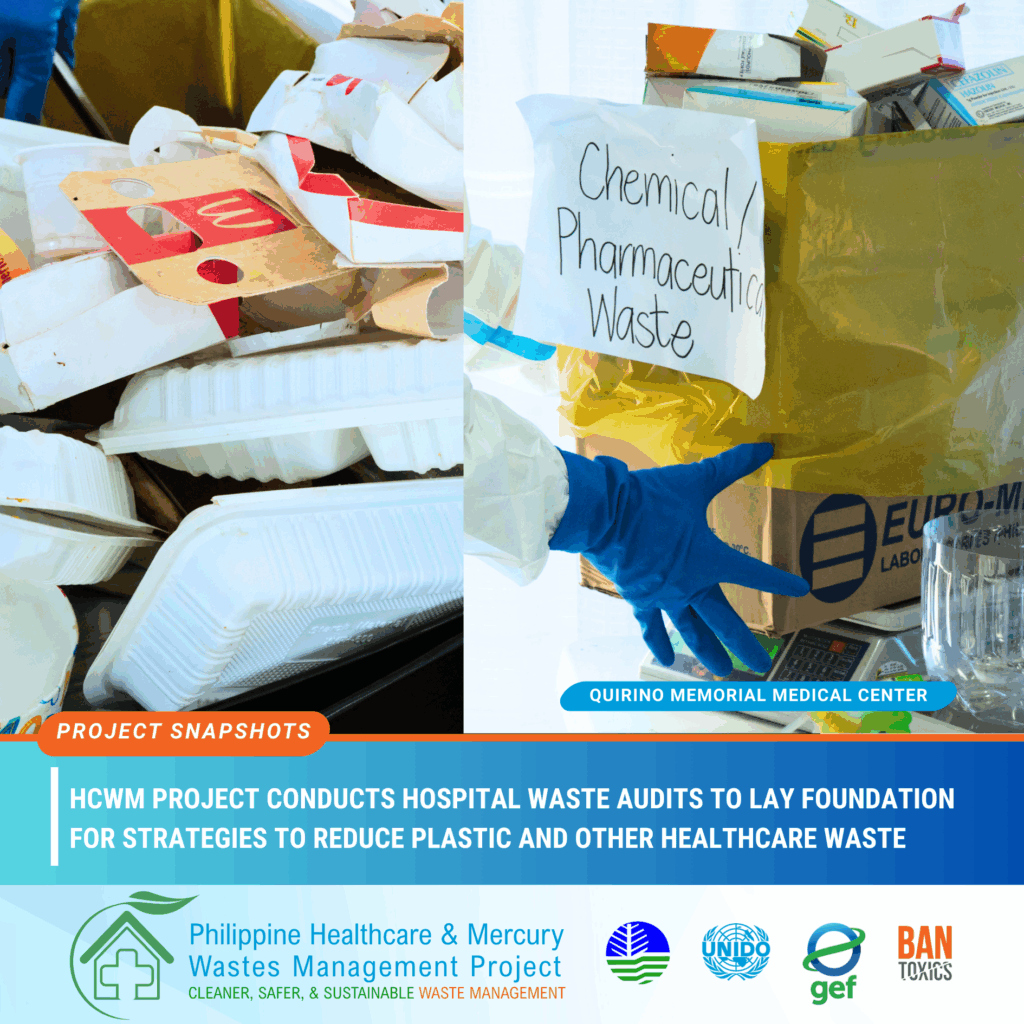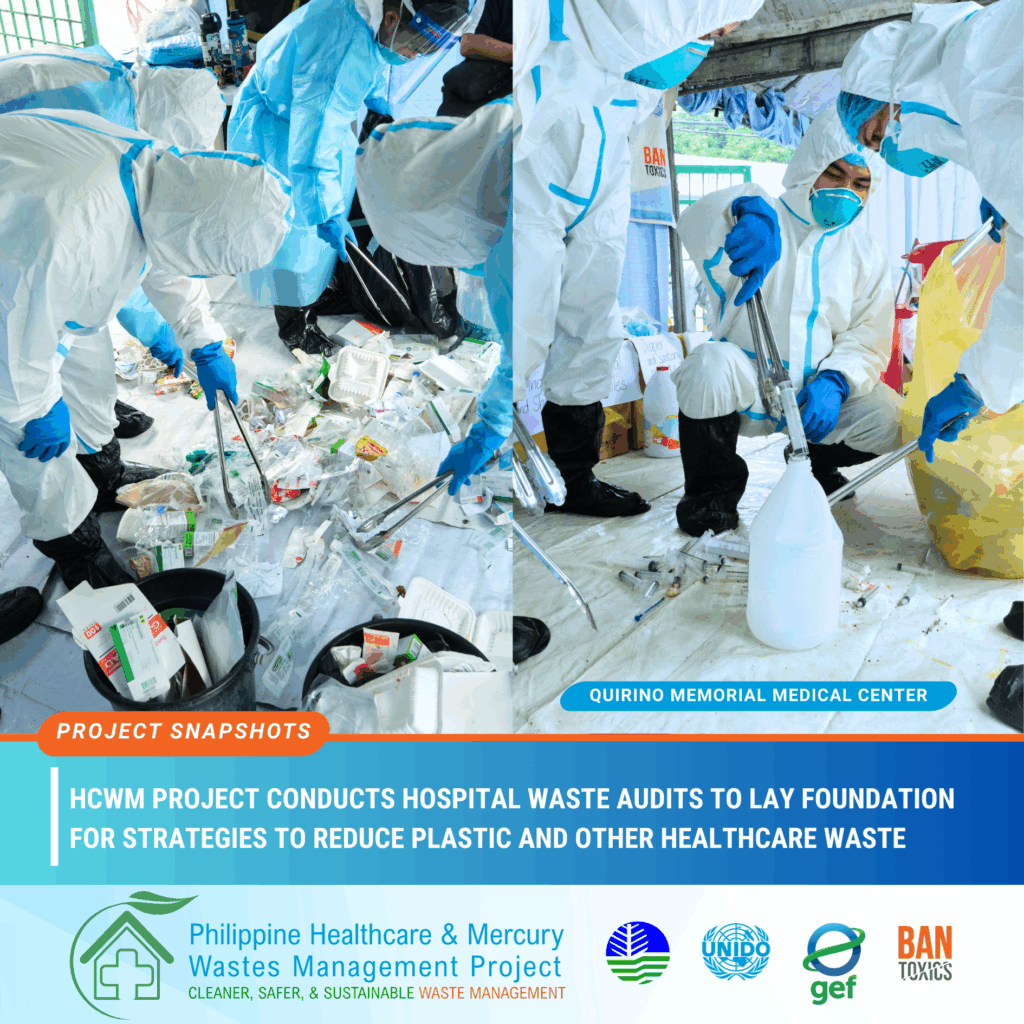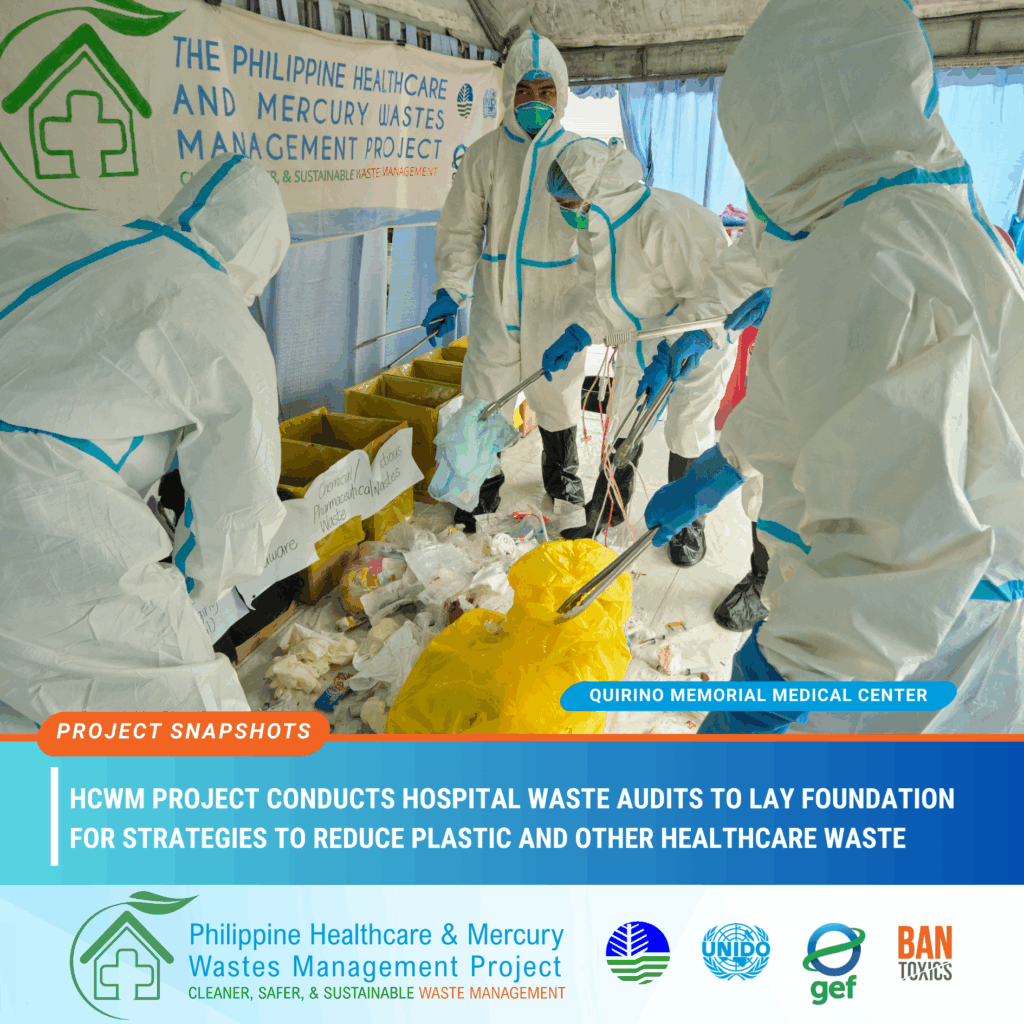
The Philippine Healthcare and Mercury Wastes Management Project (HCWM Project) recently concluded a series of waste audit activities in its three partner hospitals: Cagayan Valley Medical Center, Eastern Visayas Medical Center, and Quirino Memorial Medical Center. Conducted between July and early September, the audits were facilitated by the DENR-Environmental Management Bureau and BAN Toxics, and were carried out by the waste management personnel of the partner hospitals under the guidance of the project’s technical consultant, Healthcare Without Harm Southeast Asia (HCWH-SEA).
The waste audit forms part of the project’s effort to develop a standardized procedure for calculating hospital waste generation or waste inventory toolkit. This procedure will support hospitals in better characterizing the different types of healthcare waste and their sources, which in turn will guide the identification of appropriate interventions to reduce waste generation.
Initial observations from the audit revealed a significant volume of plastic waste, including single-use plastics, which make up a large portion of the daily healthcare waste generated by the partner hospitals. Reducing plastic waste is one of the project’s key interventions, as it also contributes to lowering the release of unintentionally produced persistent organic pollutants (uPOPs), a core objective of the project.
UPOPs, such as dioxins and furans, are highly toxic substances produced from the incomplete burning of organic waste in the presence of chlorine. They are unintentionally released into the environment as gases and residues, where they can persist for long periods and have the capacity to bioaccumulate and biomagnify in the food chain.
According to the World Health Organization, short-term exposure to high levels of dioxins may cause skin lesions such as chloracne, skin discoloration, and altered liver function. Long-term exposure has been linked to damage to the immune, nervous, endocrine, and reproductive systems.
Polyvinyl chloride (PVC)-based products—such as PPE, oxygen masks, gloves, plastic medical devices (e.g., sharps containers and syringes), single-use plastics, chlorinated waste, and infectious or biohazardous waste commonly found in hospitals—can release UPOPs when burned.
Another key intervention of the HCWM Project is to provide hospitals and treatment, storage, and disposal (TSD) facilities with access to non-burn technologies, such as autoclaves and microwaves, for treating healthcare waste.
By promoting waste reduction and introducing safer, non-burn alternatives, the HCWM Project reinforces its commitment to protecting both people’s health and the environment, while helping hospitals move closer to cleaner, safer, and more sustainable healthcare waste management systems.
—
𝘛𝘩𝘦 𝘗𝘩𝘪𝘭𝘪𝘱𝘱𝘪𝘯𝘦 𝘏𝘦𝘢𝘭𝘵𝘩𝘤𝘢𝘳𝘦 𝘢𝘯𝘥 𝘔𝘦𝘳𝘤𝘶𝘳𝘺 𝘞𝘢𝘴𝘵𝘦𝘴 𝘔𝘢𝘯𝘢𝘨𝘦𝘮𝘦𝘯𝘵 𝘗𝘳𝘰𝘫𝘦𝘤𝘵 𝘢𝘪𝘮𝘴 𝘵𝘰 𝘪𝘮𝘱𝘳𝘰𝘷𝘦 𝘩𝘦𝘢𝘭𝘵𝘩𝘤𝘢𝘳𝘦 𝘸𝘢𝘴𝘵𝘦 𝘮𝘢𝘯𝘢𝘨𝘦𝘮𝘦𝘯𝘵 𝘪𝘯 𝘵𝘩𝘦 𝘤𝘰𝘶𝘯𝘵𝘳𝘺, 𝘸𝘪𝘵𝘩 𝘢 𝘴𝘱𝘦𝘤𝘪𝘢𝘭 𝘧𝘰𝘤𝘶𝘴 𝘰𝘯 𝘳𝘦𝘥𝘶𝘤𝘪𝘯𝘨 𝘵𝘩𝘦 𝘳𝘦𝘭𝘦𝘢𝘴𝘦 𝘢𝘯𝘥 𝘦𝘮𝘪𝘴𝘴𝘪𝘰𝘯𝘴 𝘰𝘧 𝘩𝘢𝘻𝘢𝘳𝘥𝘰𝘶𝘴 𝘴𝘶𝘣𝘴𝘵𝘢𝘯𝘤𝘦𝘴 𝘧𝘳𝘰𝘮 𝘩𝘦𝘢𝘭𝘵𝘩𝘤𝘢𝘳𝘦 𝘸𝘢𝘴𝘵𝘦. 𝘐𝘮𝘱𝘭𝘦𝘮𝘦𝘯𝘵𝘦𝘥 𝘣𝘺 𝘵𝘩𝘦 𝘜𝘯𝘪𝘵𝘦𝘥 𝘕𝘢𝘵𝘪𝘰𝘯𝘴 𝘐𝘯𝘥𝘶𝘴𝘵𝘳𝘪𝘢𝘭 𝘋𝘦𝘷𝘦𝘭𝘰𝘱𝘮𝘦𝘯𝘵 𝘖𝘳𝘨𝘢𝘯𝘪𝘻𝘢𝘵𝘪𝘰𝘯 (𝘜𝘕𝘐𝘋𝘖) 𝘢𝘯𝘥 𝘵𝘩𝘦 𝘋𝘌𝘕𝘙-𝘌𝘔𝘉, 𝘵𝘩𝘦 𝘱𝘳𝘰𝘫𝘦𝘤𝘵 𝘳𝘦𝘤𝘦𝘪𝘷𝘦𝘴 𝘧𝘶𝘯𝘥𝘪𝘯𝘨 𝘴𝘶𝘱𝘱𝘰𝘳𝘵 𝘧𝘳𝘰𝘮 𝘵𝘩𝘦 𝘎𝘭𝘰𝘣𝘢𝘭 𝘌𝘯𝘷𝘪𝘳𝘰𝘯𝘮𝘦𝘯𝘵 𝘍𝘢𝘤𝘪𝘭𝘪𝘵𝘺 (𝘎𝘌𝘍), 𝘸𝘪𝘵𝘩 𝘉𝘈𝘕 𝘛𝘰𝘹𝘪𝘤𝘴 𝘴𝘦𝘳𝘷𝘪𝘯𝘨 𝘢𝘴 𝘵𝘩𝘦 𝘦𝘹𝘦𝘤𝘶𝘵𝘪𝘯𝘨 𝘱𝘢𝘳𝘵𝘯𝘦𝘳.
#CleanerSaferSustainable #WasteFree #ToxicsFree #HealthcareWasteSolutions #HCWMProject