
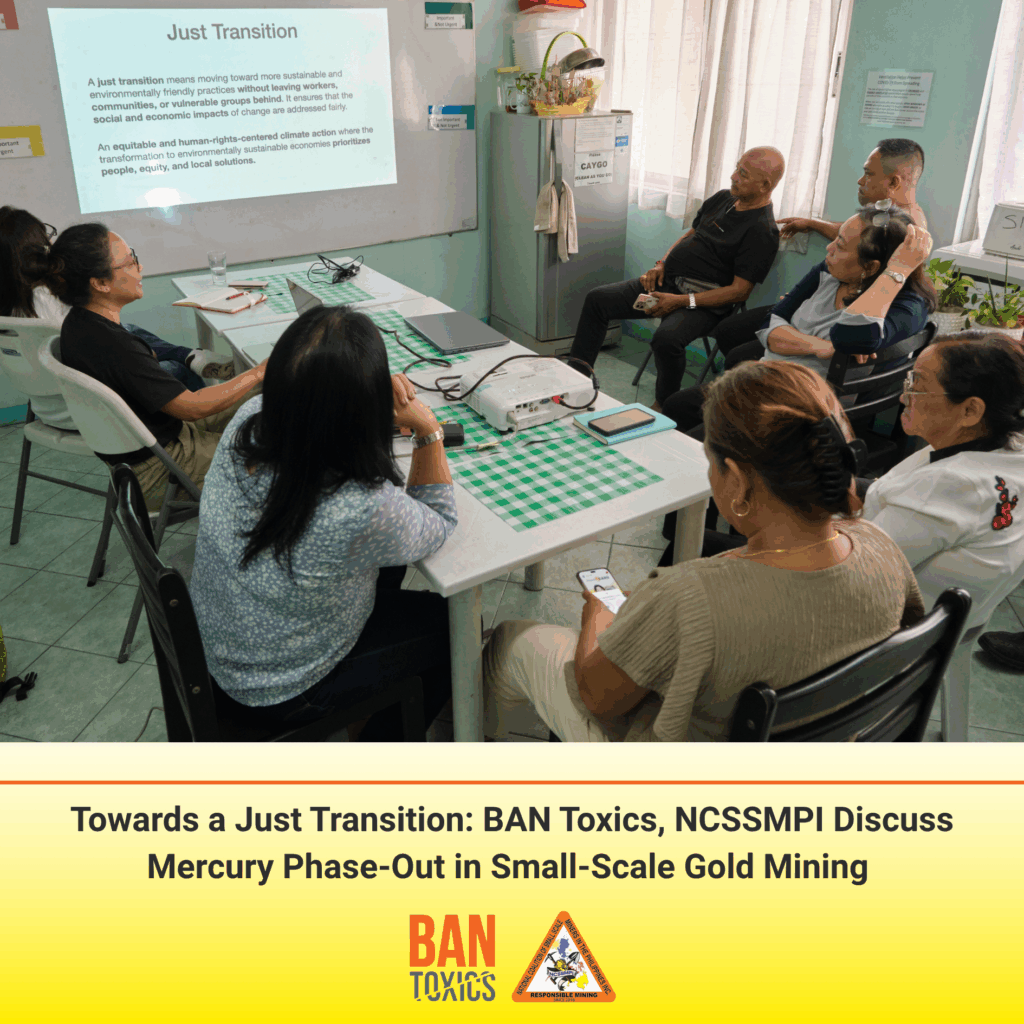
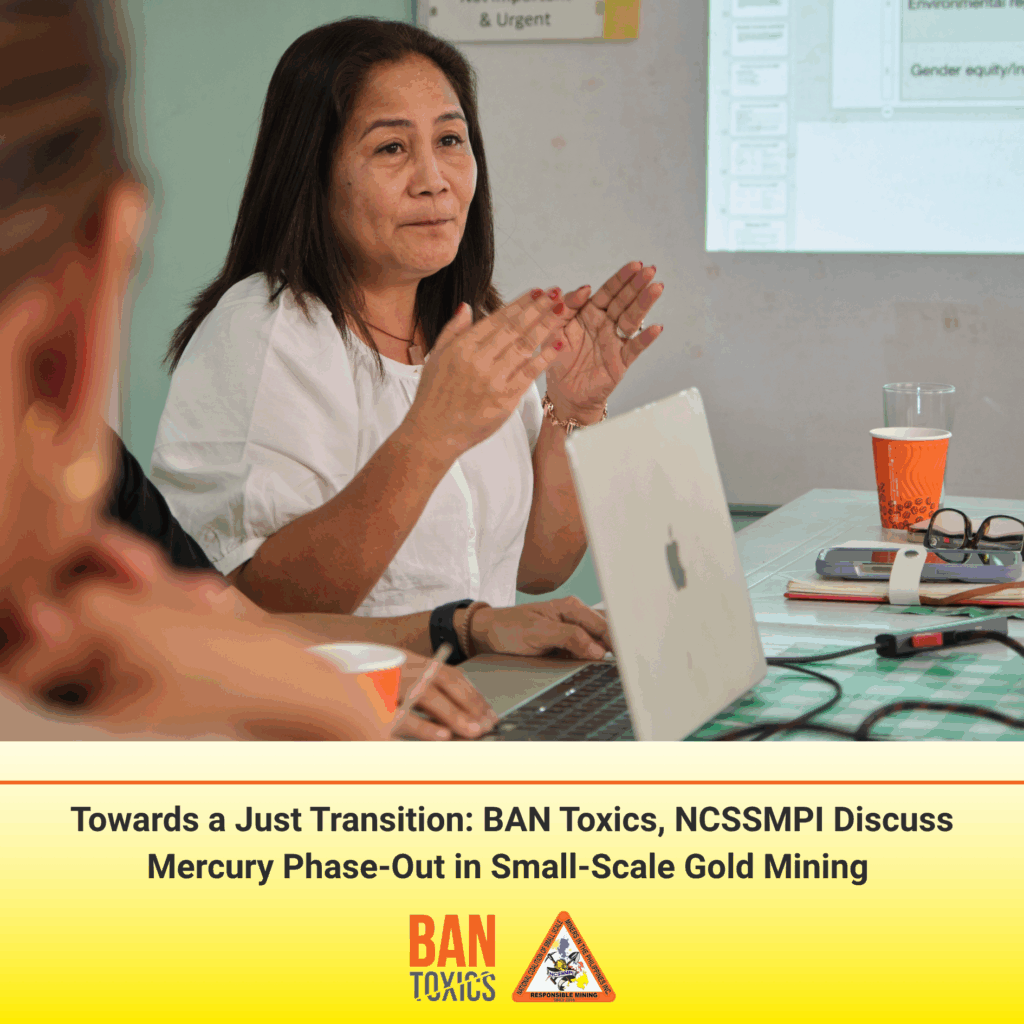
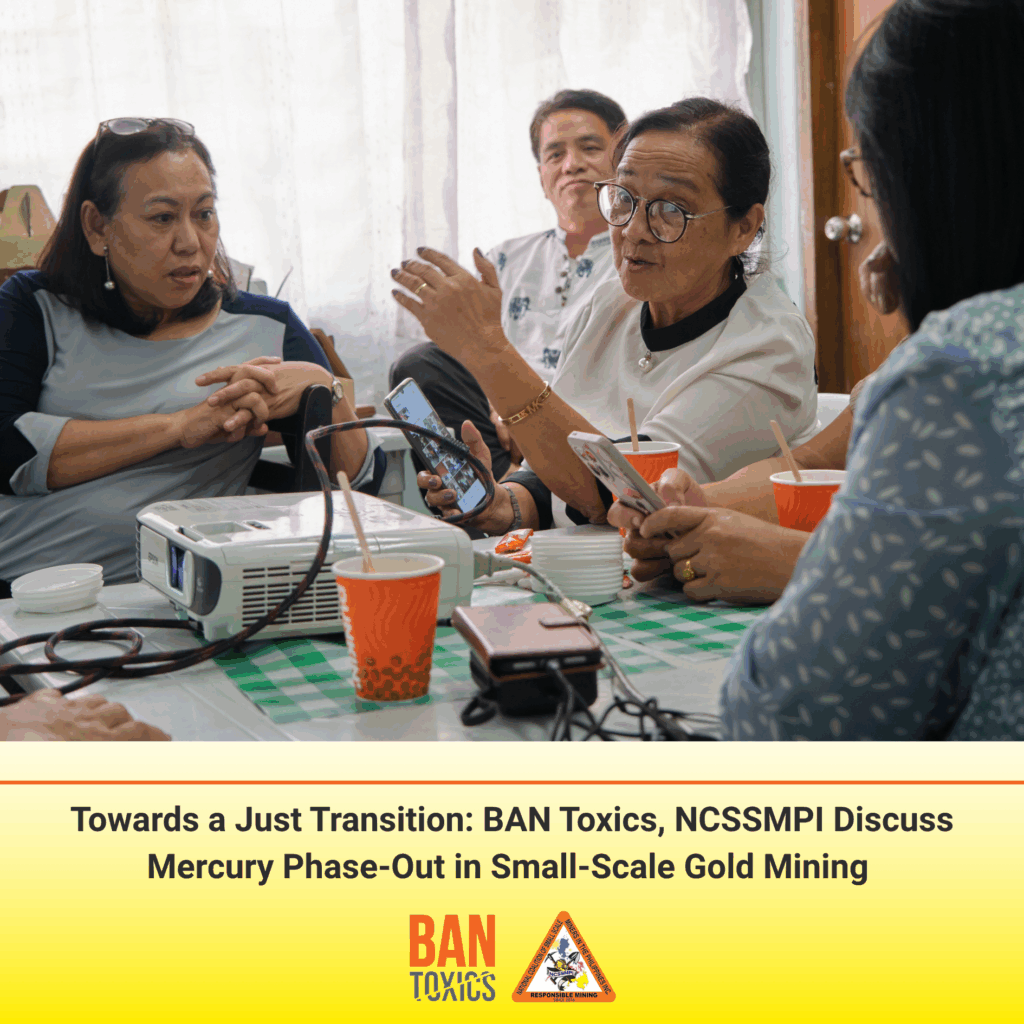
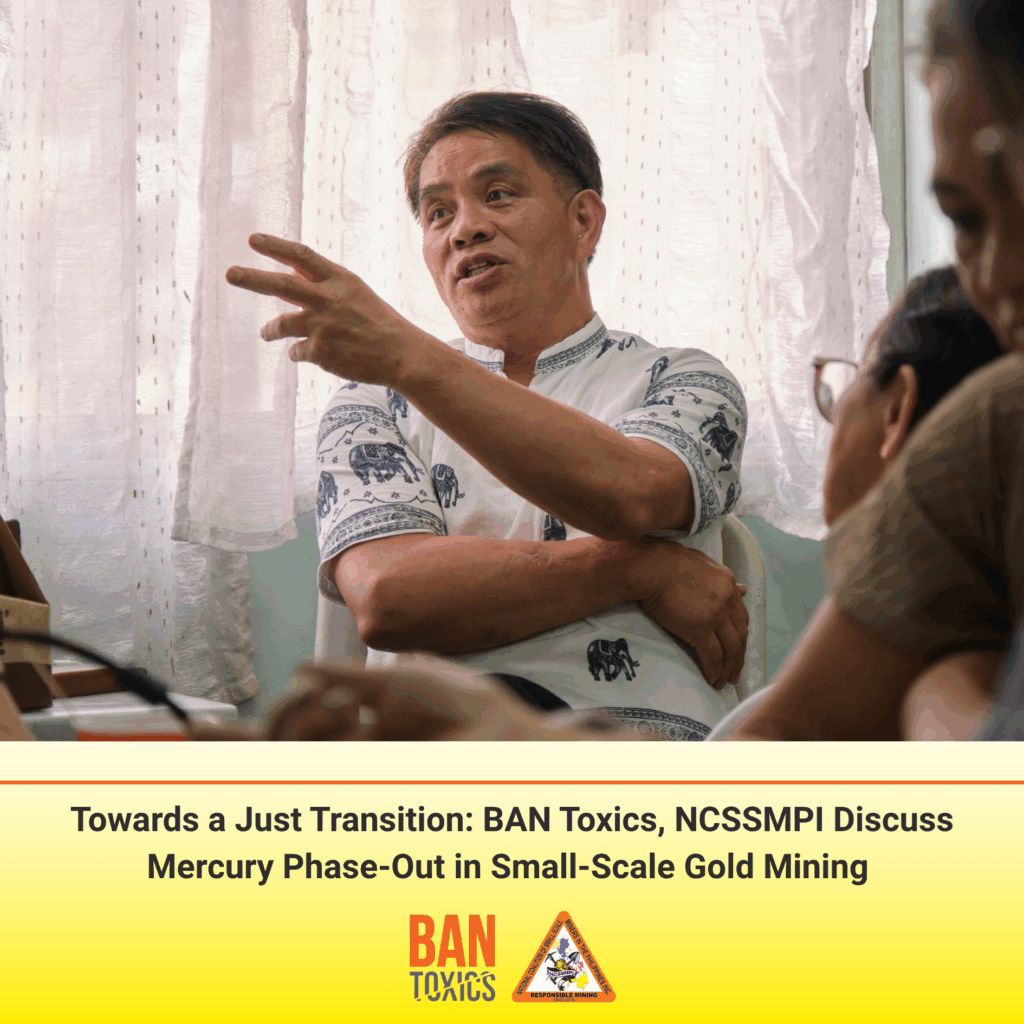
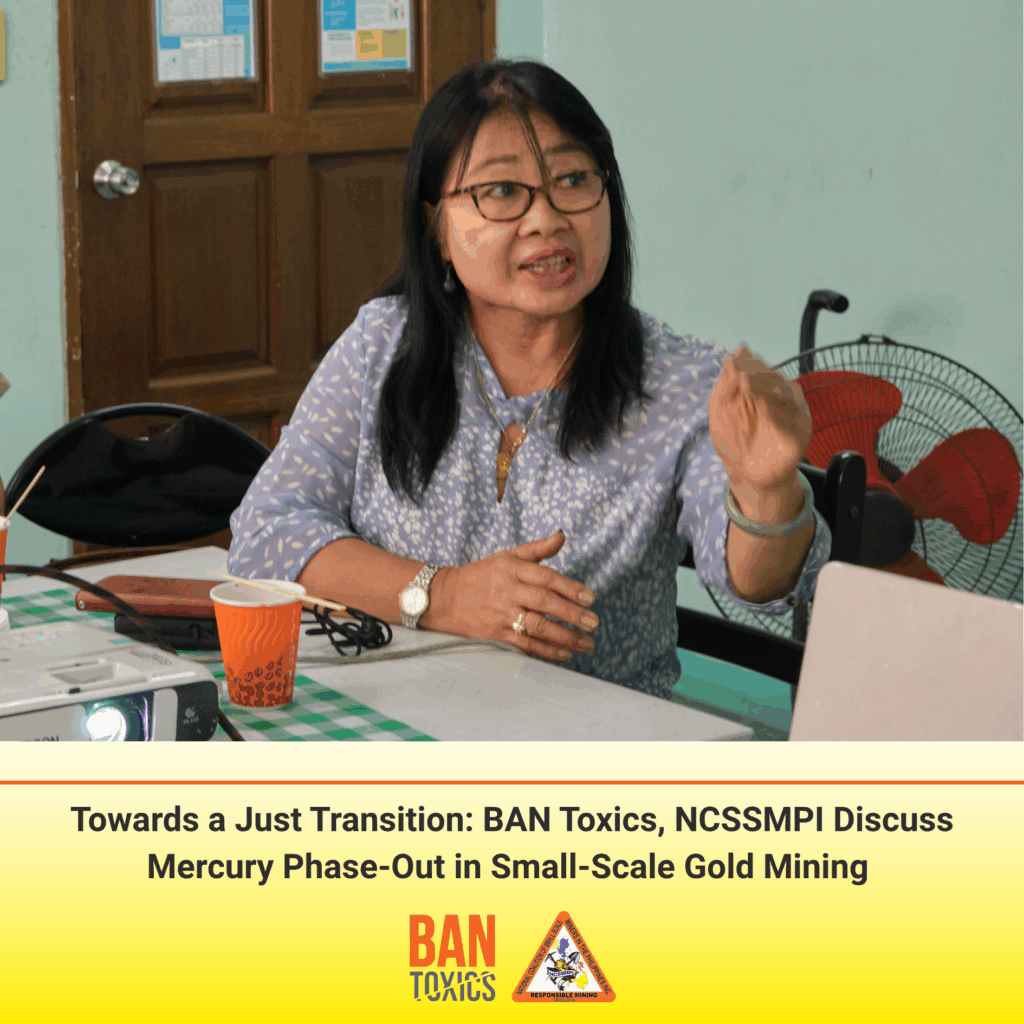
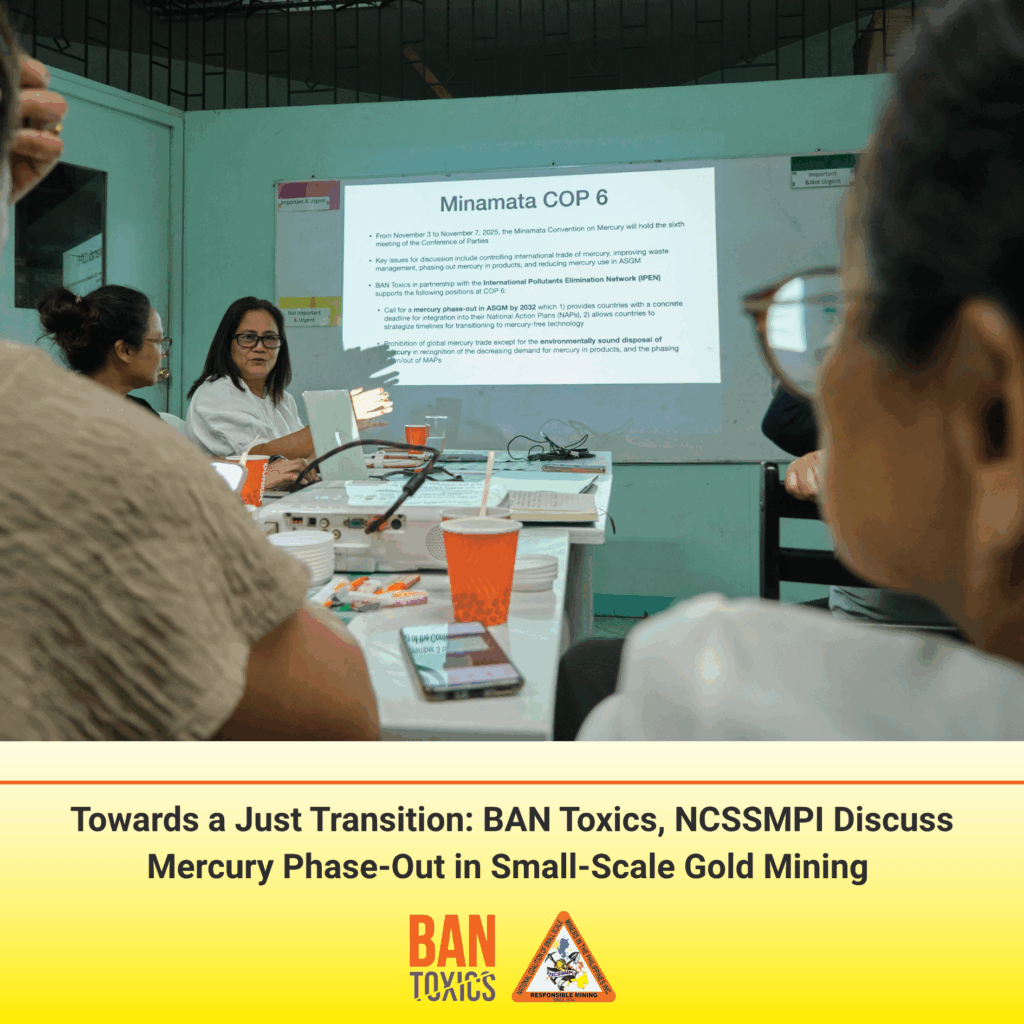
Environmental NGO BAN Toxics recently held a consultation with officers of the National Coalition of Small-Scale Miners of the Philippines, Inc. (NCSSMPI) on the proposal to the Minamata Convention to set a phase-out date for the use of mercury in the artisanal small-scale gold mining (ASGM) sector.
Currently, the Minamata Convention, a global treaty to protect human health and the environment from the adverse effects of mercury, does not yet establish such a deadline for ASGM. At the upcoming 6th Conference of the Parties (COP-6), taking place on November 3–7, 2025, civil society organizations, including BAN Toxics and IPEN, will push for the adoption of a clear phase-out date.
The consultation highlighted the need to ensure that the phase-out of mercury in ASGM is guided by a rights-based, just transition framework, recognizing that mercury use in the sector is largely driven by poverty, limited capacities, and lack of access to safer technologies.
A rights-based, just transition framework is essential to prevent the displacement of miners, dispossession, criminalization, human rights abuses, extortion, and other adverse economic impacts on vulnerable groups in the sector. It should also provide for meaningful local and community participation, draw on local and indigenous knowledge in resource management and sector development, and reject one-size-fits-all approaches. Equally important is the promotion and support of affordable and accessible mercury-free technologies and practices, particularly those suited to the most impoverished segments of the ASGM sector.
The NCSSMPI officers recognized the importance of setting a phase-out date for mercury use in ASGM, but stressed that this must go hand in hand with tackling the global mercury trade, which is the source of mercury in the country. They also emphasized the need for strong government support through capacity-building, expanded access to mercury-free technologies and practices, livelihood and job creation, and the amendment of Republic Act 7076 or the People’s Small-Scale Mining Act, which has hindered the formalization of small-scale miners.
According to BAN Toxics, there are about 500,000 small-scale gold miners across more than 30 provinces, with millions more indirectly depending on the industry for their livelihoods. The sector accounts for nearly 75 percent of the country’s total gold production. With adequate support and proper recognition, small-scale miners have the potential to help build a stronger and more self-reliant national industry.
#𝘔𝘢𝘬𝘦𝘔𝘦𝘳𝘤𝘶𝘳𝘺𝘏𝘪𝘴𝘵𝘰𝘳𝘺 #𝘔𝘦𝘳𝘤𝘶𝘳𝘺𝘍𝘳𝘦𝘦𝘔𝘪𝘯𝘪𝘯𝘨 #𝘔𝘦𝘳𝘤𝘶𝘳𝘺𝘍𝘳𝘦𝘦𝘈𝘚𝘎𝘔 #𝘑𝘶𝘴𝘵𝘛𝘳𝘢𝘯𝘴𝘪𝘵𝘪𝘰𝘯 #𝘙𝘪𝘨𝘩𝘵𝘴𝘉𝘢𝘴𝘦𝘥𝘈𝘱𝘱𝘳𝘰𝘢𝘤𝘩