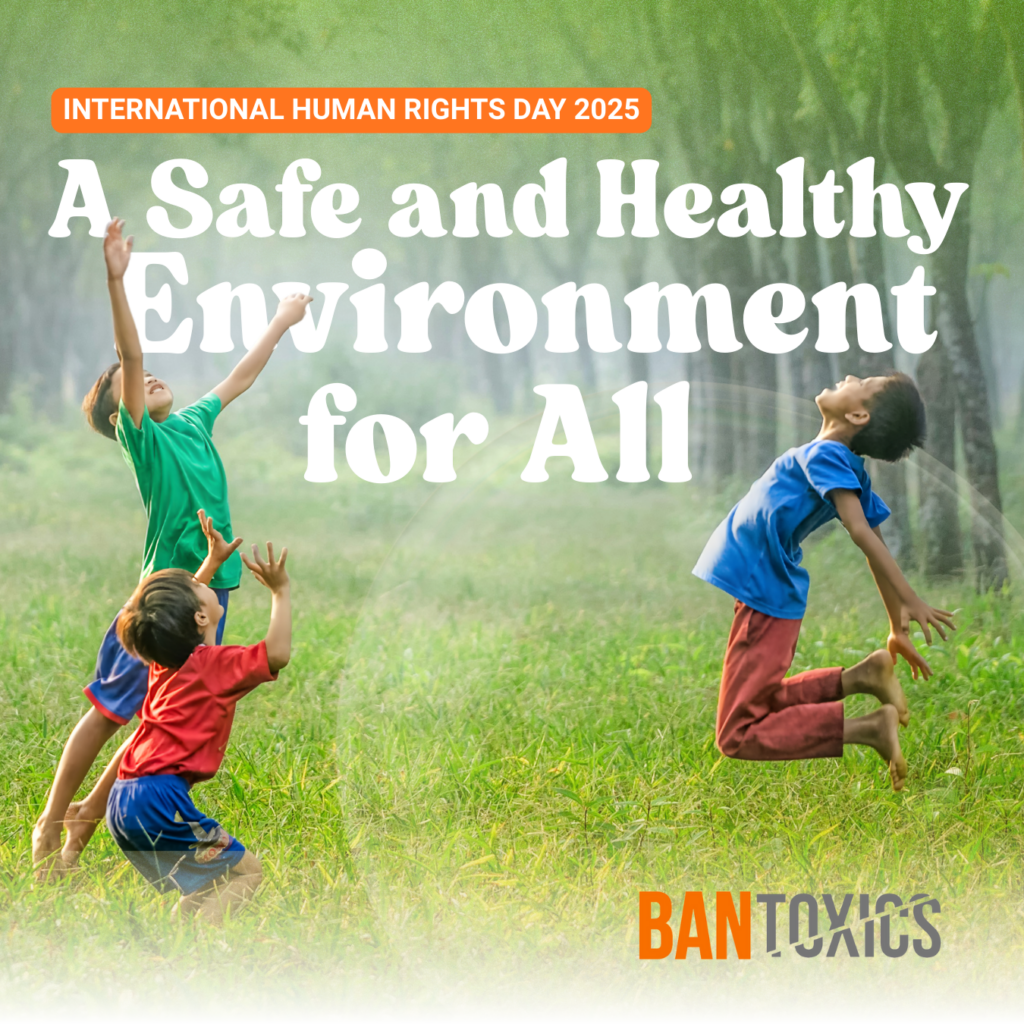
As the world commemorates International Human Rights Day, BAN Toxics underscores its advocacy for ensuring a safe and healthy environment, one free from harmful exposure to toxic chemicals and waste, as a fundamental human right for all.
While chemicals in products and industrial processes remain necessary in our ever-developing world, they continue to pose risks to human health and the environment. Everyday items still contain hazardous substances such as lead, mercury, cadmium, arsenic, and chromium. Many chemicals commonly found in plastics, including phthalates, bisphenols, and PFAS, are already scientifically recognized as harmful, yet their use remains widespread, and manufacturers continue introducing new additives whose long-term impacts remain poorly studied.
In addition to chemicals in products, certain industrial and waste-related processes continue to release harmful substances. Unintentionally produced persistent organic pollutants (UPOPs), such as dioxins and furans, arise from uncontrolled waste burning, metal smelting, and waste-to-energy incineration. Intentionally produced POPs, including some pesticides and industrial chemicals, are manufactured for specific applications, but they remain persistent and toxic.
The global waste crisis, with plastics at the center, is fueling environmental and health risks worldwide, as vast amounts of persistent and hazardous materials accumulate in landfills, waterways, and ecosystems. The problem is worsened by the dumping of waste, including e-waste, from countries in the Global North to those in the Global South, disproportionately affecting nations such as the Philippines.
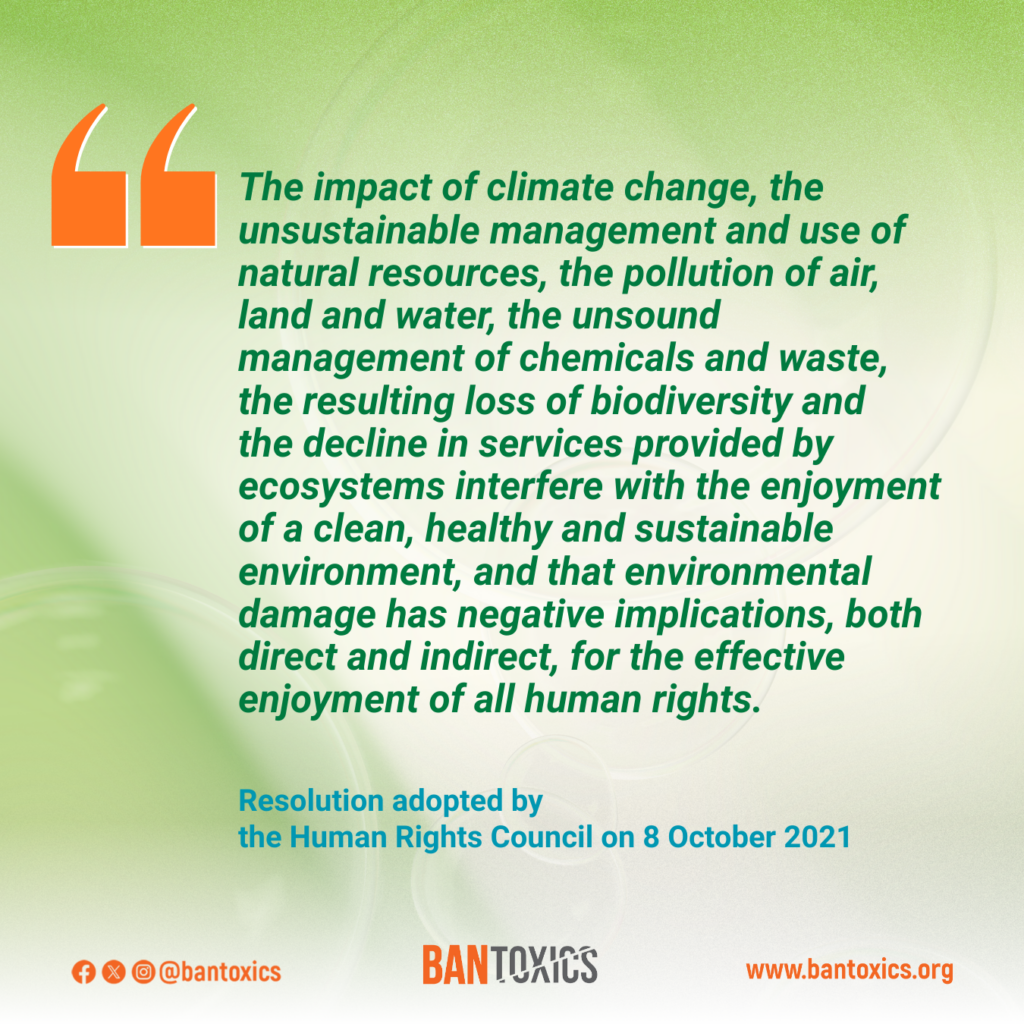
It is the duty of states to protect human rights and this includes, the enjoyment of a safe, clean, healthy and sustainable environment. In a 2021 resolution adopted by the Human Rights Council, it states:
“..the impact of climate change, the unsustainable management and use of natural resources, the pollution of air, land and water, the unsound management of chemicals and waste, the resulting loss of biodiversity and the decline in services provided by ecosystems interfere with the enjoyment of a clean, healthy and sustainable environment, and that environmental damage has negative implications, both direct and indirect, for the effective enjoyment of all human rights,”
This Human Rights Day, BAN Toxics renews its steadfast commitment to a toxics-free, waste-free, and environmentally just future for all. We will continue to collaborate with communities, civil society groups, the private sector, and government agencies in promoting the sound management of chemicals and wastes, and in enabling a safe and healthy environment for everyone.
#ToxicsFreeWasteFreeFutureforAll #environmentaljustice #HumanRightsDay2025