BALITANG TOKSIK! | 13 July 2026
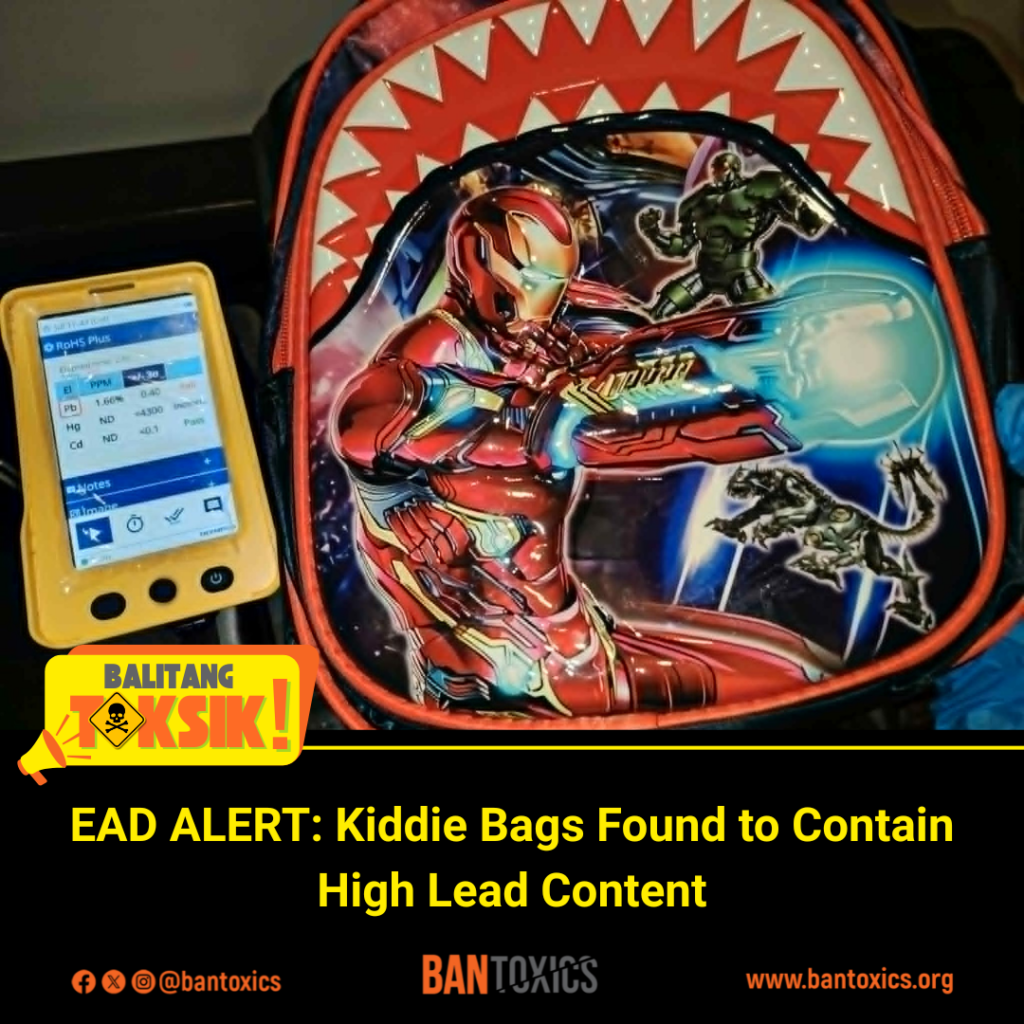
Toxics watchdog BAN Toxics urges the Food and Drug Administration (FDA) and the Department of Trade and Industry (DTI) to conduct post-market surveillance to ensure the safety of school supplies, including kiddie bags, as some items on store shelves may contain hazardous substances and do not conform to product standards and regulations.
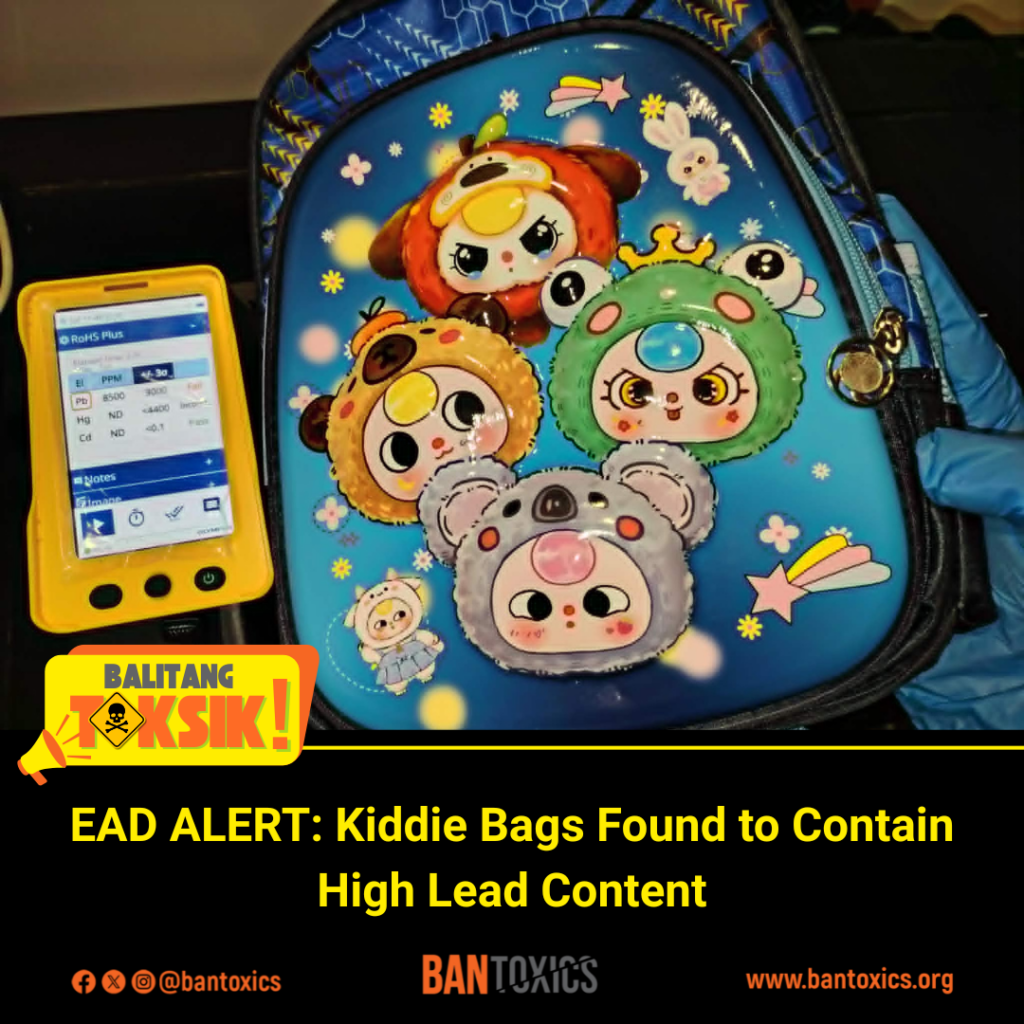
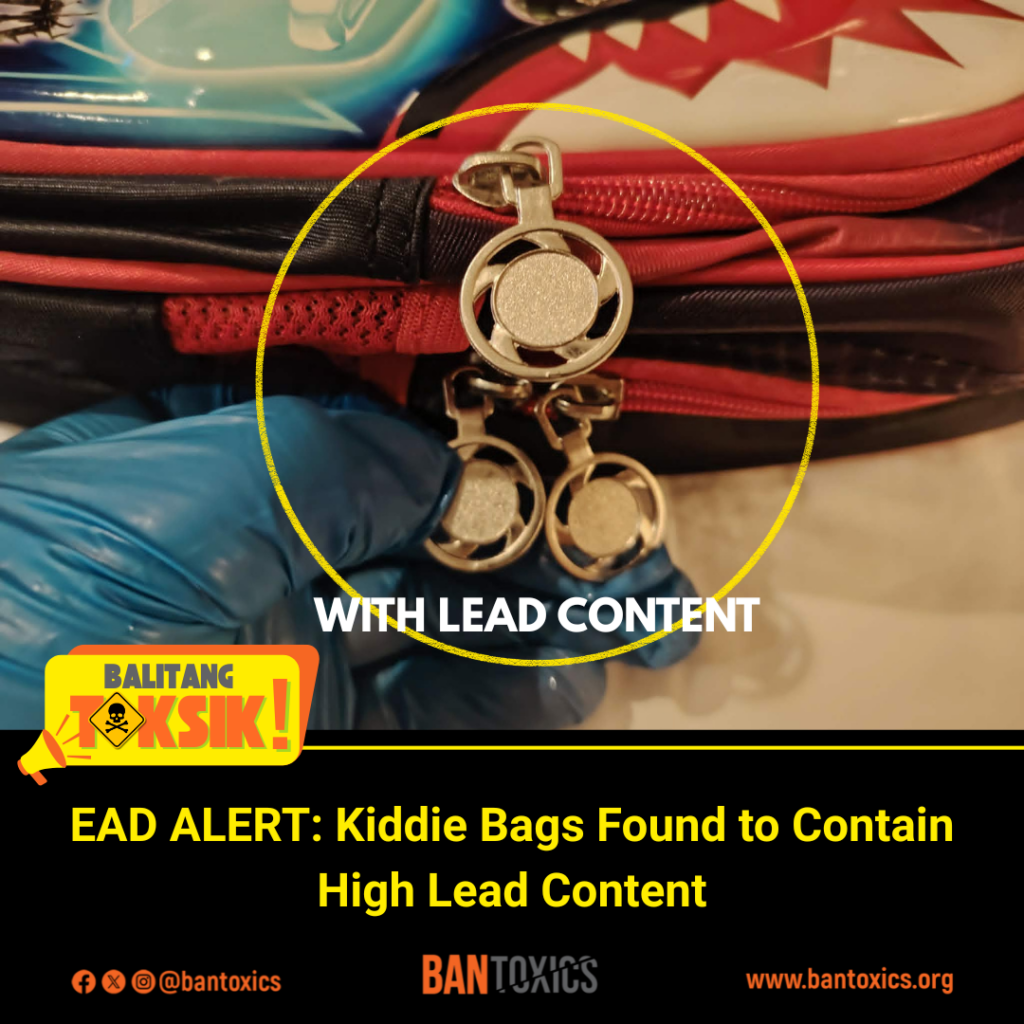
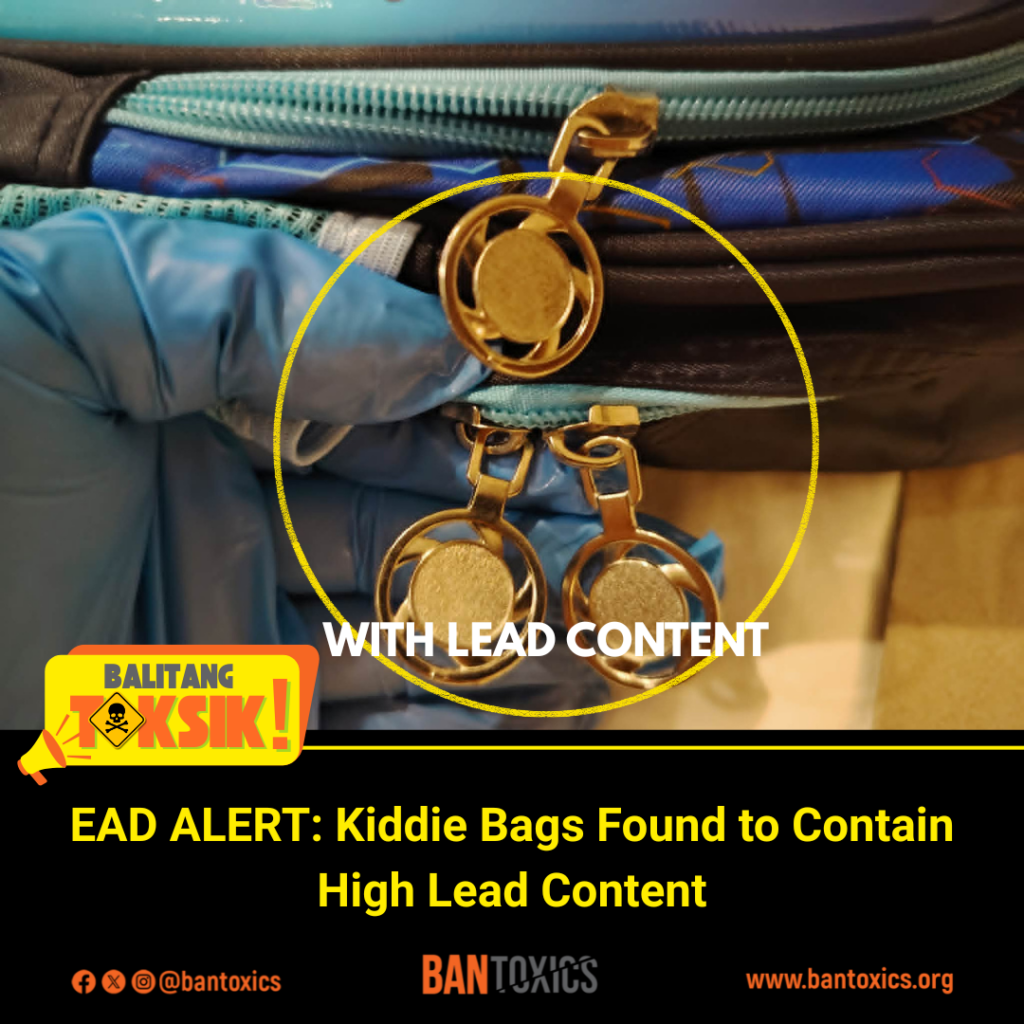
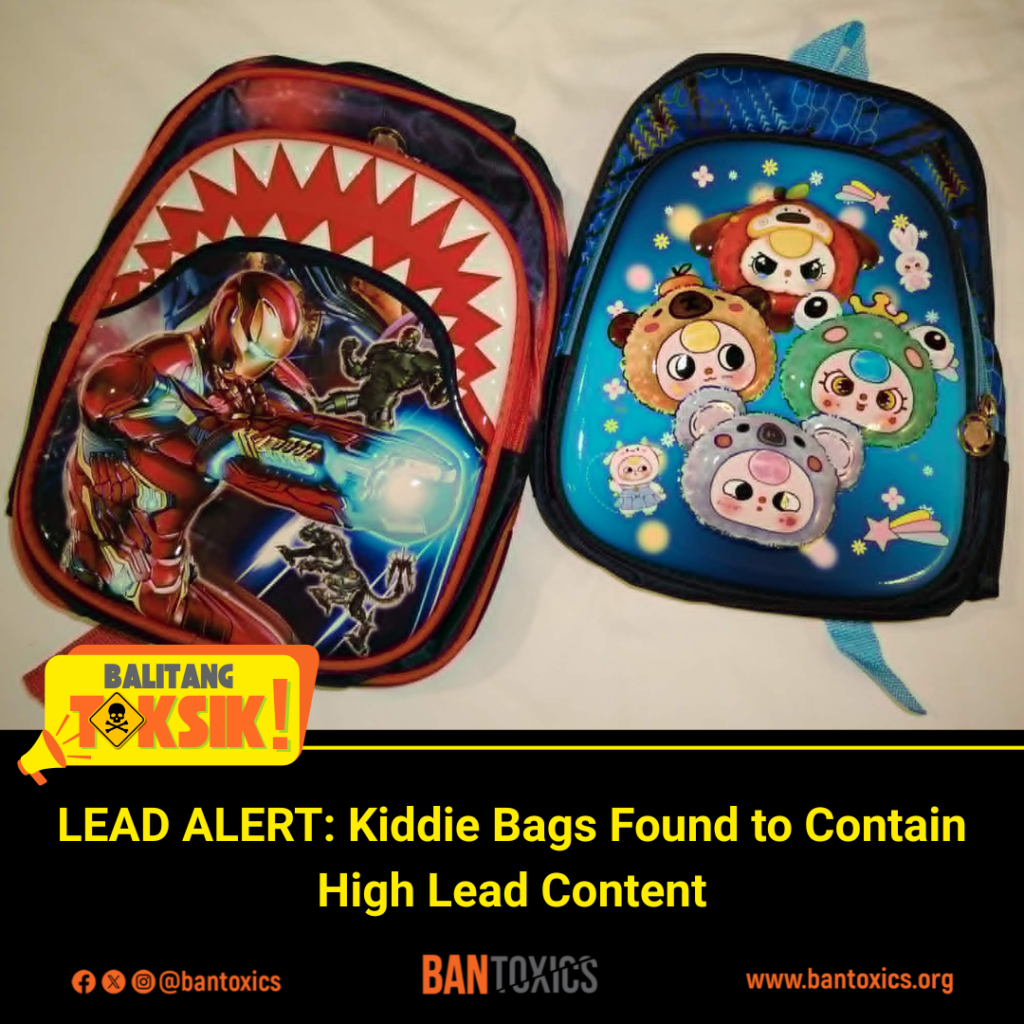
The group conducted test buys of kiddie backpacks from a well-known department store in Tacloban City, priced between P289 and P325. Using a Vanta C Series HH XRF Analyzer, the samples were screened and found to contain alarming levels of lead, ranging from 8,500 parts per million (ppm) to as high as 16,600 ppm. The highest lead concentrations were detected in the zippers of the kiddie backpacks.
Additionally, the school supplies lacked complete product information and warning labels necessary to protect consumer health and safety.
“The presence of hazardous chemicals such as lead in school supplies poses a danger to children’s health. The government’s regulatory efforts to crack down on harmful substances in children’s products should go beyond the opening of classes, as these products remain widely available,” said Thony Dizon, Advocacy and Campaign Officer of BAN Toxics.
“We further urge our regulators to ensure that school supplies offered for sale in the market comply with safety standards and to hold accountable stores that violate product standards and regulations to safeguard children’s health from exposure to toxic chemicals.”
Lead is prohibited in the manufacture of school supplies under DENR Administrative Order No. 2013-24, or the Chemical Control Order for Lead and Lead Compounds. The Order also prohibits the use of paints containing more than 90 parts per million (ppm) of lead in the manufacture of toys and a wide range of children’s products after December 31, 2016.
According to the World Health Organization, lead is a well-recognized toxicant with wide-ranging health impacts, affecting the neurological, cardiovascular, gastrointestinal, and hematological systems. Young children are particularly vulnerable because they are more likely to be exposed to lead than adults, and even low levels can harm the developing brain, potentially reducing intellectual ability.
To protect children from exposure to toxic chemicals in school supplies, BAN Toxics proposes the following recommendations:
For the national government to enact legislation that prohibits the use of hazardous chemicals in children’s products, such as school supplies, to safeguard children’s right to safe and toxic-free products.
For regulatory agencies and local government officials to establish consumer action centers for immediate product verification, consumer-related concerns and complaints in public markets and malls, and proactively conduct joint post-market surveillance and inspections for product safety, quality, and standards.
For manufacturers to comply with existing regulations in the country, ensure product certification and information transparency on the use of toxic chemicals, and consider transitioning to non-toxic ingredients or materials in the production of children’s products.
For sellers to only offer registered and notified school supplies for sale, ensuring compliance with product safety and labeling requirements and making safe and non-toxic school supplies available to consumers.
For consumers to always check and read labels before purchasing, seek product information and FDA certification, avoid colorful fabrics that may contain toxic lead, avoid plastic PVC school supplies that may contain phthalates, and report any school supplies that do not meet product safety standards to regulatory agencies.
This advocacy effort is part of the group’s Toxic-Free and Waste-Free School Program (TFSP), which encourages educational institutions to adopt sound chemical and waste management practices in their operations. This initiative aims to protect students and faculty members from the harmful effects of toxic chemicals and hazardous wastes. #