
An Open Letter on the Recent Tragedy Involving Small-scale Miners in Itogon, Benguet
by Leoncio Na-oy
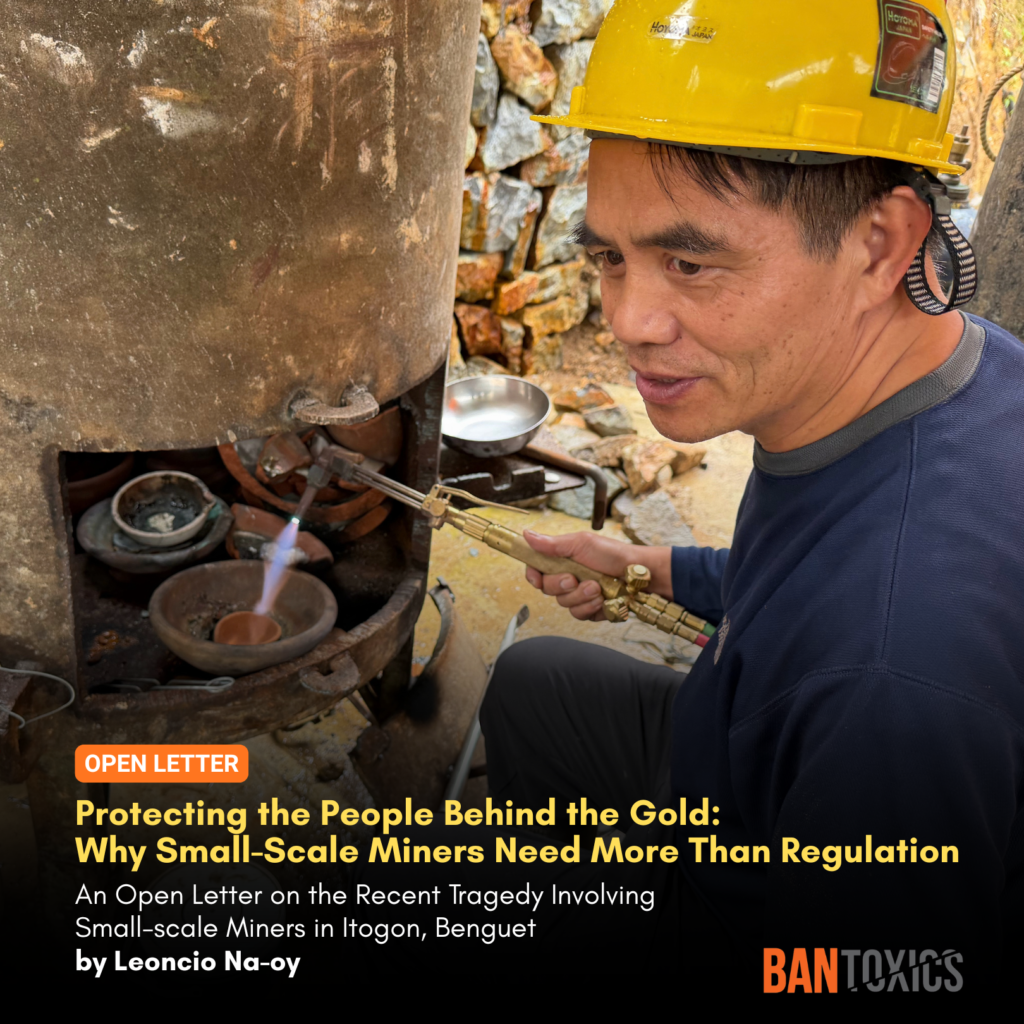
The deaths of seven small-scale miners in Itogon, Benguet, on September 30, 2026, should not become another entry in the long history of mining accidents in the Philippines. Behind every number are fathers, sons, brothers, and members of communities who entered the mine to earn a living and provide for their families—but never returned home.
I extend my deepest sympathies to their families, friends, and communities mourning their loss. But beyond expressing grief, we must also confront the difficult questions that tragedies like this bring forward: Why do miners continue to work in conditions that place their lives at risk? And what must change so that earning a livelihood does not come at the cost of losing one’s life?
As a miner myself, I know that the decision to enter a mine is rarely as simple as choosing between a safe job and a dangerous one. Small-scale mining is a reality for many communities in the Philippines, particularly in mineral-rich areas such as the Cordillera. For generations, mining has been connected to family survival, local economies, and community life.
Many miners are making decisions within the realities available to them—realities shaped by limited livelihood opportunities, generations of mining experience, and the responsibility of providing for their families.
Recognizing this reality does not mean accepting unsafe practices. It means addressing the conditions that allow these risks to continue.
Small-scale mining, by its nature, is a hazardous occupation. Mine collapses, poor ventilation, gas exposure, inadequate emergency preparedness, occupational hazards, and exposure to harmful substances can put miners’ lives at risk every day. These dangers become even greater when communities operate outside systems that provide access to technical assistance, safety programs, appropriate technologies, and institutional support.
This is why I believe formalization matters.
But formalization should not mean simply requiring miners to comply with regulations or obtain recognition. Recognition must open the door to meaningful support. It should help mining communities strengthen their organizations, improve safety practices, access appropriate technologies, and work with government institutions toward more responsible mining.
Formalization should also help make responsible and mercury-free mining more achievable. The Philippines is a Party to the Minamata Convention on Mercury, which calls for reducing and, where feasible, eliminating mercury use in small-scale gold mining. For miners, however, moving away from mercury cannot simply mean telling communities to stop using it. Miners need access to practical alternatives, technical knowledge, training, and technologies that allow them to recover gold without putting their health and the environment at greater risk.
This is where Minahang Bayan plays an important role. When mining communities operate informally, they often have limited access to government guidance and technical assistance. Becoming part of a recognized system can create opportunities for monitoring, guidance, and support while encouraging miners to take greater responsibility for their practices.
However, formalization alone will not make mining safe. A declaration or registration on paper will not automatically make mining safer. A permit or contract cannot protect a miner underground. What matters is what happens after formalization-whether institutions provide sustained support, whether policies are implemented effectively, and whether miners are treated as partners rather than simply as subjects of regulation.
This is why policy reform is also necessary. Republic Act No. 7076, or the People’s Small-Scale Mining Act of 1991, needs to be revised to respond to the realities facing small-scale mining communities today. The proposed House Bill No. 9311, or the Minahang Bayan Act, provides an opportunity to address these gaps and create a more responsive framework for small-scale mining. At the same time, responsibility does not rest on miners alone.
Government agencies, local government units, civil society organizations, academic institutions, and other stakeholders all have roles to play in making safer and more responsible mining possible. We cannot expect communities to transform an entire sector without providing the resources, knowledge, and systems they need.
Through my work with small-scale mining communities, I have seen that miners are not simply part of the challenges facing the sector. They are also essential partners in creating solutions. They possess practical knowledge and firsthand experience that must be considered when developing policies and programs intended to improve mining safety and responsibility.
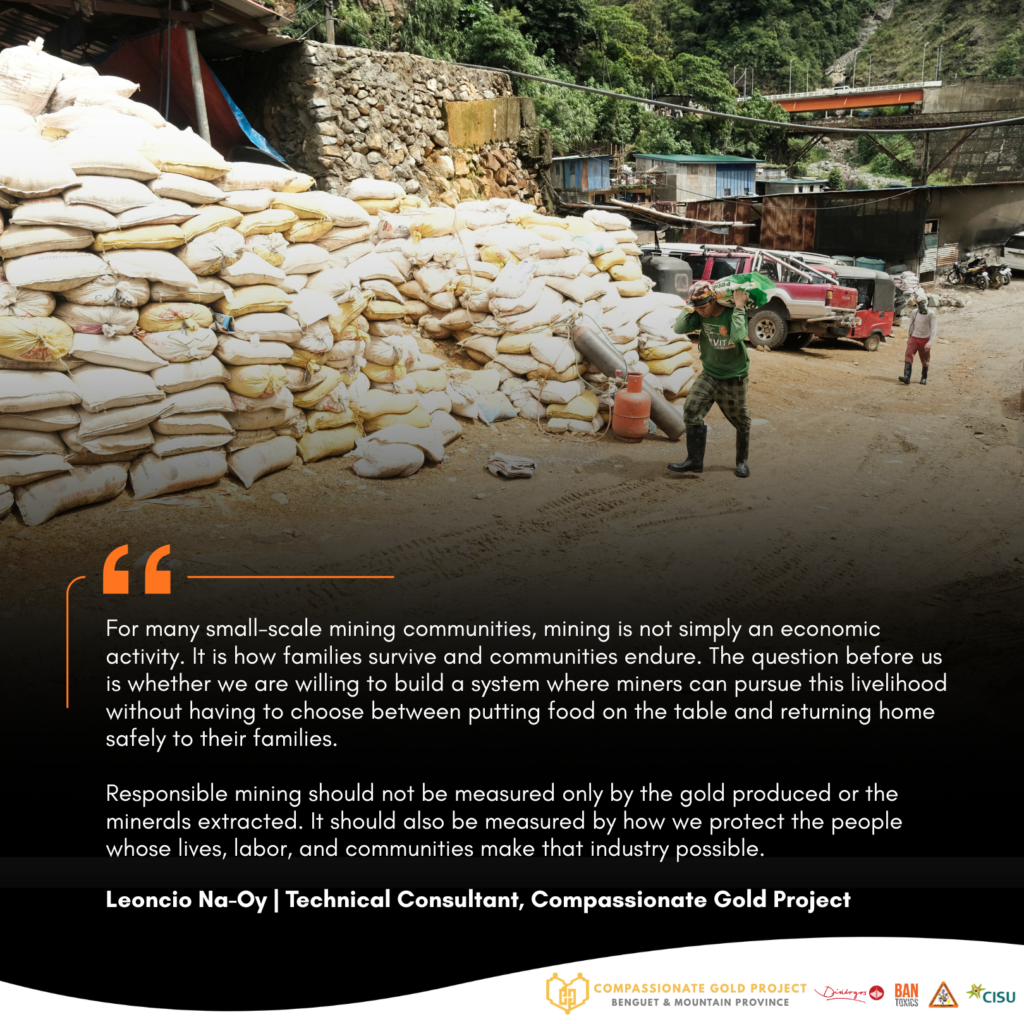
The tragedy in Itogon should remind us that the future of small-scale mining cannot be defined only by the risks miners face today. It must be shaped by our willingness to build stronger institutions, improve policies, and invest in mining communities. For many small-scale mining communities, mining is not simply an economic activity. It is how families survive and communities endure. The question before us is whether we are willing to build a system where miners can pursue this livelihood without having to choose between putting food on the table and returning home safely to their families.
Responsible mining should not be measured only by the gold produced or the minerals extracted. It should also be measured by how we protect the people whose lives, labor, and communities make that industry possible.
—
About the Author:
Leoncio Na-oy is a small-scale miner and mining expert advocating for mercury-free, ethical, and responsible small-scale mining. He is the Chairman of the Board of the National Coalition of Small-Scale Miners of the Philippines, Inc. (NCSSMPI). He currently serves as Technical Consultant for the Compassionate Gold Project of environmental organization BAN Toxics, where he also serves as a member of the Board.