BALITANG TOKSIK! | 18 June 2026
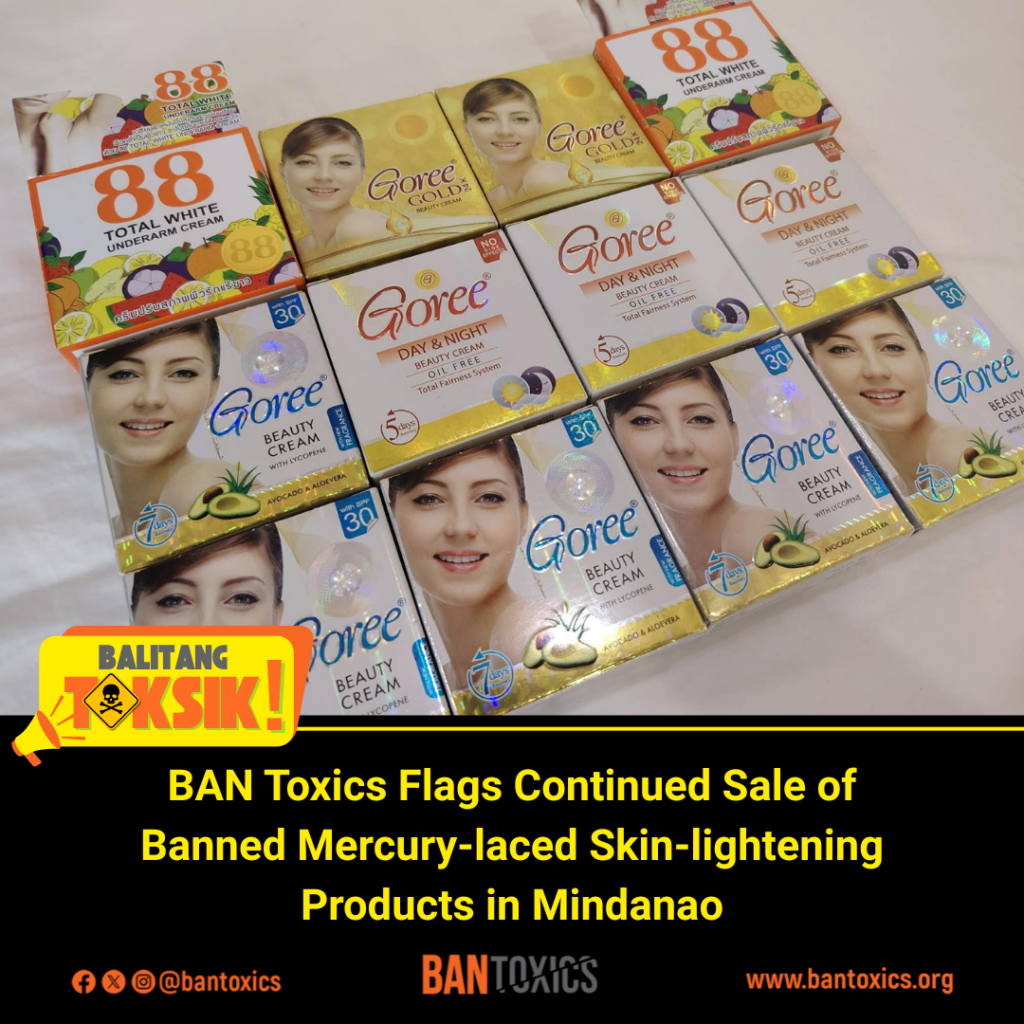
Following market monitoring activities conducted from June 10 to 13, 2026, in Surigao City, Butuan City, and Davao City, toxics watchdog BAN Toxics prompted the Food and Drug Administration (FDA) to act on the proliferation of banned mercury-containing skin-lightening products being sold in beauty shops.
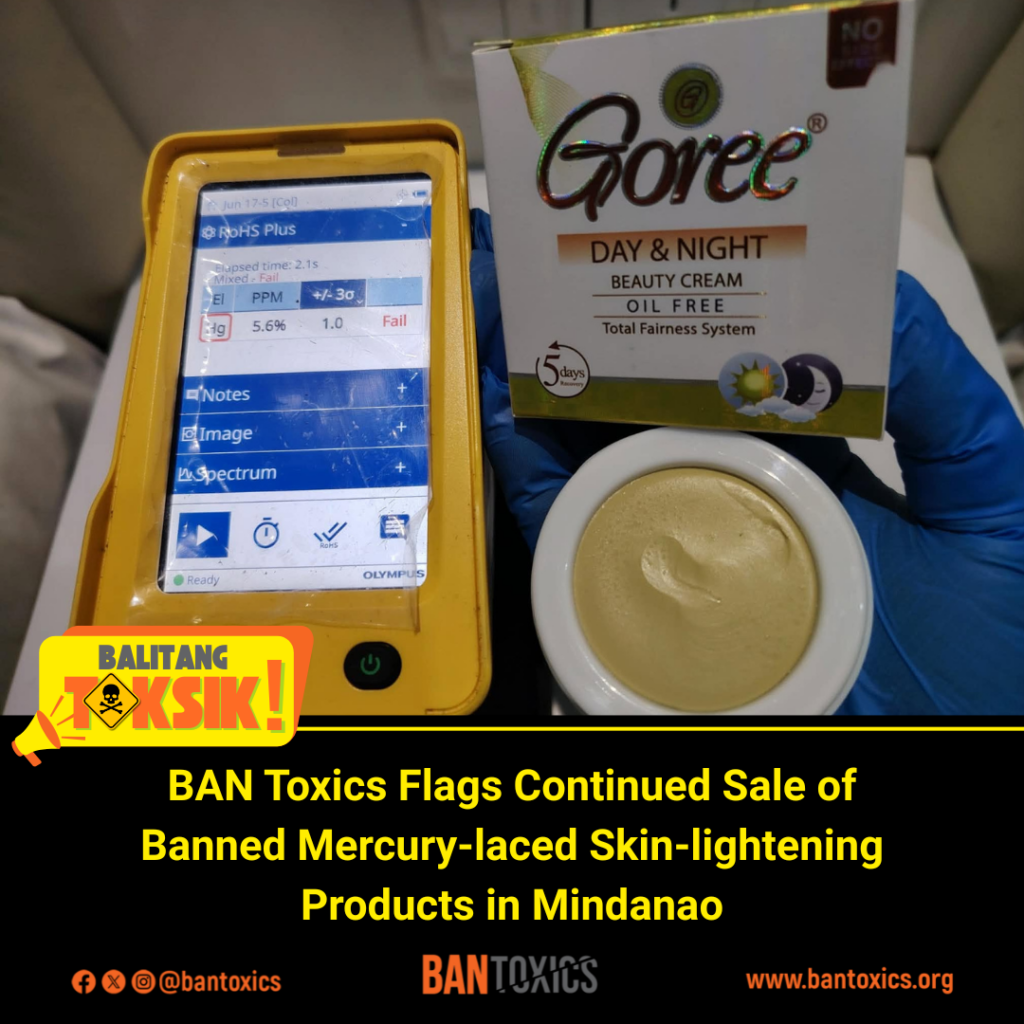
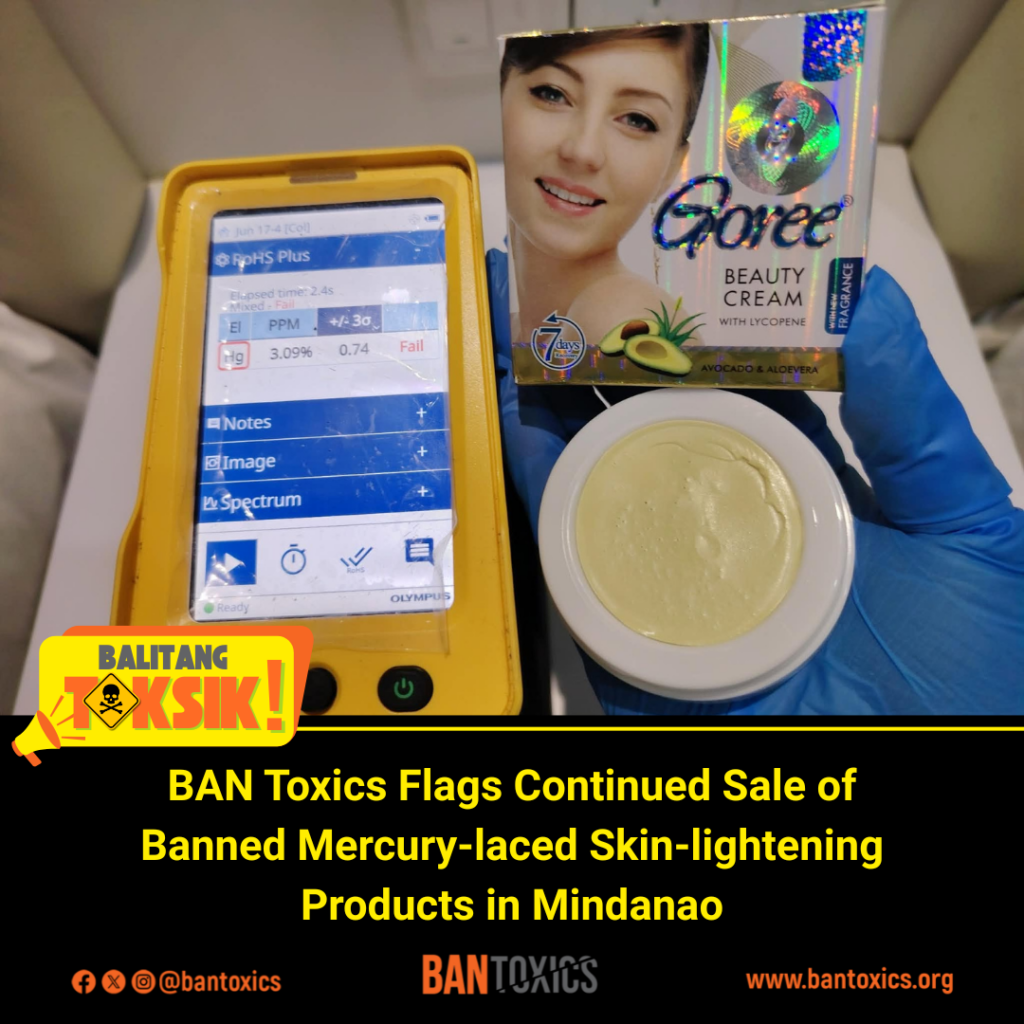
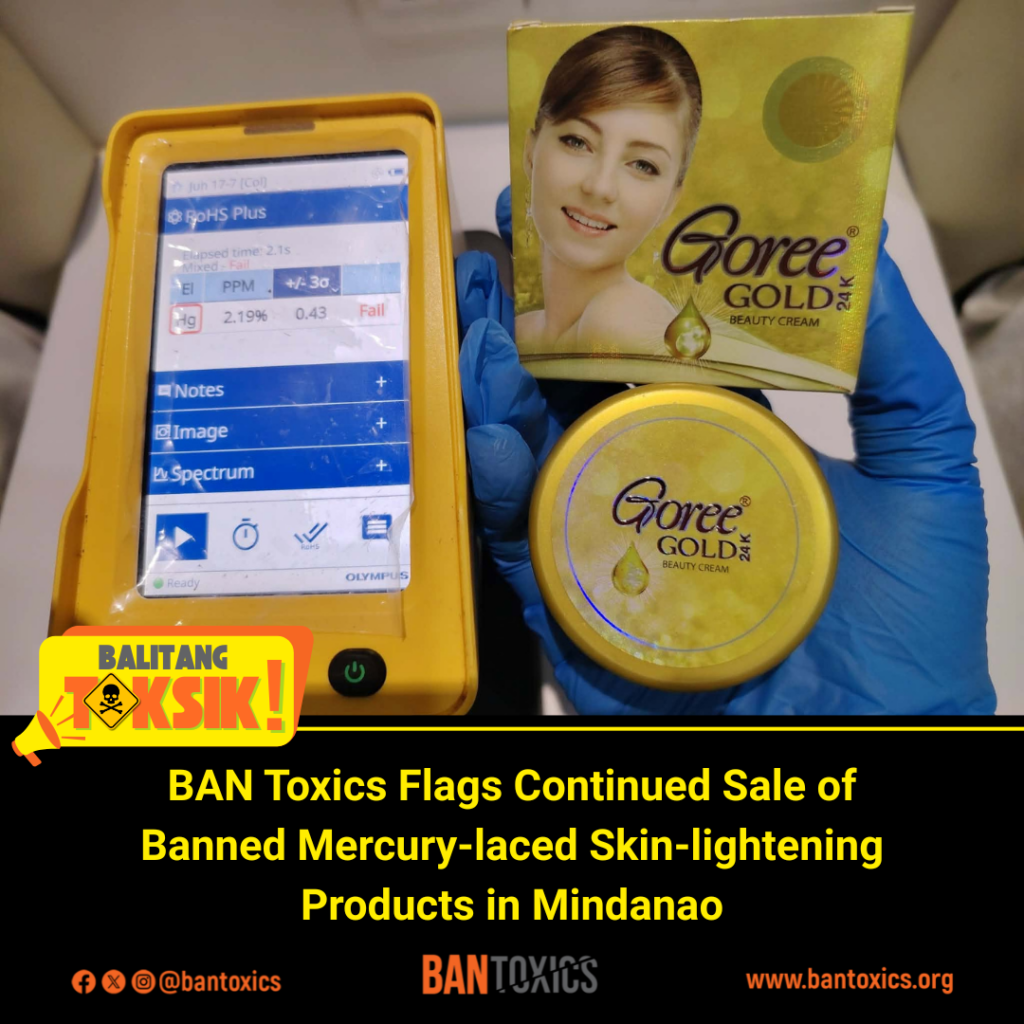
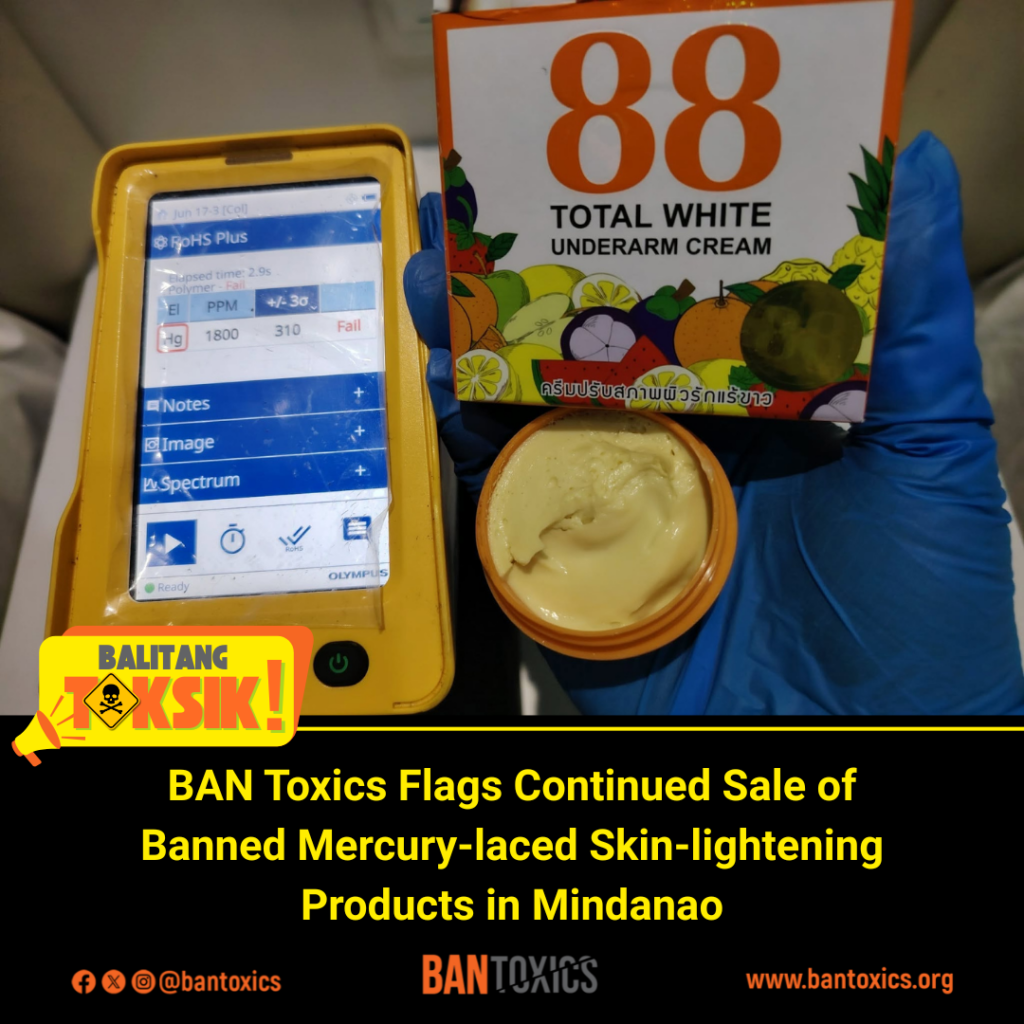
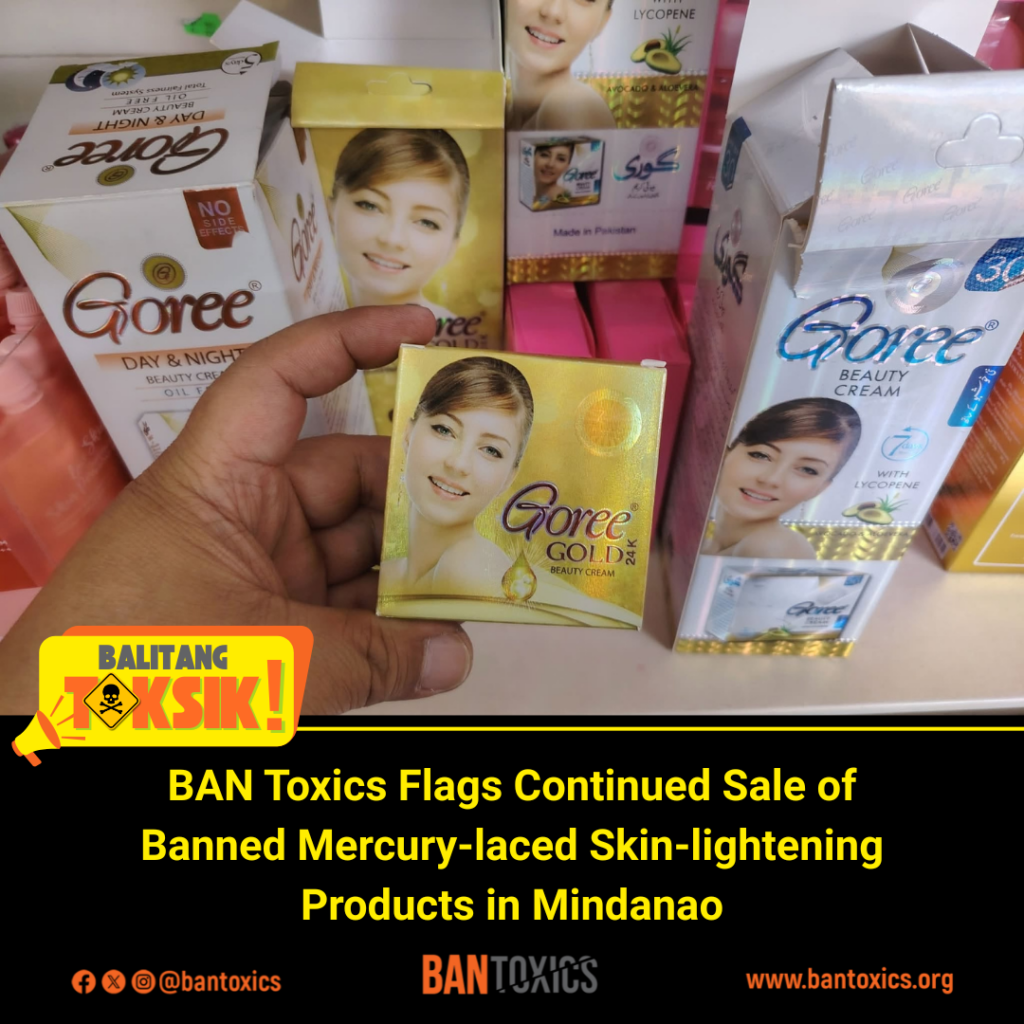
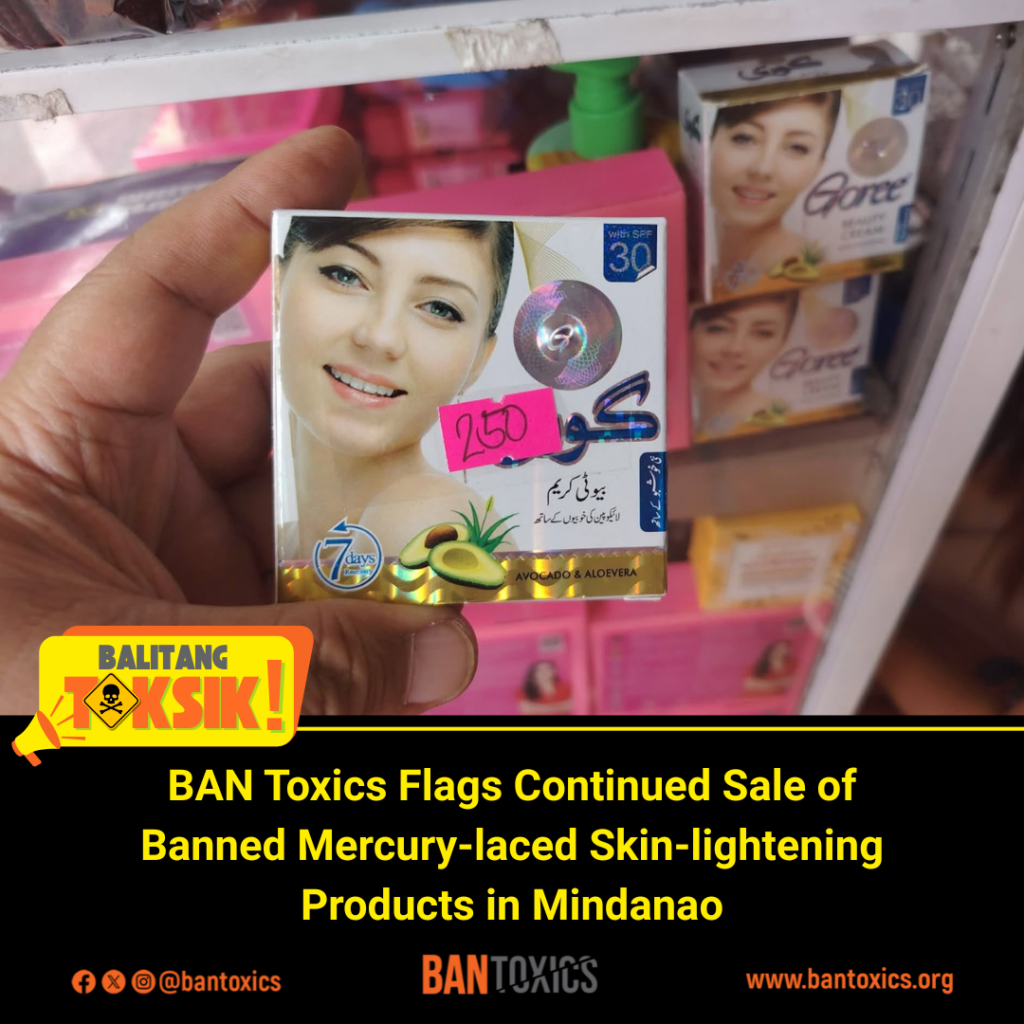
To conduct chemical testing, the group purchased Pakistan-made Goree products such as Goree Beauty Cream with Lycopene Avocado & Aloe Vera, Goree Day & Night Beauty Cream Oil Free Total Fairness System, and Goree Gold 24K Beauty Cream, as well as Thailand-made 88 Total White Underarm Cream, with prices ranging from P175 to P350 in seven shops across the three cities.
The group noted that the FDA has previously issued the following advisories for these items:
- Goree Beauty Cream with Lycopene Avocado & Aloe Vera (FDA Advisory No. 2017-289 / FDA Advisory No. 2023-2344)
- Goree Day & Night Beauty Cream Oil Free Total Fairness System (FDA Advisory No. 2017-289 / FDA Advisory No. 2023-2391)
- Goree Gold 24K Beauty Cream (FDA Advisory No. 2023-2392)
- 88 Total White Underarm Cream (FDA Advisory No. 2021-1187)
The advisories indicate that the abovementioned products lack valid Certificate of Product Notification (CPN). “The unauthorized cosmetic products have not gone through the notification process of the FDA; the agency cannot assure their quality and safety. The use of such violative products may pose health risks to consumers.”
Using a Vanta C Series Handheld XRF Analyzer, the group tested the products and detected mercury at concentrations as high as 50,600 parts per million (ppm), far beyond the 1 ppm limit set under the Chemical Control Order for mercury of the Department of Environment and Natural Resources (DENR), as well as the Minamata Convention on Mercury and the ASEAN Cosmetic Directive.
“The widespread sale of prohibited mercury-containing skin-lightening products not just in Metro Manila but in Mindanao as well is dangerous to the health and safety of the public, especially women and children,” said Thony Dizon, Advocacy and Campaign Officer of BAN Toxics. “It violates existing regulations on mercury in the country and our right to safe and toxic-free products.”
According to the World Health Organization, mercury exposure in women primarily causes severe neurological, reproductive, and developmental damage, with particularly high risks for pregnant women and developing fetuses. It can lead to infertility, birth defects, and developmental delays in children, as well as chronic symptoms in women, including tremors, memory loss, depression, and numbness.
In 2025, the Zero Mercury Working Group (ZMWG) released a report titled “Zero Out Toxic Production,” which exposes the toxic and often illegal international trade in mercury-added skin-lightening products. The report builds on ZMWG’s previous work exposing such trade and underscores the importance of stronger regulation and monitoring of manufacturers involved in their production.
The report tested 37 samples of six widely available brands of skin-lightening products made in Pakistan, as indicated on their packaging: Faiza, Golden Pearl, Goree, Aneeza, Parley, and Face Fresh. The testing was conducted by ZMWG and its partners from Pakistan, Kenya, the Philippines, and the United States. Laboratory analysis found that 35 of the samples contained mercury levels thousands of times higher than the legal limit of 1 ppm, with one product reaching as high as 24,000 ppm. The samples were analyzed in accredited laboratories in the European Union and the United States.
ZMWG estimates that more than 66 million mercury-added skin-lightening products are produced annually, using over 110 metric tons of mercury compounds, with Pakistan, Thailand, and China together accounting for more than half of global production.
According to Dizon, the continuing illegal trade of mercury-added skin-lightening products remains a major issue that requires stronger regulatory enforcement and international cooperation.
“We call on both the FDA and the DTI to expedite their regulatory and enforcement functions to prevent the further sale and use of prohibited skin-lightening products, ensure consumer protection, and prevent exposure to toxic mercury,” he added.
BAN Toxics, which advocates for safe cosmetics regulation in the country, urges legislators to pass a law that will protect public health and the environment from hazardous chemicals in cosmetics.
“We will continue to be vigilant in monitoring and documenting prohibited skin-lightening products offered for sale in the market and push for stricter product standards and enhanced consumer safety and protection,” the group said. “Let’s make the Philippines ‘Mercury-Free’ and ‘Toxics-Free.” #