
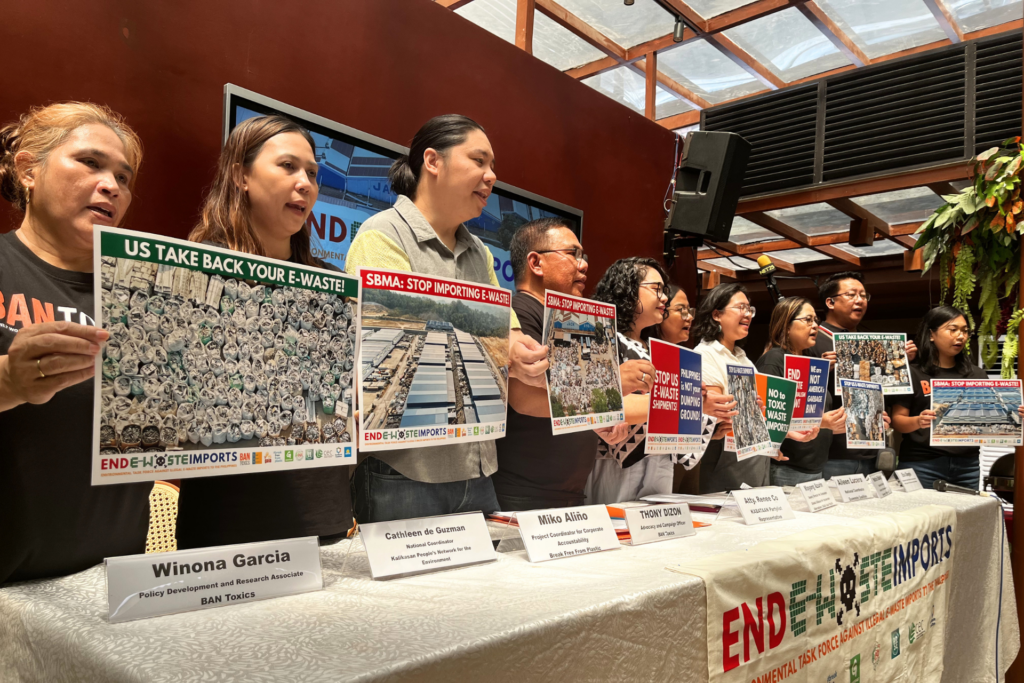
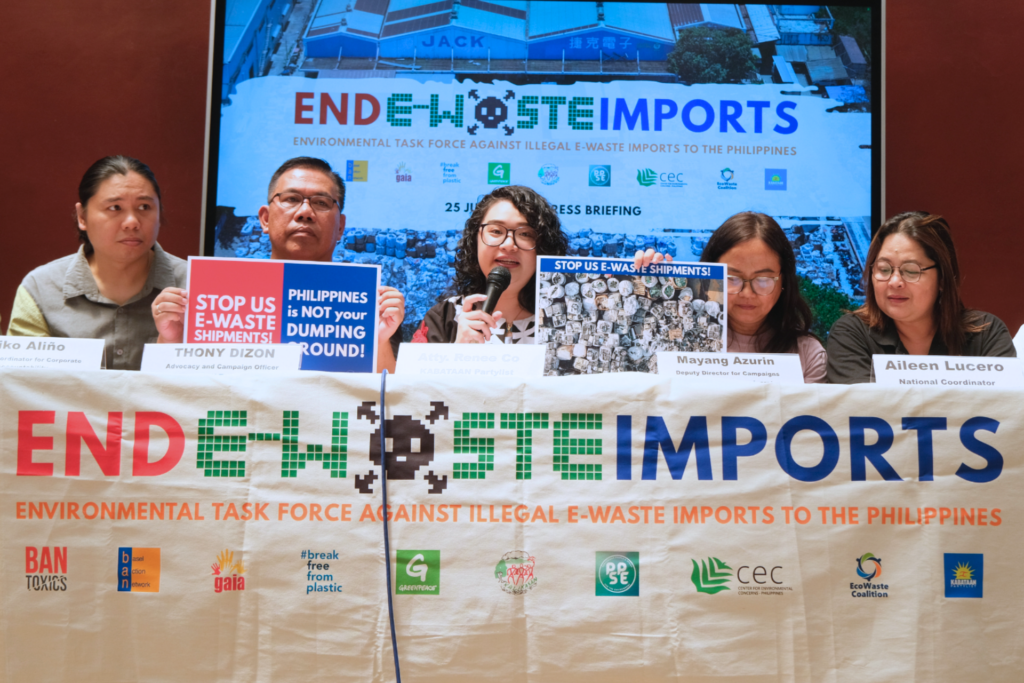
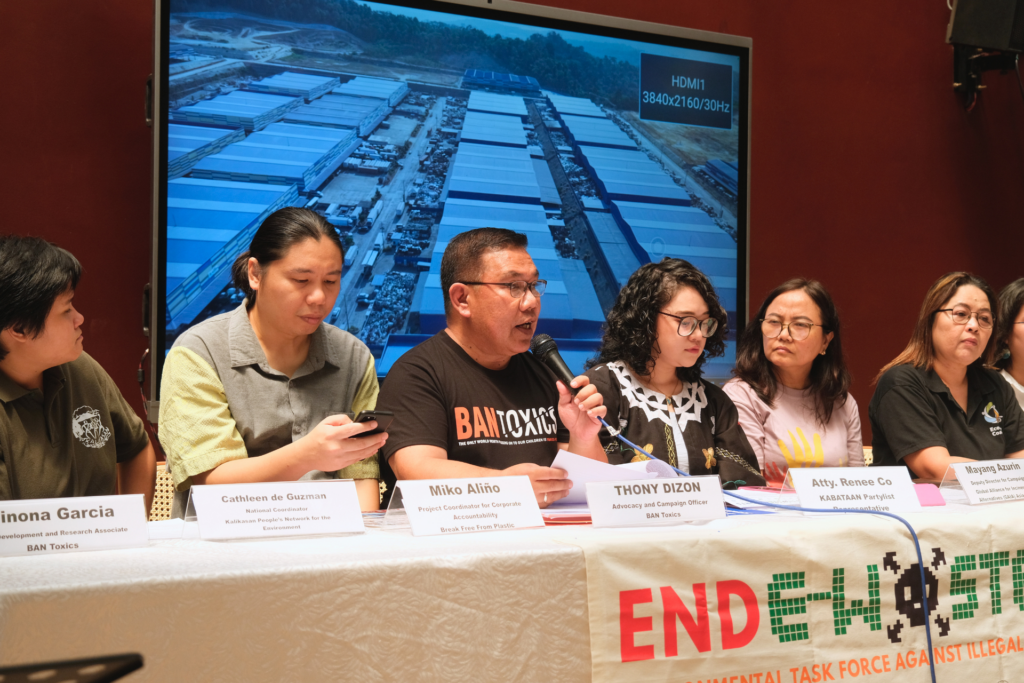
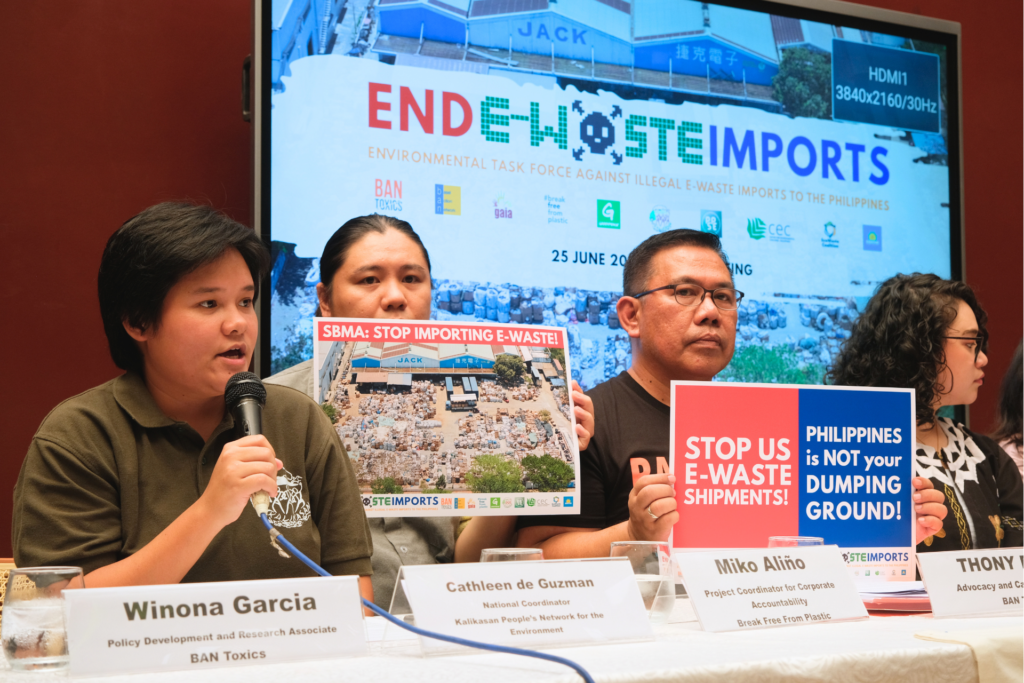
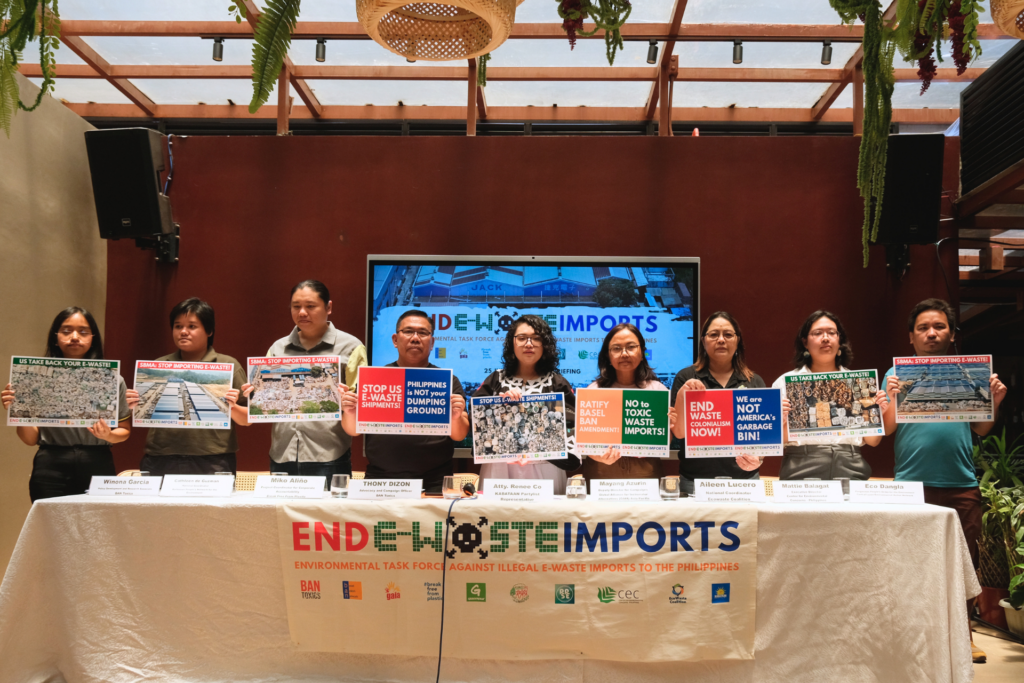
Quezon City, Philippines – A new environmental task force composed of several environmental groups gathered today for a press briefing to expose and condemn what they say is an ongoing illegal importation of hazardous electronic waste (e-waste) from the United States into the country via the Subic Bay Freeport Zone.
Dubbed Environmental Task Force Against Illegal E-Waste Imports to the Philippines or END E-WASTE IMPORTS, it comprises of BAN Toxics, Basel Action Network (BAN), Global Alliance for Incinerator Alternatives (GAIA) Asia Pacific, Break Free From Plastic – Asia Pacific, Kalikasan People’s Network for the Environment, Greenpeace Philippines, Ecowaste Coalition, Center for Environmental Concerns – Philippines, Pangasinan People’s Strike for the Environment, Central Luzon Environmental Action Network, and Kabataan Partylist.
The Task Force presented alarming images of several factories in Subic laden with e-waste placed outdoors and exposed to the sun and rain. The revelation stemmed from a monitoring campaign called Operation Can Opener (OCO) run by global waste trade watchdog organization BAN, which tracks shipments of hazardous wastes and sends alerts to destination countries. Using GPS tracking devices placed inside non-functional e-waste as well as commercially available trade data, BAN has traced suspected e-waste shipments to Subic. Some factories shown in the images presented are the locations where the GPS trackers ended up.
Since March 2025, BAN has sent 14 OCO alerts to the Bureau of Customs (BoC) and the Department of Environment and Natural Resources (DENR), flagging a total of 234 containers of suspected e-waste and one of plastic waste. However, the BoC told BAN that they are restricted from taking any action against the said shipments due to a Manila Regional Trial Court (RTC) ruling in April 2025 that upheld the Subic Bay Freeport as a separate customs territory.
According to BAN Toxics Campaign and Advocacy Officer Thony Dizon, the RTC ruling undermines the country’s environmental laws and obligations to the Basel Convention, a global treaty on the transboundary movement of hazardous waste, to which the Philippines is a party and the US is not.
“We vehemently condemn the RTC ruling that paves way for the entry and dumping of imported e-waste in the Philippines in violation of the Basel Convention, as it is alarming and constitutes a clear encroachment on our environmental protection obligations and national sovereignty,” Dizon said.
Under the Basel Convention, importation of hazardous waste from a non-party like the US to a party like the Philippines is strictly prohibited. The only exception to this rule, under Article 11 of the Convention, is if there is a bilateral, regional, or multilateral agreement between Parties and non-Parties, on the condition that such agreement provides environmental safeguards equivalent to or stronger than those established under the Convention.
Meanwhile, BAN, citing sources in the US and the Philippines, has also flagged concerns over a potential bilateral agreement between the US and the Philippines. According to BAN Co-founder and Chief of Strategic Direction Jim Puckett, any such bilateral agreement would violate the Basel Convention and would be the first time the US signs a bilateral agreement with a developing country to export its potentially hazardous waste.
“This is not acceptable. Countries cannot carve out territories and say that the Basel Convention does not apply there, just to allow hazardous waste trade that does not comply with Basel rules,” Puckett said.
BAN and BAN Toxics are currently in Geneva, Switzerland, for the 15th meeting of the Open-ended Working Group (OEWG) of the Basel Convention, where they made an intervention to raise this issue of a “compliance emergency” threatening the fabric of the Basel Convention. BAN and other NGOs have also sent an open letter to the US Embassy in Manila expressing alarm and objection over any such bilateral agreement.
Also speaking during the briefing, Kabataan Partylist Representative Atty. Renee Co called out the Subic Bay Management Authority officials who are pushing for the designation of Free Trade Zones such as Subic to become Basel-Convention-Free Zones. This position by the SBMA was made clear during the Lower House Environment Committee meeting to amend Republic Act 6969 or the Toxic Substances and Hazardous and Nuclear Wastes Control Act.
“We vehemently oppose any move to carve out special exemptions for freeports from our environmental laws and international obligations that makes a mockery of our sovereignty to establish a sacrifice zone for the profit of foreign corporations and the waste of wealthy nations,” Rep. Co stated. “Kabataan Partylist is prepared to pursue all necessary legislative measures, including pushing for a comprehensive congressional inquiry, to investigate these illicit shipments, expose the entities responsible, and hold accountable any government officials complicit in allowing our country to be used as a global dumping ground.”
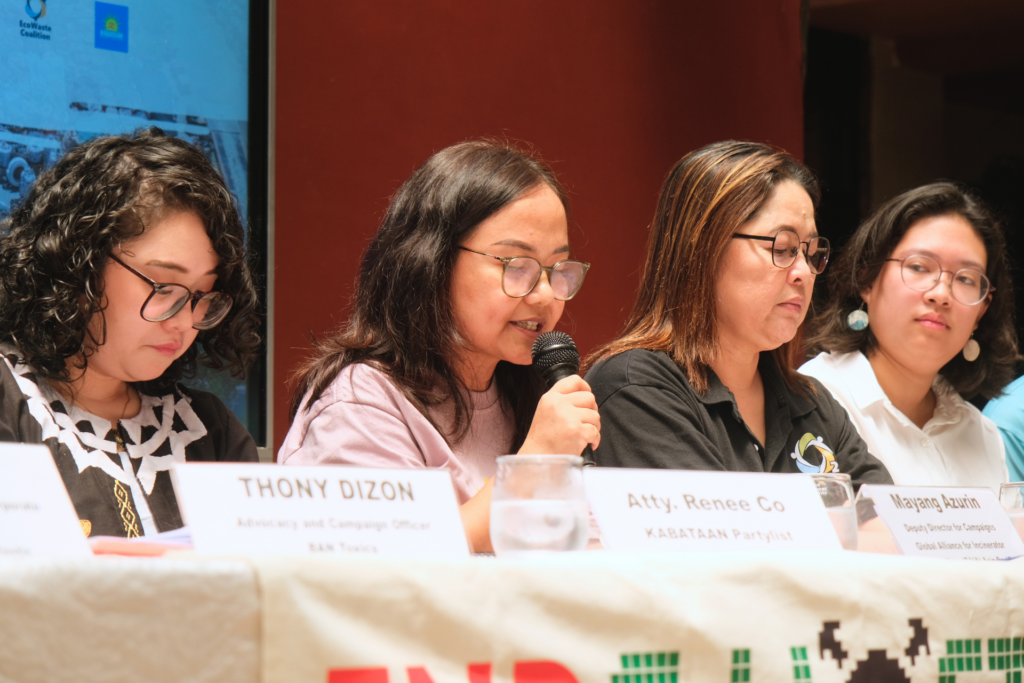
Beyond the legal concerns, GAIA Asia Pacific Deputy Director Mayang Azurin highlighted the environmental and health impacts of e-waste. “E-waste is not merely a source of minerals—it contains toxic substances that can contaminate air, water, soil, and threaten the health of workers and surrounding communities.”
Azurin also warned of the Philippines’ involvement in the US-led Pax Silica coalition that might open the doors to turning the country into “a processing hub for the world’s electronic waste under the guise of ‘circular economy’ and ‘critical mineral recovery.’
“What is being marketed as innovation and sustainability risks becoming yet another example of environmental burden-shifting, where wealthy countries and corporations export the costs of their consumption while communities in the Global South bear the pollution, health risks, and ecological damage,” Azurin added.
Kalikasan PNE National Coordinator Cathleen de Guzman also warned of the possible connection between the ongoing e-waste importation issue in Subic to the Pax Silica, which she said is an “affront to national sovereignty.”
“The toxic waste entering Subic and the expansion of projects under Pax Silica are not separate issues. They expose a single pattern of U.S. imperialist intervention enabled by a government willing to surrender our sovereignty. Our lands are opened for extraction, our territories for militarization, and our communities for toxic dumping, while ordinary Filipinos are made to suffer for conflicts that do not serve their aspirations for land, livelihood, and sovereignty,” de Guzman said.
“The toxic waste in Subic is only the visible garbage; the real waste is a government that allows foreign powers to turn the Philippines into a dumping ground and a launching pad for U.S. military and economic interests,” de Guzman added.
Meanwhile, according to Ecowaste Coalition National Coordinator Aileen Lucero, the shipments add to the growing number of high-profile cases of illegal waste shipments to the Philippines from countries such as Japan (1999), Canada (2013-2014), Australia (2019), Hong Kong (2019), and South Korea (2020).
“Although high-profile dumping scandals have gained public attention, the influx of waste from highly industrialized countries continues because regulatory gaps allow the shipping of items, such as electronic, metal, and plastic scraps, classified as ‘recyclable.’ The government must urgently implement the long-overdue ban on importing hazardous electronic and plastic waste to resolve this environmental injustice. Also, ratifying the Basel Convention Ban Amendment will decisively signal that the Philippines is not a dumping ground for foreign waste,” said Lucero.
Other organizations of the End E-Waste Task Force provided messages of solidarity and calls to action.
“Waste trade is not just a waste problem but an environmental and social injustice. It externalizes the costs of wealthy nations’ unmitigated production and overconsumption to the Global South, exacerbating systemic harms experienced by vulnerable communities. True environmental justice cannot coexist with this exploitation, nor with the problematic legal loopholes designed by the government. The Philippine government must firmly reject these unjust practices and end waste colonialism now.” – Marian Ledesma, Zero Waste Campaigner, Greenpeace Southeast Asia
“With government leaders convening for the 15th Basel OEWG meeting, the international community must see how free trade zone exemptions are being exploited to bypass treaty obligations. These alarming activities inside the Subic Bay Freeport Zone undermines the Basel e-waste amendments, which require strict Prior Informed Consent procedures for all electronic waste movements.” – Miko Aliño, Asia-Pacific Program Coordinator, Break Free From Plastic
“We never learn from past mistakes. Once again, the Philippines is fast becoming a toxic dumping ground, with new reports confirming that illegal US e-waste shipments are slipping through our borders in blatant violation of our national environmental laws and international treaty obligations. It is absolutely outrageous that our government is repeating the mistakes of previous waste trading scandals instead of slamming the door shut on these hazardous imports and protecting our people and environment from toxic exposure. These latest transgressions represent a dangerous erosion of our environmental safeguards.” – Von Hernandez, 2003 Goldman Prize winner and Board ambassador for BAN.
“This is another chapter in the U.S.’ long and toxic history of environmental crimes against the Philippines, from colonization until present day, which they have not been made fully accountable for… This pattern of treating our country as a dumping ground and extraction frontier must end.” – Mattie Balagat, Executive Director, Center for Environmental Concerns – Philippines
The press briefing concluded with the formal launch of the END E-WASTE IMPORTS task force that will campaign to raise awareness on the issue, mobilize community action, and ultimately stop illegal e-waste shipments.#