
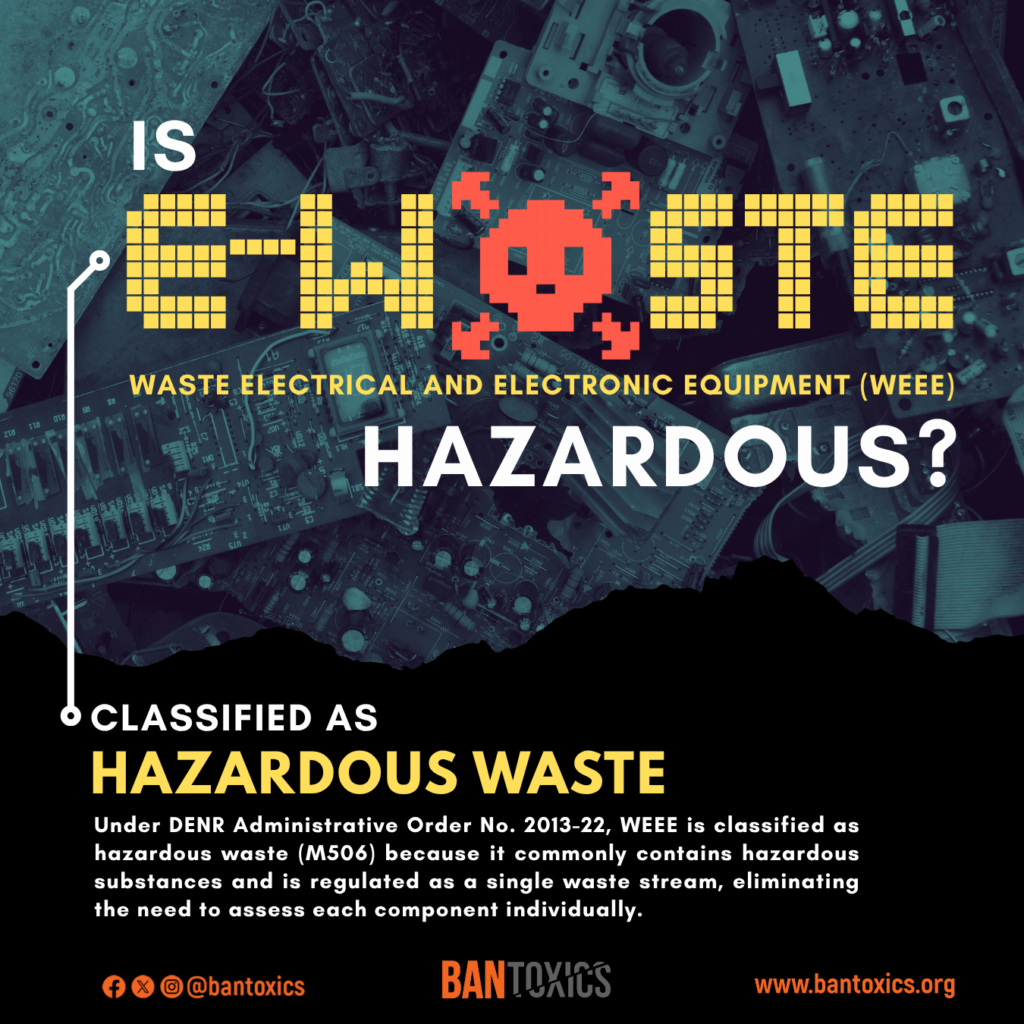
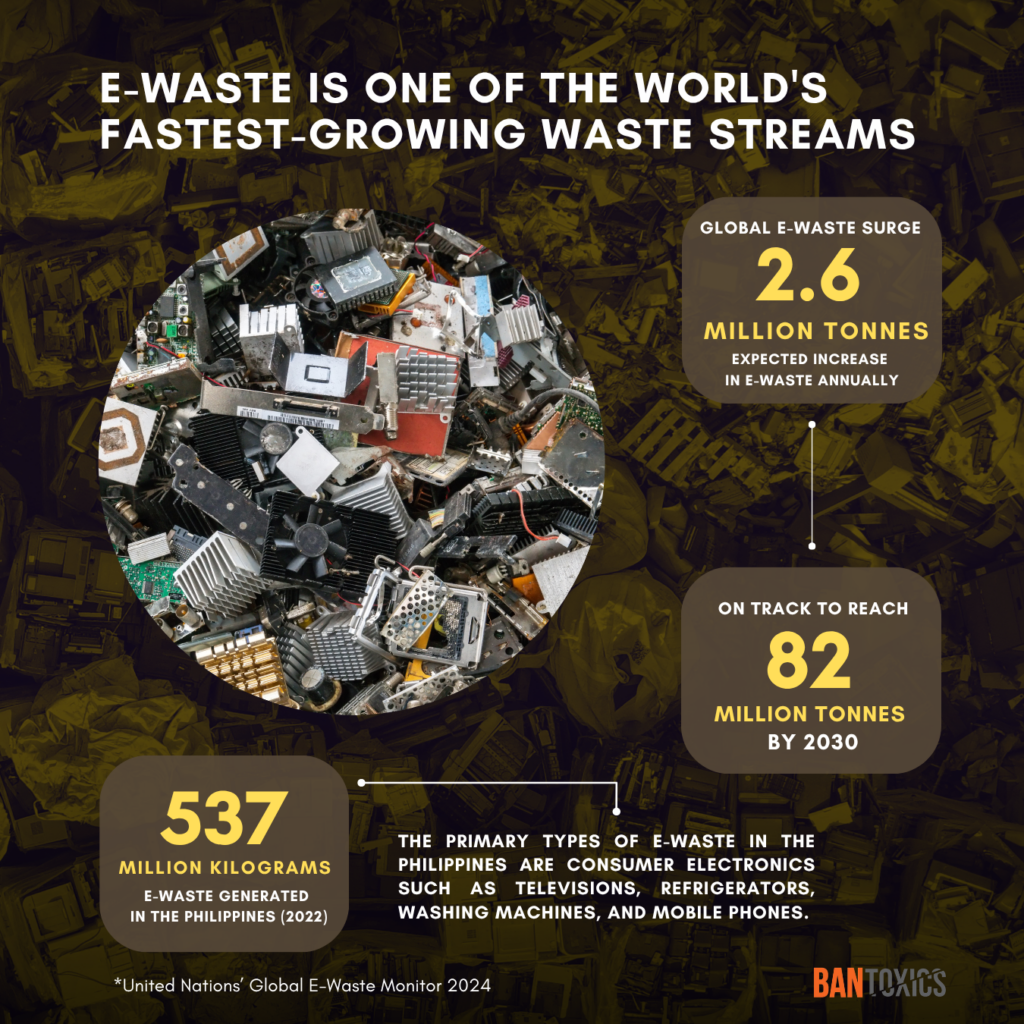
As the global e-waste crisis surges, with volumes projected to reach 82 million tonnes by 2030, the Philippines has already generated an estimated 537 million kilograms of e-waste, making it one of Southeast Asia’s largest generators of e-waste.
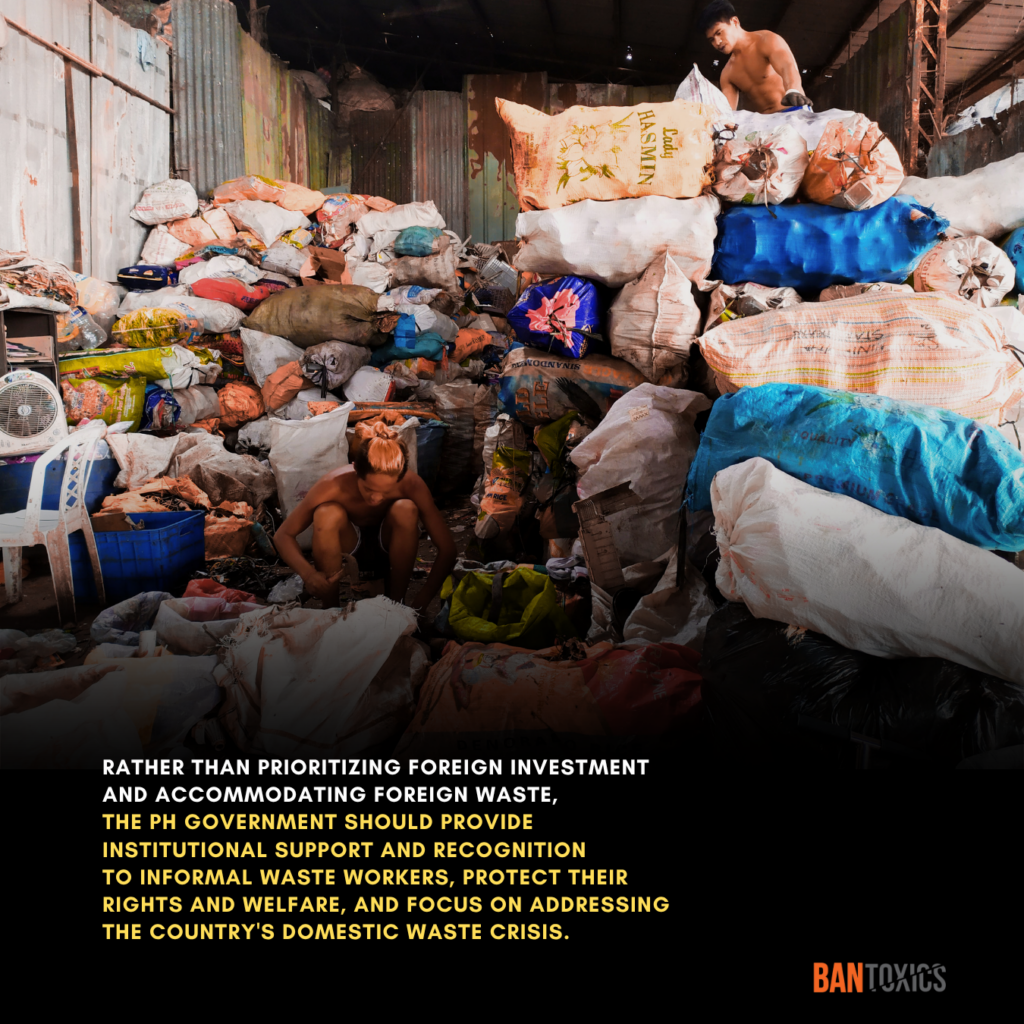
Yet despite the country’s growing domestic e-waste crisis, it still lacks sufficient recycling facilities, treatment infrastructure, and enforcement capacity to effectively manage its own waste.
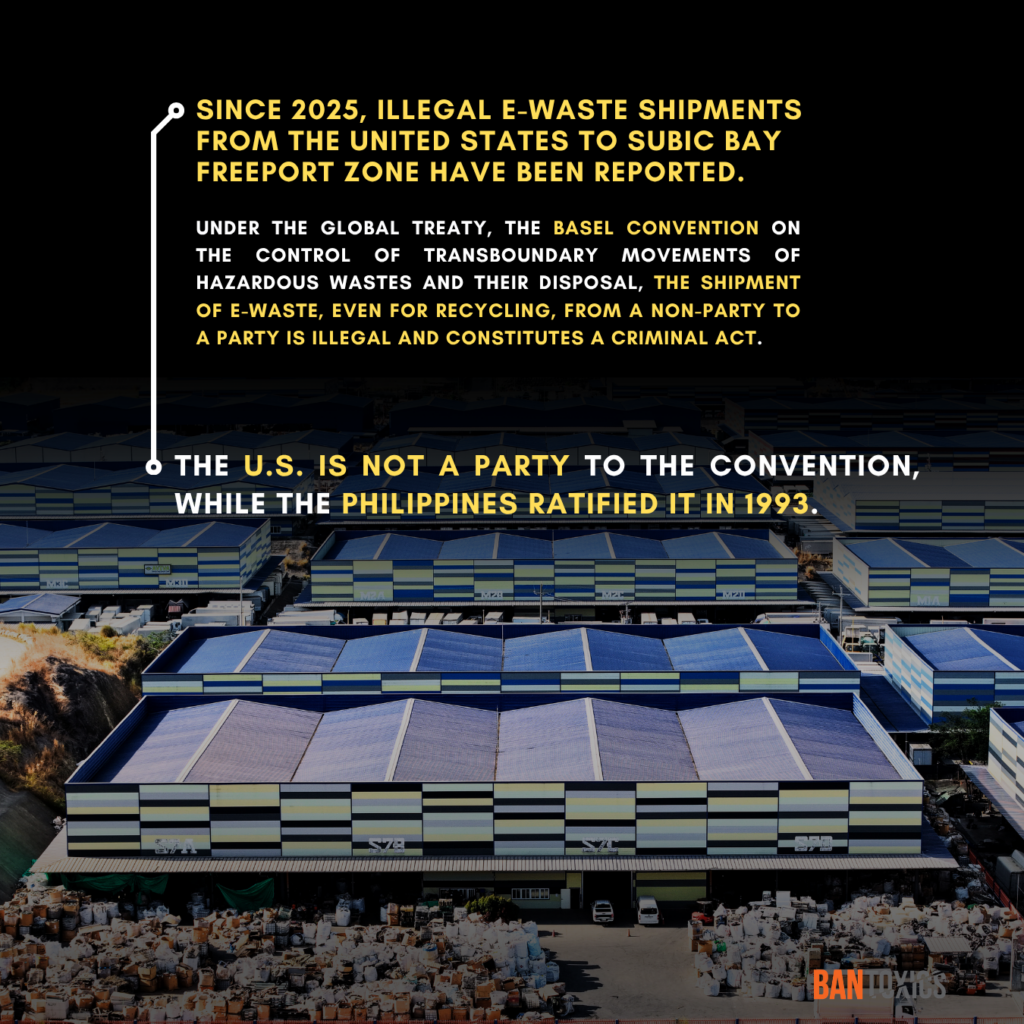
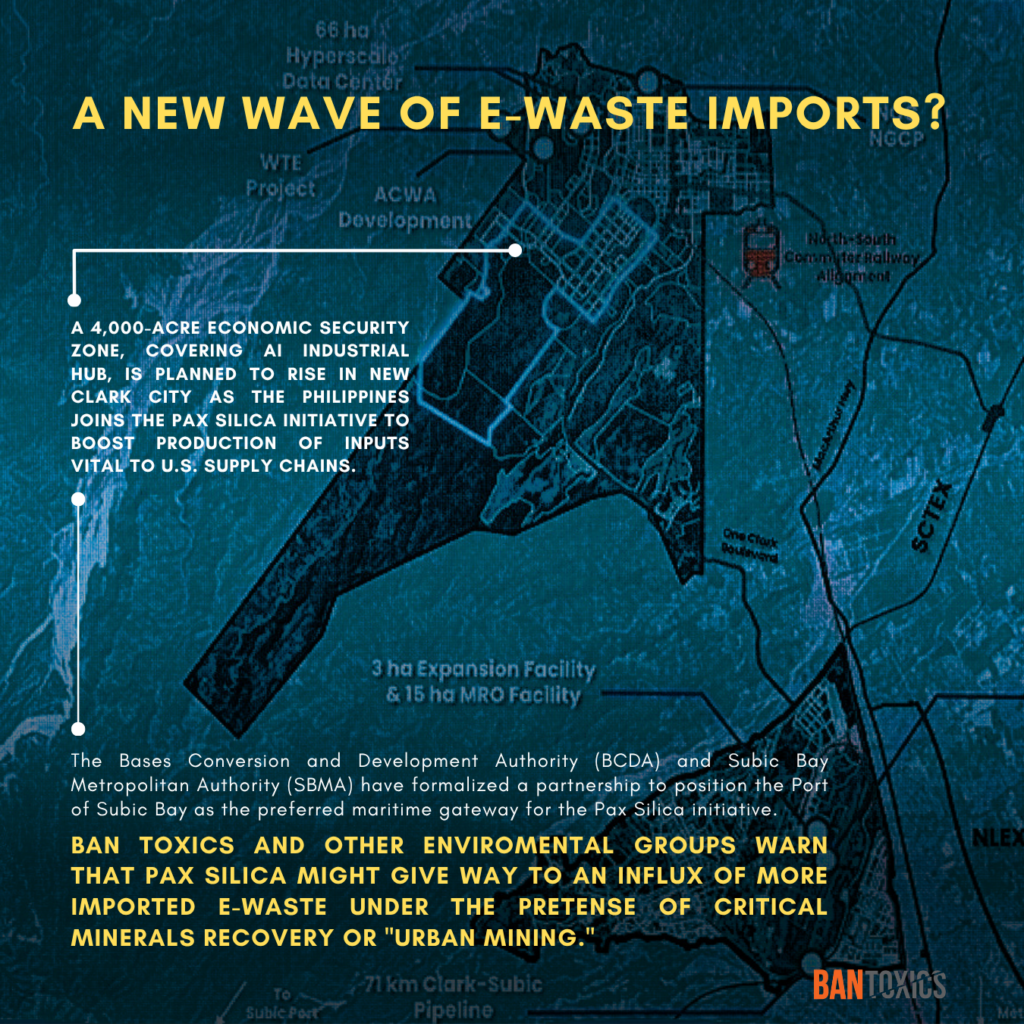
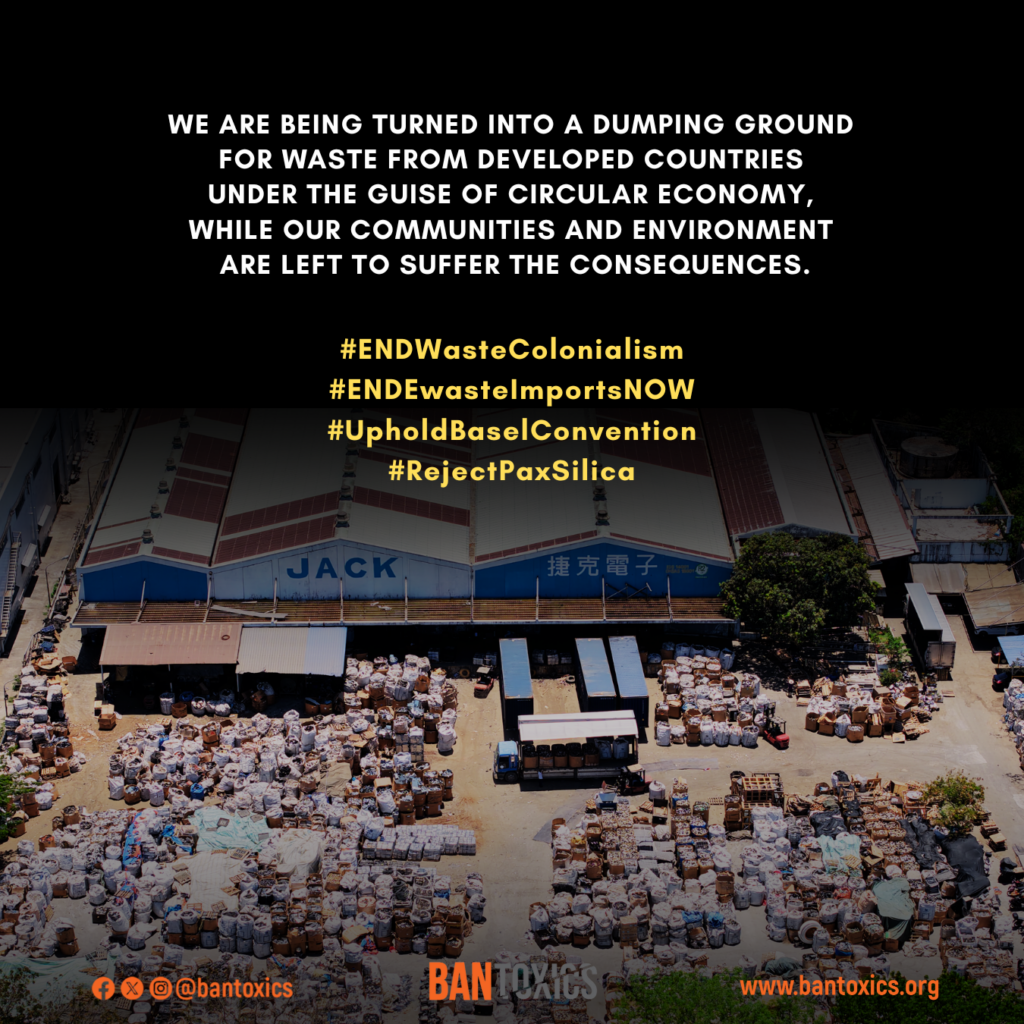
Instead of addressing these critical gaps, the Philippines remains at risk of becoming a dumping ground for e-waste from developed countries, creating additional environmental and public health risks.