
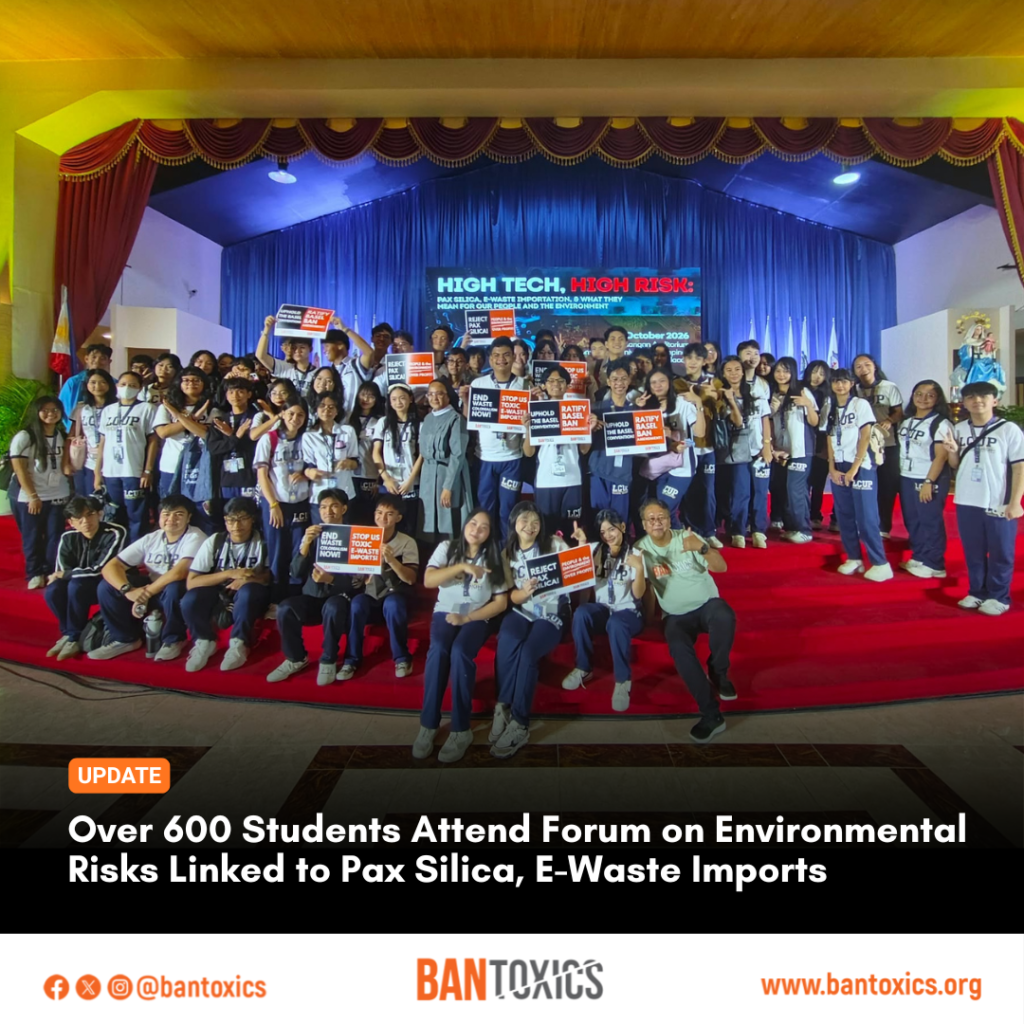
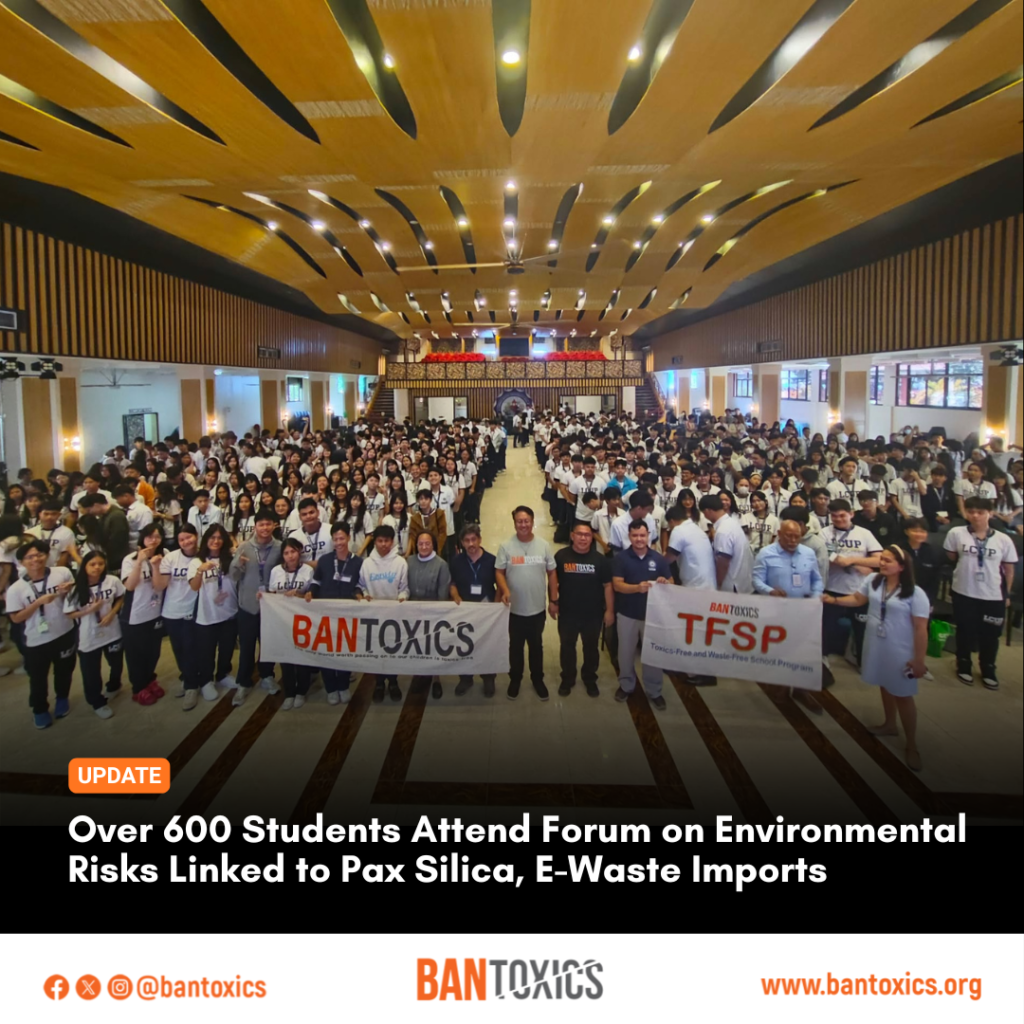
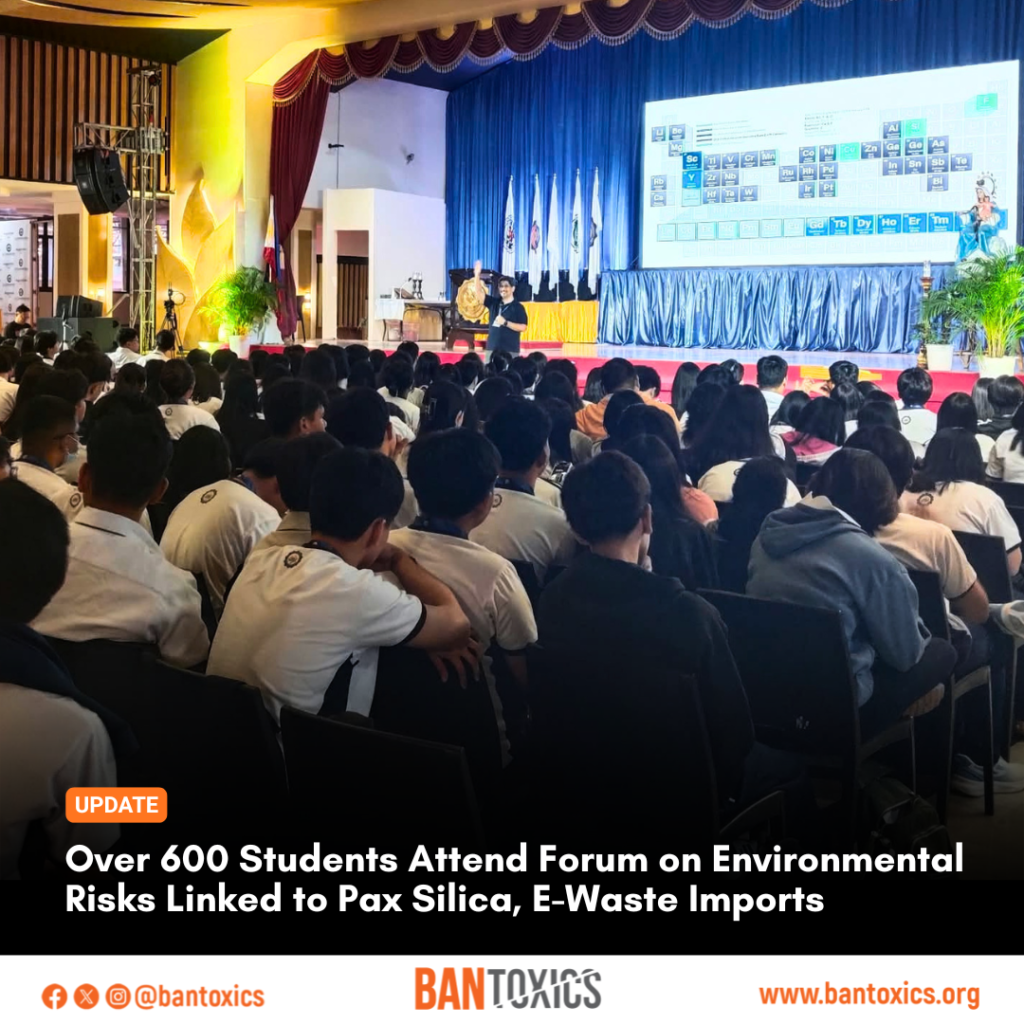
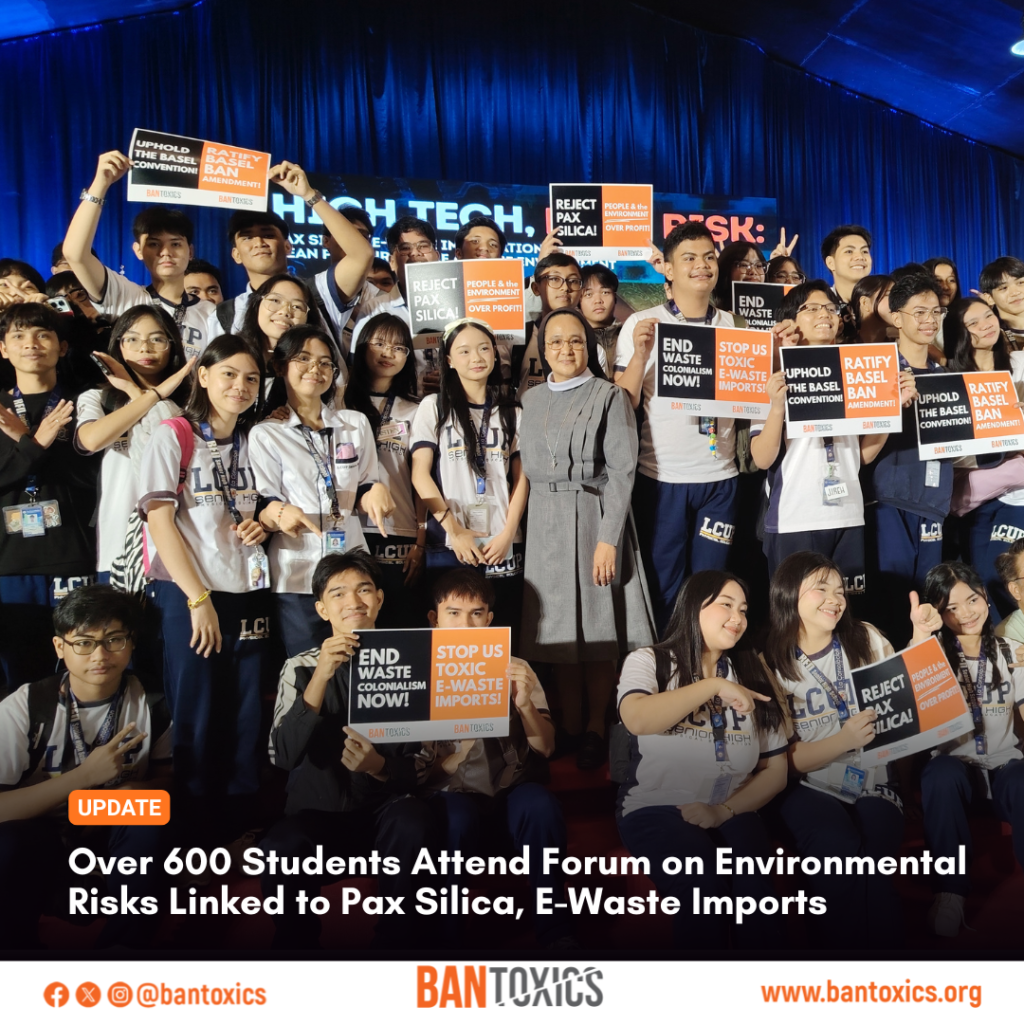
On October 9, 2026, civil society organization BAN Toxics, in partnership with Mother Rita Barcelo Caritas Center (MRBCC), held a forum at La Consolacion University Philippines in Malolos, Bulacan, to discuss Pax Silica and e-waste importation and their impacts on people and the environment.
Dubbed “High Tech, High Risk,” the forum gathered more than 600 senior high school and college students, along with other members of the school community. It explored the hidden costs and emerging risks of technological advancements, highlighting the need to examine who benefits from these developments and who ultimately bears the risks.
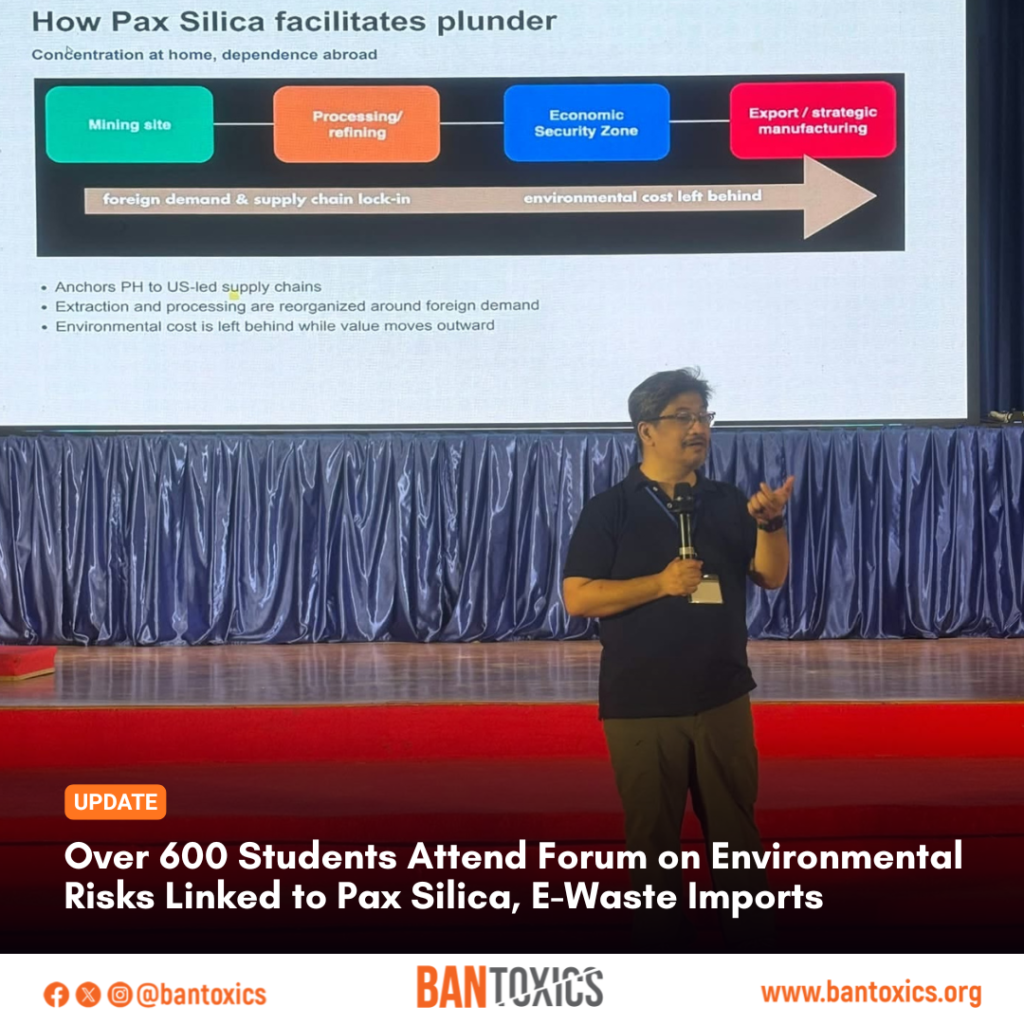
Prof. Giovanni Tapang of the UP Diliman National Institute of Physics and former dean of the College of Science gave a presentation on Pax Silica, raising questions about who will truly benefit from the initiative and whether it will genuinely industrialize the country.
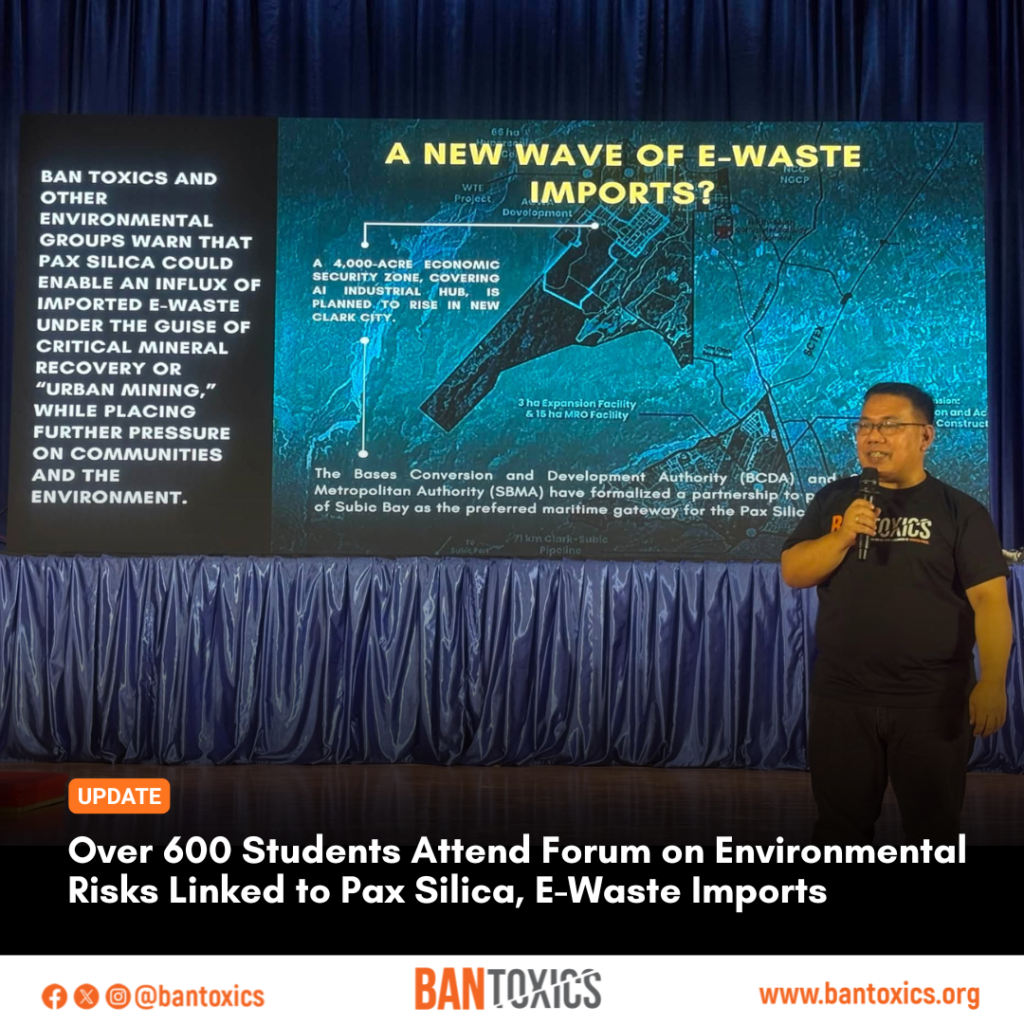
Under Pax Silica, a US-led initiative, plans are underway for a 4,000-acre Economic Security Zone (ESZ), including an AI industrial hub, in New Clark City. The proposed high-tech manufacturing facilities within the Luzon Economic Corridor aim to boost the production of inputs vital to US supply chains for semiconductors, AI, and critical minerals.
Prof. Tapang likened Pax Silica to grocery shopping, wherein the US places an order using a grocery list, while the Philippines does the work of gathering everything on the list but receives only menial wages. Meanwhile, the US takes home the groceries and reaps the greater benefits.
He raised concerns about the potential social, environmental, and economic impacts of the initiative, including the displacement of Indigenous Peoples and farmers, the generation of toxic and radioactive waste, high energy and water consumption, and the lack of meaningful technology transfer and domestic industrial development.
Meanwhile, BAN Toxics Advocacy and Campaign Officer Thony Dizon, one of the presenters, discussed illegal e-waste shipments from the US that have been monitored entering the country through the Subic Bay Freeport Zone since 2025. Last June, BAN Toxics and other environmental groups launched the END E-Waste Imports campaign task force to expose these illegal shipments, prompting government action.
According to Dizon, e-waste shipments from the US are illegal under the Basel Convention, a global environmental treaty aimed at regulating the transboundary movement of hazardous wastes, to which the Philippines is a party but the US is not.
He also pointed out that improper e-waste recycling can pose serious hazards and cause environmental contamination due to the toxic materials found in electronic devices, including lead, mercury, brominated flame retardants, cadmium, chromium, and polychlorinated biphenyls (PCBs).
Dizon warned that the Pax Silica initiative could pave the way for more imported e-waste under the guise of critical minerals recovery or “urban mining.”
LCUP President Sr. Niceta M. Vargas, OSA, PhD, in a message read during the forum, underscored the broader implications of technological advancement, saying, “every technological device begins with resources taken from the earth. And when that technology becomes obsolete, it leaves behind waste that does not simply disappear. Behind every piece of e-waste are questions of human health, environmental protection, responsible consumption, and social justice.”