
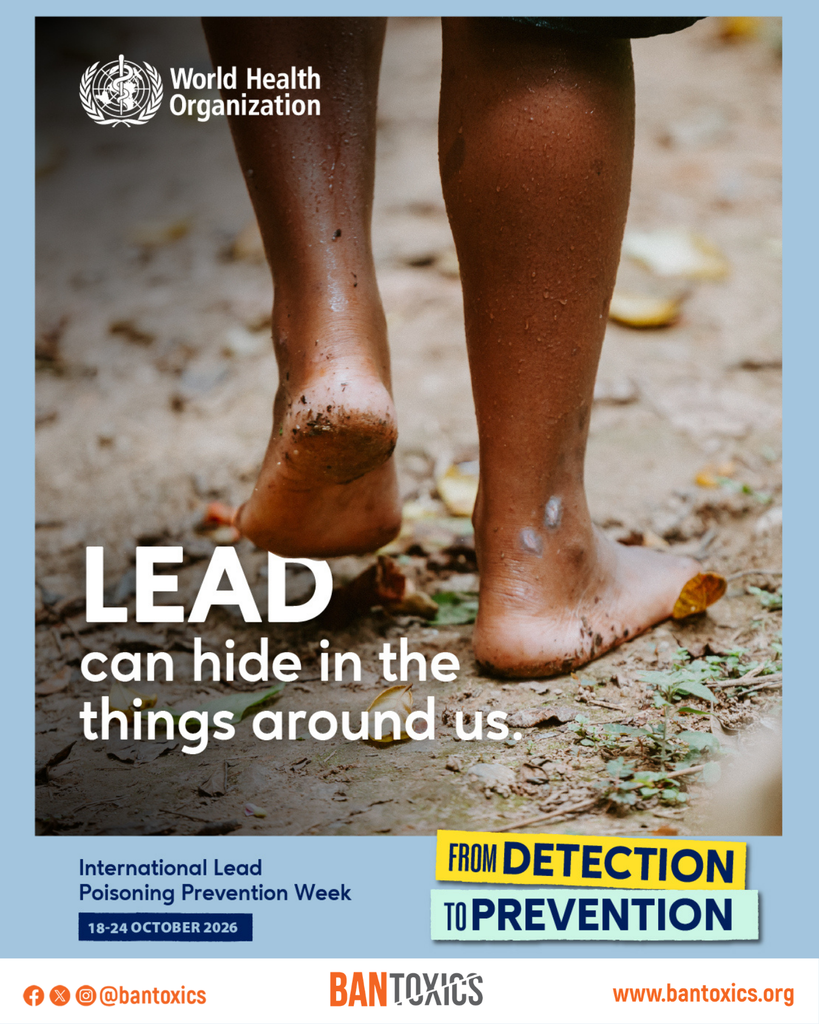
Committed to eliminating toxic lead in consumer products, particularly children’s toys and other items intended for children, BAN Toxics highlights the urgent need for stronger enforcement of existing lead regulations to protect public health, especially the health and safety of children.
The 4th International Lead Poisoning Prevention Week (ILPPW), taking place from October 18–24, 2026, carries the theme “From Detection to Prevention.” The theme highlights that lead poisoning is often invisible, that exposure can come from multiple sources, and that identifying these sources is essential to protecting public health, particularly the health of children. Once lead exposure has been identified, proven preventive measures can be implemented to reduce risks and prevent further harm.
According to the World Health Organization (WHO), lead exposure was associated with more than 3.5 million deaths globally in 2023, largely due to cardiovascular effects. This staggering toll highlights the urgent need for stronger preventive measures. The message is clear: the world must move from detecting lead exposure to preventing it at its source.
Lead is a well-recognized toxicant with wide-ranging health effects, affecting the neurological, cardiovascular, gastrointestinal, and hematological systems.
A 2024 study by BAN Toxics and the Environmental and Social Development Organization (ESDO) in Bangladesh, titled Not Suitable for Children: Toxic Chemicals in Plastic Toys Sold in Bangladesh and the Philippines, found hazardous chemicals in a significant number of the 257 plastic toys sampled from bargain stores in Dhaka, Bangladesh, and Metro Manila, Philippines.
The study detected hazardous substances, including lead, at concentrations ranging from 11 parts per million (ppm) to 4,600 ppm, raising serious concerns about the safety of these products. The findings underscore the need for stronger market surveillance and enforcement to prevent hazardous toys from reaching children.
In 2013, the Department of Environment and Natural Resources (DENR) issued the Chemical Control Order (CCO) for Lead and Lead Compounds, which regulates the use of lead in various products and applications, including food and beverage packaging, fuel additives, water pipes, toys, school supplies, cosmetics, and paints. Despite existing laws and regulations, lead remains a concern in consumer products, particularly those intended for children.
As October marks Consumer Welfare Month in the Philippines, BAN Toxics reminds consumers to remain vigilant and carefully check the products they purchase, especially toys, school supplies, and other items intended for children. Consumers are encouraged to choose products that comply with applicable safety standards, avoid products that may contain hazardous chemicals such as lead, and report suspected unsafe products to the appropriate authorities.
Protecting children from lead poisoning starts with awareness and requires decisive action. This #ILPPW2026, let us move from detection to prevention by strengthening enforcement, keeping toxic products out of children’s hands, and working together toward a safer, toxics-free future for every child.
#LeadPoisoning #BanLeadPaint #LeadFreeFuture #ToxicsFreeFuture