
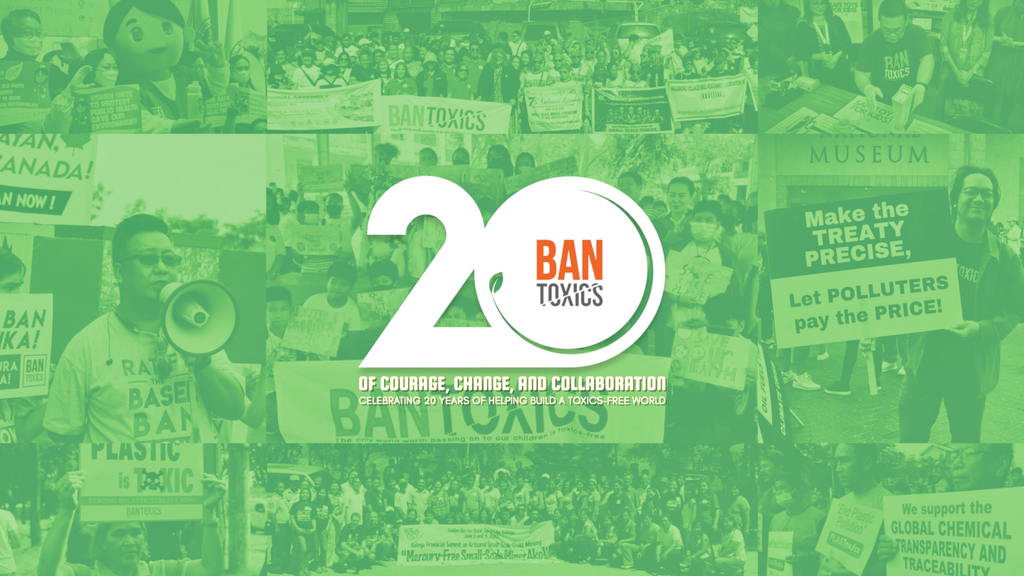
BAN Toxics was founded on October 11, 2006, by public-interest lawyer Richard Gutierrez, whose work with the US-based Basel Action Network (BAN), a campaigning organization dedicated to ending the toxic waste trade, compelled him to form a similar organization to address the waste issues besetting the Philippines.
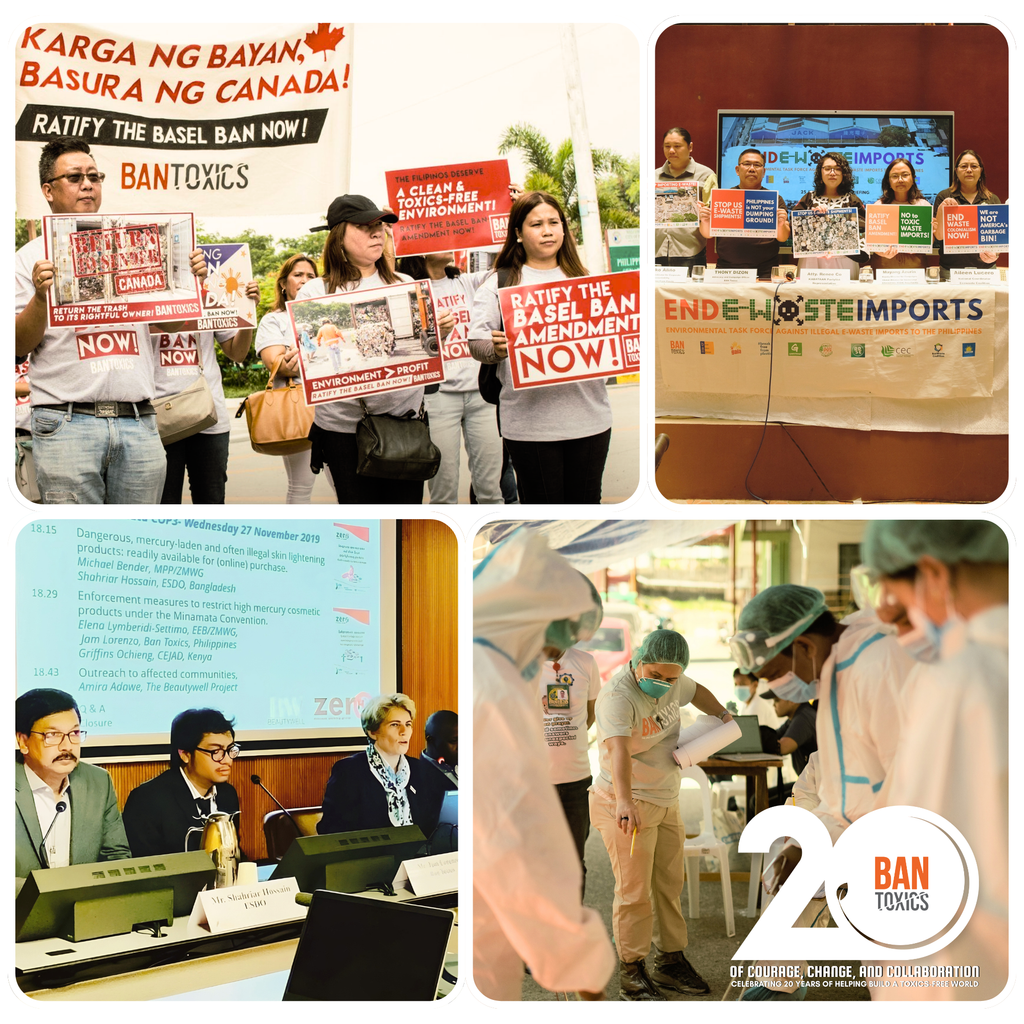
From our earliest years, we have been on the front lines of exposing and opposing illegal waste shipments. Together with allied environmental groups, we exposed the scandalous waste provisions in the Japan-Philippines Economic Partnership Agreement (JPEPA) and campaigned against the illegal Canada waste shipments until they were finally repatriated.
We raised the alarm on the rising volume of e-waste shipments to the Philippines, which were being improperly dismantled and disposed of in landfills. Just this year, we exposed illegal e-waste shipments from the United States entering the country through Subic Bay, prompting government action.
We also actively contribute to global environmental governance through our engagement in the Basel, Rotterdam, and Stockholm Conventions, the Minamata Convention on Mercury, and the ongoing negotiations toward a global plastics treaty. We have consistently urged the Philippine Government to ratify the Basel Ban Amendment, which would strengthen protection against the dumping of hazardous waste from developed countries.
Currently, we are working with the United Nations Industrial Development Organization (UNIDO) and the Environmental Management Bureau of the Department of Environment and Natural Resources (DENR-EMB) to implement the Philippine Healthcare and Mercury Wastes Management Project.
During our 20-year journey, we have remained steadfast in our mission to protect communities and the environment from the harms of toxic waste.
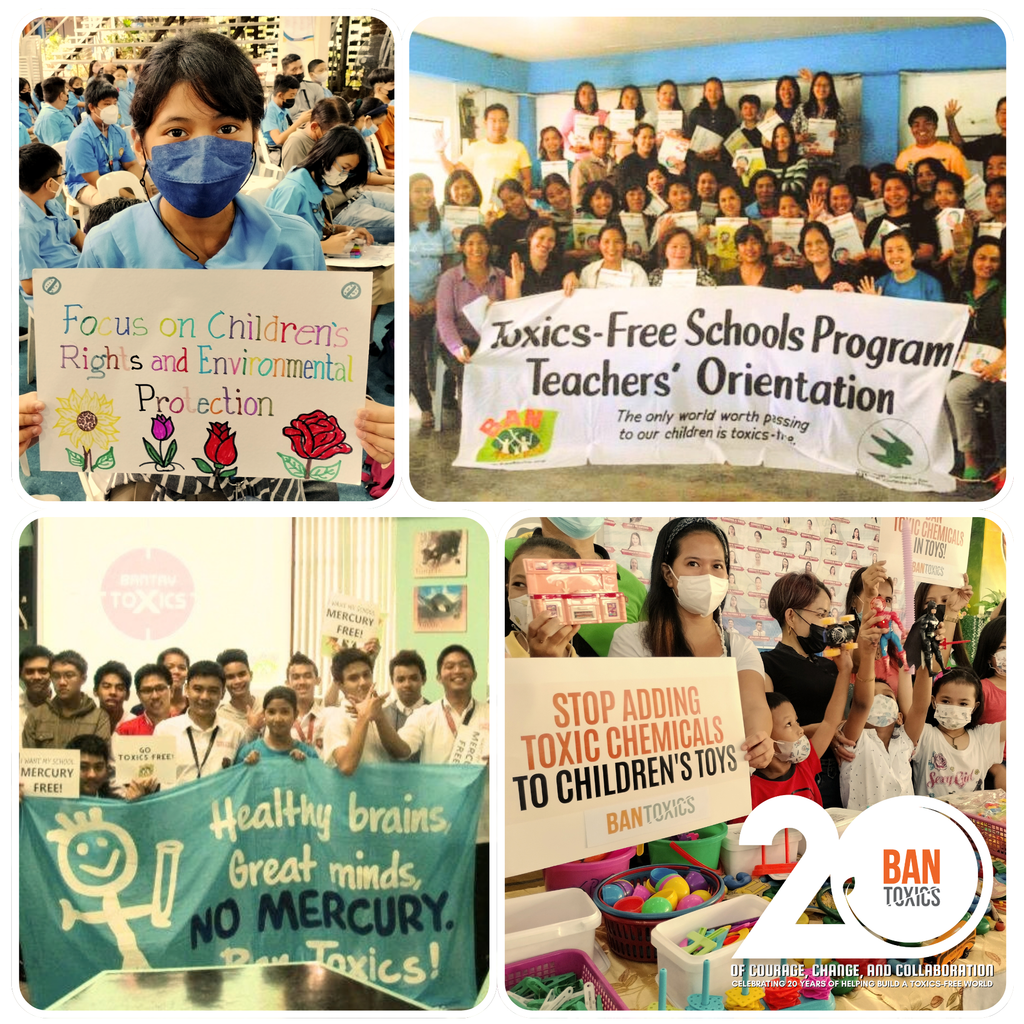
One of our foundational advocacies is protecting children and youth from toxic chemical exposure and ensuring a safe and healthy learning environment. BAN Toxics recognizes the heightened vulnerability of children and young people to toxic chemicals due to their developing bodies, behavioral patterns, and increased exposure to environmental hazards.
In response to a mercury spill incident at St. Andrew’s School in Parañaque City in 2006, BAN Toxics launched the Mercury-Free Schools Program to educate and raise awareness of school communities on the proper handling and management of mercury. By 2013, the program expanded its scope and evolved into the Toxics-Free Schools Program (TFSP), encompassing a wider range of toxic substances and chemical safety practices.
The TFSP highlights issues related to mercury, plastics, and other toxic chemicals, empowering school communities with the knowledge and skills needed to reduce their use and manage them safely. Its goals include raising awareness about hazardous substances, promoting non-toxic alternatives, and advocating for stronger chemical and waste management policies in schools.
Now carried forward as the Toxics-Free and Waste-Free Schools Program, TFSP conducts a wide range of initiatives: teacher trainings, awareness campaigns on the dangers of toxic chemicals present in everyday items, school inventory assessments, and the development of chemical and waste management systems. More recently, it launched Toy Clinics as part of the “Safe Toys for Kids” campaign, educating children and parents on hazardous substances found in toys and other children’s articles.
By addressing the risks posed by mercury, plastics, and other hazardous substances, TFSP not only safeguards students’ health but also empowers them to become proactive, informed citizens, capable of contributing to a safer, healthier future for their communities and the nation.
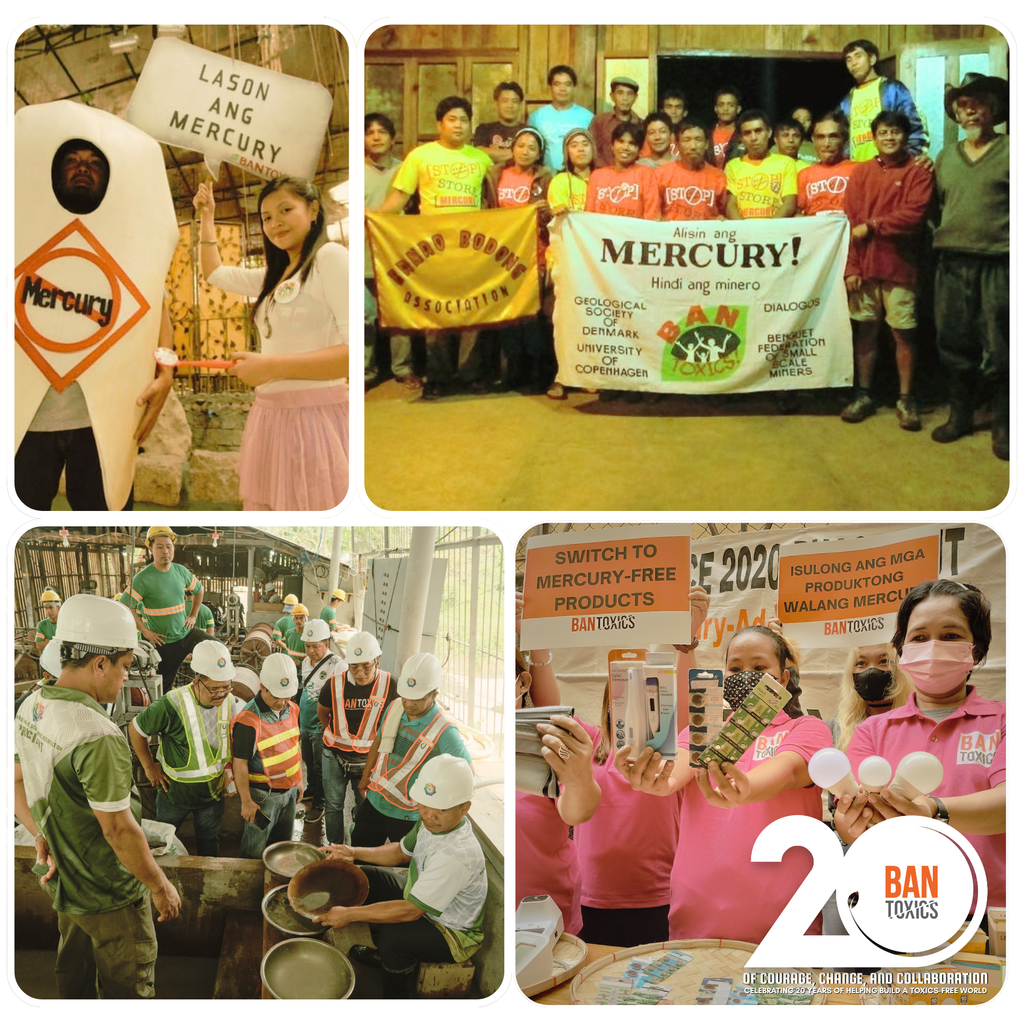
One of BAN Toxics’ pioneering areas of work focuses on the sound management of mercury. Through our research, community work, policy advocacy, and active engagement with government agencies and lawmakers, we have contributed to the development of several regulations on mercury, including DENR Administrative Order (DAO) 2019-20, or the updated Chemical Control Order for Mercury and Mercury Compounds; DOH Administrative Order (AO) 2020-0020, or the Guidelines on the Phase-Out of Mercury in Dental Restorative Procedures; and FDA Circular No. 2022-003, banning all mercury-added thermometers, sphygmomanometers, dental amalgam capsules, and liquid mercury for use in dental restorative procedures.
BAN Toxics has also been actively engaged in the development and implementation of the Minamata Convention on Mercury, participating in the Intergovernmental Negotiating Committee (INC) meetings and Conferences of the Parties (COPs). We continue to monitor its implementation and push for stronger measures to reduce and eventually eliminate mercury use, emissions, and releases.
We were among the first NGOs to work closely with poverty-driven artisanal and small-scale gold mining (ASGM) communities to help transform the sector and improve miners’ lives and livelihoods. Recognizing ASGM as a major source of mercury emissions in the Philippines and globally, we continue to implement programs that promote mercury-free mining practices while advancing the rights and empowerment of women and children, improving labor conditions, and advocating for the formalization of the largely unrecognized sector.
Our work with ASGM communities also led to the establishment of the National Coalition of Small-Scale Miners of the Philippines in 2016, which remains one of our invaluable partners in advocating for an ethical and responsible mining sector that contributes to environmental protection and the well-being of mining communities.
BAN Toxics will continue to advance efforts towards a mercury-free future that protects people’s health, safeguards the environment, and supports safer and more sustainable livelihoods for communities.
#ToxicsFreeFuture